Blog
How education is shaping the future of conservation in Amboseli
Read moreWhen giants lack space: Why elephants need Room to Roam
By Peter Borchert, writer and conservationist
Africa’s elephants stand at a crossroads. In some regions, they teeter at the brink of extinction; in others, their growing numbers strain fragile ecosystems and the patience of rural communities. As conservationists debate solutions, deep divisions often surface—arguments over what constitutes “too many” or “too few,” or whether culling should ever be on the table.
But beneath all these contrasting realities lies one unifying truth: the real elephant problem is not about numbers, but about space—and how humanity chooses to share it.
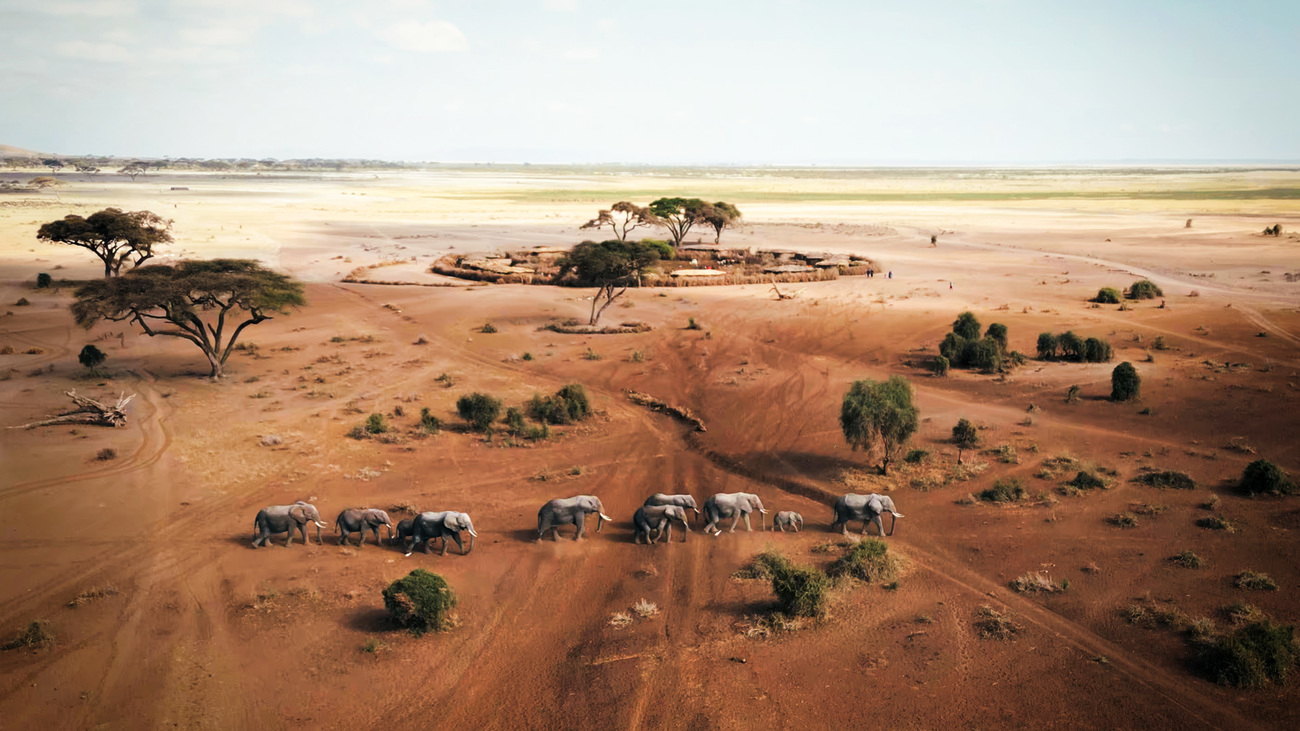
Few animals evoke as powerful an emotional response as elephants. Our relationship with them spans thousands of years, inspiring awe, affection, and, increasingly, urgency—especially for the people who share land, water, and resources with them. In many ways, the challenges elephants face reflect our broader struggle with the natural world: our successes and failures in elephant conservation mirror our shifting relationship with nature itself.
Conversations about elephant management are frequently polarised. Are there too few elephants—or too many? Are they victims or ecosystem engineers? Do they need stricter protection, or more active management? These debates, often framed as the “elephant problem,” tend to obscure more than they explain. When we look beyond numbers and focus instead on space—where elephants live, move, and adapt—solutions begin to emerge.
Across Africa, elephants face drastically different futures depending on where they live. In parts of West, Central, and East Africa, populations continue to collapse under the pressures of habitat loss, poaching, and encroachment. Elsewhere, in segments of East Africa and across much of southern Africa, strong protection and decades of effort have allowed populations to rebound.
These recoveries demonstrate something essential: when elephants have safety and space, they flourish. But they also reveal a deeper truth. Elephants are not simply large herbivores; they are ecosystem engineers. As Jason Bell, IFAW’s Executive Vice President, notes:
“Elephants play a critical role in shaping their environments, directly enhancing biodiversity and aiding in climate change mitigation. Their survival is crucial. IFAW’s Room to Roam initiative—a multi-faceted approach to the conservation of elephants and other wildlife—aims to create and secure vast, connected landscapes for elephants and people to coexist and thrive.”
This perspective underscores why the so-called “elephant problem” is not fundamentally about numbers. In fenced or fragmented landscapes, growing populations can strain ecosystems, diminish tree cover, and heighten conflict with communities. Yet in landscapes where movement is possible and ecosystems remain intact, elephants actively create space and opportunities for other species to flourish.
By reframing elephants as crucial architects of ecological resilience—not simply animals to be counted or controlled—we can begin to see that the real challenge lies in restoring the space, connectivity, and freedom of movement they need to fulfill their ecological role. This is exactly what initiatives like Room to Roam are designed to deliver.
Debates over elephant numbers often mask the deeper problem: the loss and fragmentation of space. Numbers are symptoms. Space is the cause.
Conservation is not a matter of calculating an ideal population. It is about resilience—the ability of wildlife to adapt, move, and recover within healthy, connected ecosystems.

Protected areas remain essential, but many are too small, isolated, or underfunded to support elephants long-term. Without freedom to move between reserves and adjoining community lands, elephants become confined to ecological “mega-zoos,” surviving only through artificial management.
As Dr Rob Guldemond of the University of Pretoria notes: “Allowing elephants to make their own decisions about moving into and out of protected areas is crucial for the persistence of this charismatic species and for preserving the diversity of life that they share with us.”
Large, connected landscapes allow wildlife to follow natural seasonal patterns, reduce pressure on local habitats, and build ecological stability. However, expanding and securing this space requires investment, political will, and community partnership.
No issue divides conservationists more sharply than fencing. While fences can reduce conflict and protect crops, they also fragment habitats and disrupt migrations. Evidence from Botswana and South Africa illustrates the heavy ecological cost of restricting elephant movement.
Modern science shows that elephant impact on vegetation is shaped as much by water availability, habitat layout, and land-use pressures as by population size. Managing space—not numbers—offers a more sustainable path. Strategies like adjusting water distribution or reconnecting fragmented reserves encourage natural migrations and give landscapes time to recover.
Transfrontier Conservation Areas (TFCAs)—or “megaparks”—offer tremendous promise. By reconnecting ecological landscapes across national borders, TFCAs restore natural processes, reduce local population pressure, and share conservation benefits across communities.
As Dr Guldemond explains: “IFAW’s Room to Roam initiative provides opportunities for dispersal as an important ecological process to stabilise elephant numbers and population growth.”
Ultimately, the future of elephants—and of biodiversity across Africa—depends on restoring movement, connectivity, and coexistence. Efforts that focus solely on numbers miss the deeper truth: our survival and theirs are interconnected.
By reimagining conservation at the scale of broad, connected landscapes, Africa can turn fragmented sanctuaries into thriving ecosystems once again.
Author’s note:
This article draws heavily on the research of the late Professor Rudi van Aarde and his colleagues at the University of Pretoria’s Conservation Ecology Research Unit. IFAW has supported this critical body of science, which underpins our visionary Room to Roam initiative—an ambitious effort to secure, connect, and protect habitats across East and Southern Africa so elephants and people can coexist and thrive. Supported by two decades of research and community partnership, Room to Roam aims to rebuild ecological resilience, strengthen biodiversity, and ensure a future where wildlife has the freedom and space it needs.
Our work can’t get done without you. Please give what you can to help animals thrive.
Unfortunately, the browser you use is outdated and does not allow you to display the site correctly. Please install any of the modern browsers, for example:
Google Chrome Firefox Safari