Central India Tiger Corridor Project
Central India Tiger Corridor ProjectThe paths that keep India’s tigers connected
The paths that keep India’s tigers connected
1 October 2026
A tiger does not know where a protected area ends. It follows prey, searches for territory and mates, and, particularly when young tigers disperse from the places where they were born, travels through landscapes that extend far beyond the boundaries of a tiger reserve. In Central India, those journeys may lead through forests and farmland, past villages, and across roads and railway lines. The long-term survival of India’s tigers depends not only on protecting the reserves where they live, but also on ensuring they can safely move through the landscapes between them.
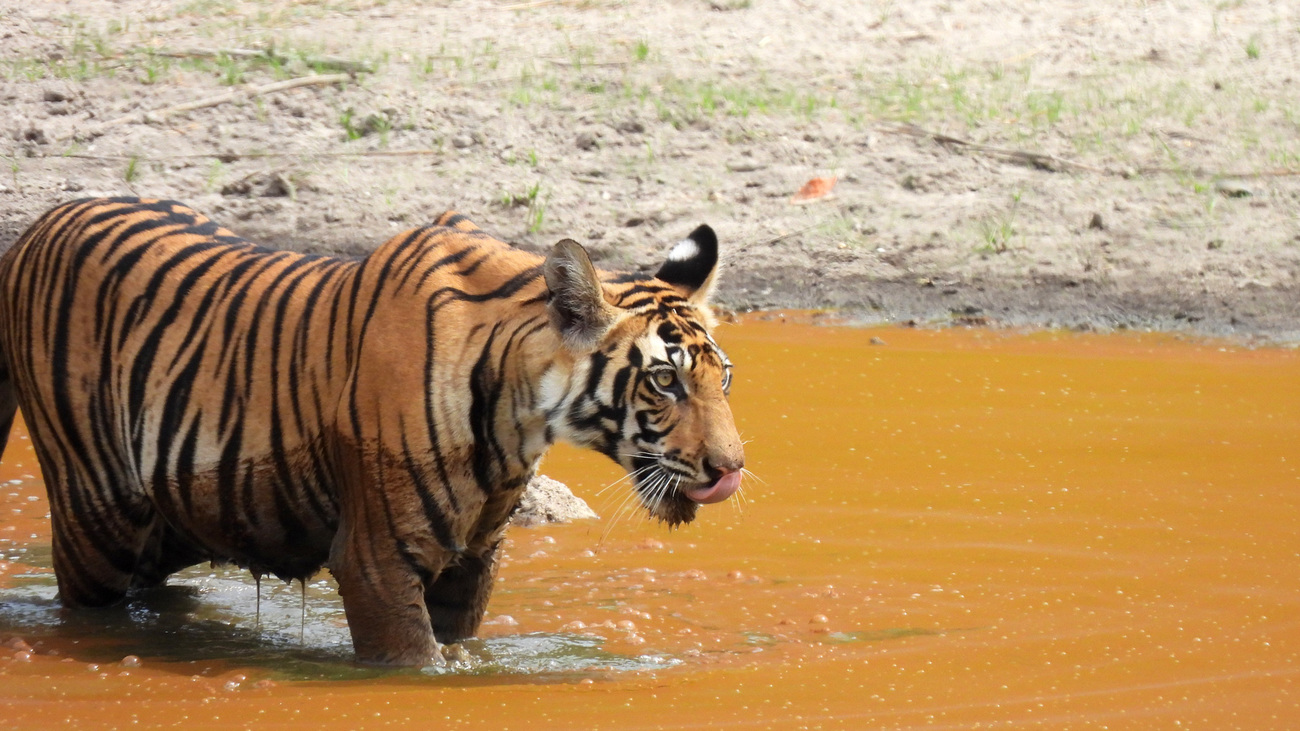
Bengal tigers move through the landscape of the IFAW–Wildlife Trust of India (WTI) Central India Tiger Corridor Project, which facilitates habitat connectivity to support long-term survival and biodiversity. Photo: © IFAW-WTI
What it takes to keep those pathways open is not always immediately obvious.
During a recent visit to the Nawegaon-Nagzira landscape, IFAW colleagues from India, Kenya, and Zimbabwe spent time with communities living alongside tiger habitat. Families welcomed us into their homes with food and drink, while women proudly showed us the honey, turmeric, pickled foods, and other products they produce through small enterprises and sell in local markets.
We also saw how families are using improved cookstoves and LPG, reducing their need to collect firewood from the surrounding forests.
These changes are part of a much larger conservation effort. Keeping tiger habitats connected requires understanding how animals use the landscape and addressing the threats they encounter along the way. But it also requires working with the people who share these spaces, creating opportunities that reduce pressure on forests, lower the risk of encounters with wildlife, and enable communities to help shape conservation solutions.
Our visit also created an opportunity for South-South learning. The wildlife and landscapes of India, Kenya, and Zimbabwe are different, but many of the questions are shared. How can wildlife continue to move through increasingly fragmented landscapes? How can communities benefit from conservation? And what can people working in one landscape learn from those confronting similar challenges elsewhere?
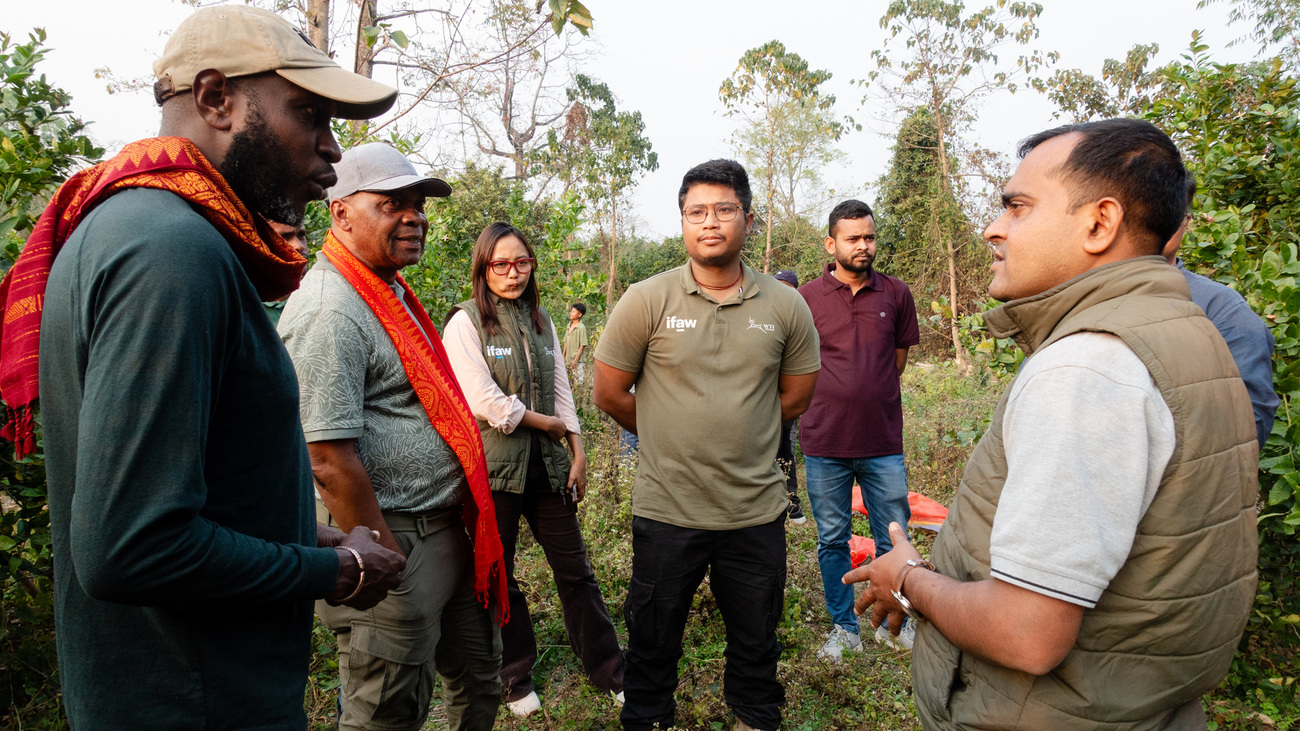
IFAW colleagues and community members share experiences on a farm in Central India as part of a South-South learning exchange, exploring approaches to conservation, sustainable livelihoods, and coexistence with wildlife. Photo: © IFAW-WTI
A recovering population needs room to move
The Central Indian landscape supports approximately 37% of India’s tiger population and serves as a critical network of protected areas and the habitats connecting them. Within this region, the Nawegaon-Nagzira landscape plays an important role as a connector between tiger populations, allowing individual animals to disperse, find prey and mates, establish territories, and contribute to the genetic health of the wider population.
Movement is fundamental to the life of a tiger, but navigating this landscape is increasingly complex. Tigers travel through forests, farms, buffer areas, and the spaces around approximately 89 communities. A railway line cuts through the region in one direction and a major highway in another, with additional infrastructure development planned. These barriers can restrict movement, fragment habitat, and increase the risks animals face as they travel between suitable habitats.
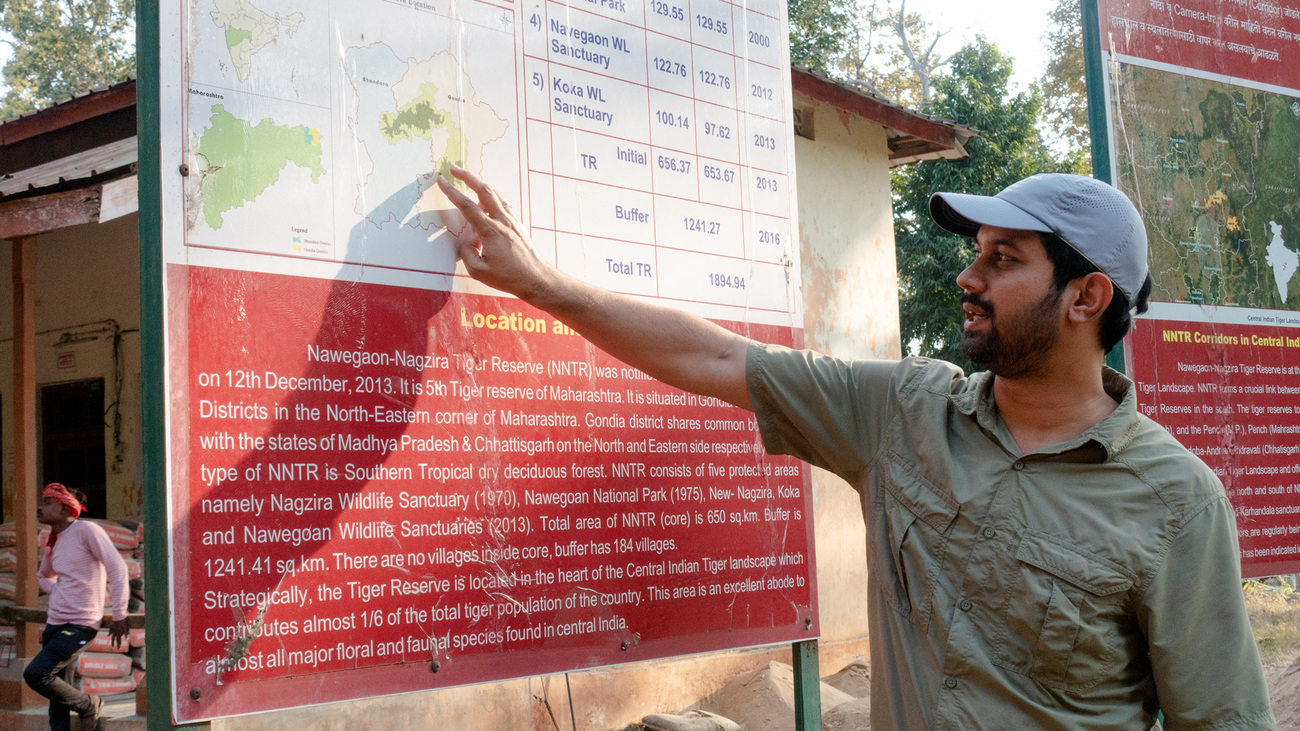
Ankit Thakur, Project Head of WTI’s Central India Tiger Corridor Project, uses a map to illustrate the tiger landscapes and critical connections that enable wildlife to move between protected areas in Central India. Photo: © IFAW-WTI
For 15 years, IFAW and the Wildlife Trust of India (WTI) have worked alongside communities, Forest Department authorities, and other partners to better understand how tigers use this landscape and reduce the threats they encounter. In 2011, teams conducted the first tiger occupancy survey in the area, helping establish a clearer picture of tiger presence and laying the groundwork for long-term conservation action.
The recovery since then is encouraging. In 2015, there were an estimated two to three tigers in the Nawegaon-Nagzira landscape. The Nawegaon-Nagzira Tiger Reserve administration’s annual monitoring recorded 21 tigers in 2025. But the goal of this work is not simply to increase tiger numbers. As populations recover, individual animals need sufficient space to establish territories, access prey, find mates, and disperse to other habitats. A female tiger may require approximately 20 to 30 square kilometres, depending on habitat conditions and prey availability. Without safe connections to other suitable habitats, recovering populations can become increasingly isolated.
Protecting these pathways is therefore about creating the conditions for a tiger population to sustain itself. Healthy populations need individual animals to move between habitats, encounter other tigers, and contribute to genetic diversity across the wider landscape.
Understanding how tigers use the landscape
Protecting a corridor begins with understanding how animals actually use it. IFAW and WTI’s work follows two closely connected priorities: monitoring and protecting wildlife corridors, and reducing conflict between people and wildlife. Both depend on reliable information about where animals are present, which pathways they use, and the threats they face along the way.
Camera traps are an important part of building that picture. Because every tiger has a unique pattern of stripes, images can help teams document which individual animals are present in different parts of the landscape. Rather than tracking a single tiger on a journey from one reserve to another, surveys conducted across multiple seasons reveal broader patterns in how tigers use corridors outside the protected area network, including pathways that pass through human-dominated landscapes.
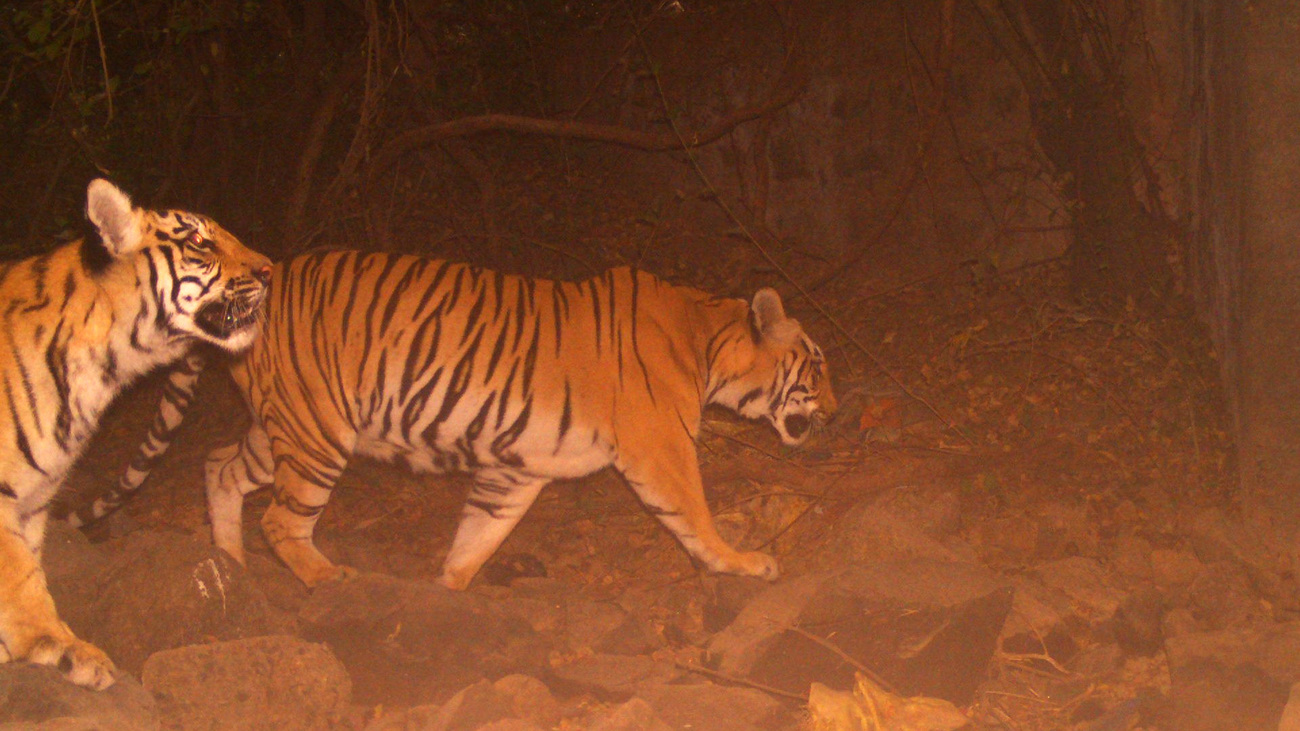
Bengal tigers move through the landscape of the IFAW–WTI Central India Tiger Corridor Project. Photo: © IFAW-WTI
That evidence can help Forest Department authorities make informed decisions about where protection is most needed. Combined with information about communities, infrastructure, and previous incidents, it can also help identify areas where people and wildlife may be more likely to encounter one another and where action could reduce future conflict.
A corridor may appear as a line on a conservation map, but for wildlife it is a living landscape. Understanding whether animals are actually using these spaces is what tells us whether that landscape remains connected.
Reducing threats along the way
Monitoring also helps inform action on the ground. Field teams and Forest Department staff walk the landscape looking for threats, including snares, bird traps, and illegal electric fences that can injure or kill wildlife.
During 175 anti-snare and anti-electrocution patrols, teams covered more than 1,050 kilometres across 77 forest beats and detected and removed 174 snares. This work reduces immediate dangers for tigers and for the many other species moving through the same landscape.
Ungulates and other wildlife depend on these corridors too, contributing to healthy ecosystems and sustaining the prey populations on which large carnivores depend. Protecting connectivity is therefore not simply about providing a passage for tigers. It is about maintaining a functioning landscape that supports the movement and survival of many species.
This landscape-scale approach reflects the same principle that guides IFAW’s Room to Roam initiative in Africa. Elephants moving across East and southern Africa and tigers dispersing through Central India face different ecological realities, but neither can thrive in isolated pockets of habitat. Wildlife needs room to move.
Communities at the heart of connectivity
The forests surrounding Nawegaon-Nagzira are not empty spaces between protected areas. People live here, raise families, earn livelihoods, and depend on natural resources. Their lives are closely connected to the health of the landscape, and their participation is essential to its future.
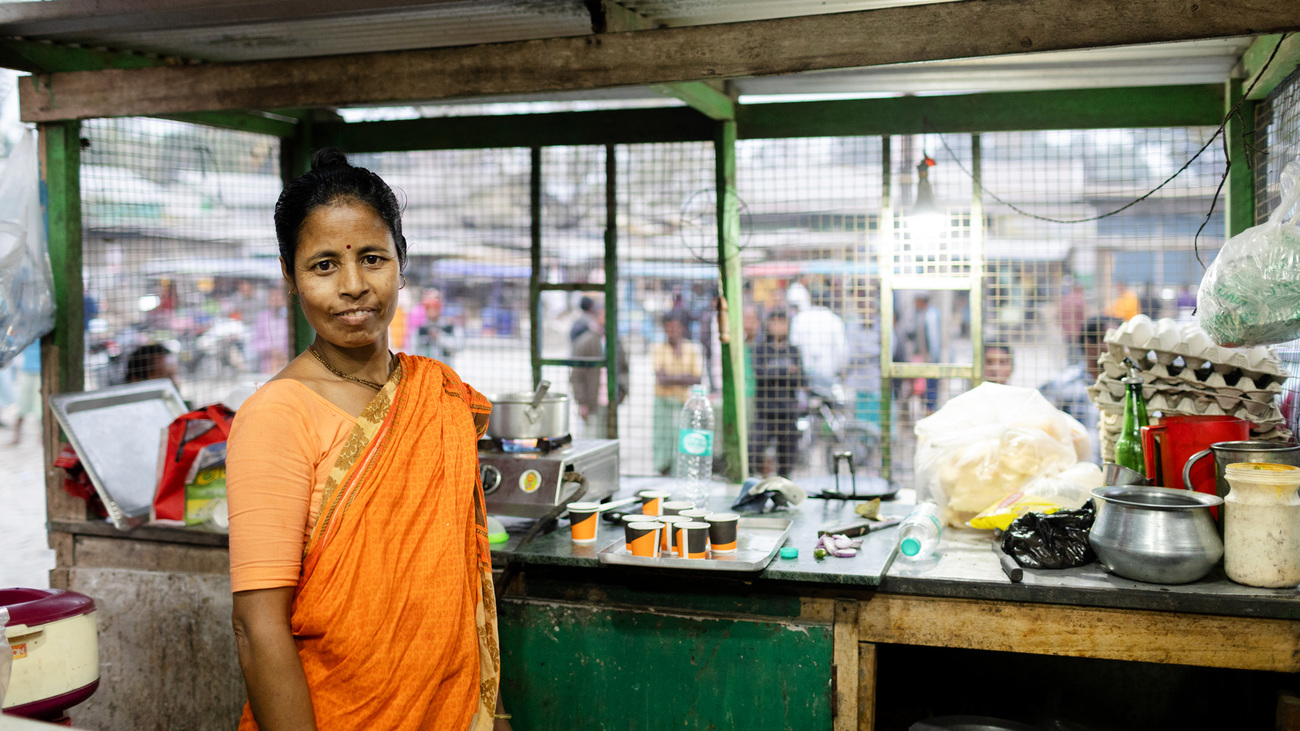
A participant in the Green Restaurant Program, one of six community restaurants managed by local women to build greater financial independence while supporting families living alongside tiger habitat. Photo: © IFAW-WTI
Historically, many families entered forests to collect firewood and other resources, increasing pressure on tiger habitat as well as the possibility of potentially dangerous encounters with wildlife. Reducing that dependence requires more than asking people to change how they use forests. It requires practical alternatives that support livelihoods and make coexistence possible.
Over the years, IFAW and WTI have worked with community self-help groups to strengthen livelihoods connected to sustainably sourced forest products and other enterprises. During our visit, the pride the women took in their work was unmistakable. They welcomed us into their homes, shared food and drinks, and showed us products including honey and turmeric that they produce and sell in local markets.
For some groups, these enterprises have grown into meaningful alternative sources of income. The principle is straightforward: when people have sustainable ways to earn a living that place less pressure on forests, both communities and wildlife can benefit.
We saw another example inside one of the homes we visited. Improved cookstoves and access to liquid petroleum gas (LPG) have helped families reduce their reliance on firewood from the forest. More than 6,000 improved cookstoves were installed across villages in the wider Nawegaon-Nagzira and Tadoba-Andhari landscapes between 2011 and 2020, alongside efforts to facilitate LPG connections with government support.
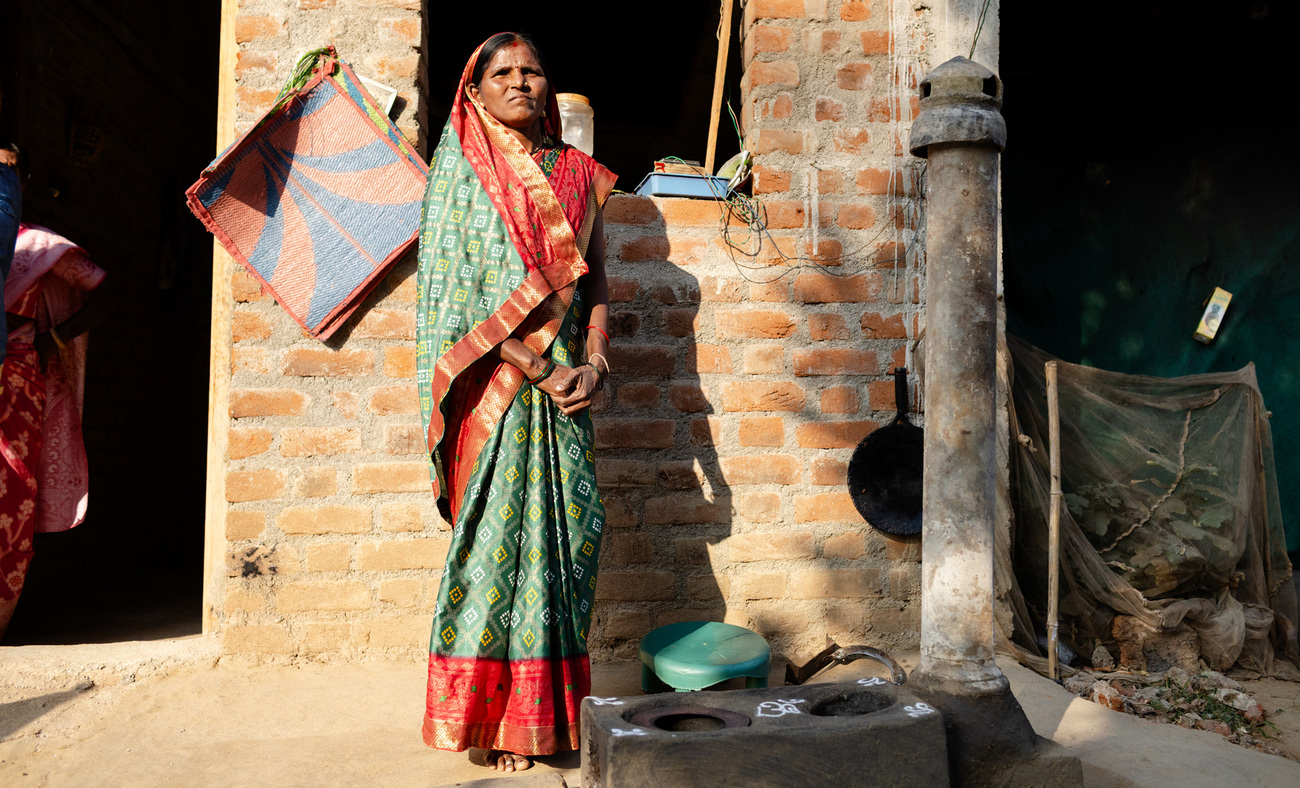
A woman living near the Nawegaon-Nagzira Tiger Reserve demonstrates an improved cookstove, which helps families reduce their reliance on firewood from surrounding forests and the need to enter areas shared with wildlife. Photo: © IFAW-WTI
For women, who have traditionally undertaken much of the fuelwood collection, the change can be particularly meaningful. Community members have described spending less time entering forests to collect wood, reducing their potential exposure to encounters with wild animals and freeing time for family, farming, and other activities.
These are everyday changes, but they are intimately connected to the larger conservation picture. The people living alongside tiger habitat are not separate from conservation. They are among its most important partners and stewards.
Making coexistence possible
As tiger populations recover and animals move through shared landscapes, preventing and responding to human-wildlife conflict becomes increasingly important. Maintaining connectivity cannot come at the expense of people living along wildlife corridors. Communities need information, resources, and support to respond safely when wildlife is nearby.
The project works with communities, schools, and frontline staff to build that capacity. Awareness campaigns have reached more than 13,000 people through 102 programmes across 40 villages and 37 schools, while signage has been installed in identified conflict hotspots.
Rapid Response Teams have also worked with communities and authorities since 2017 to respond when wildlife enters areas used by people. In one case, two female sloth bears chose sites within villages to give birth to their cubs, one in an abandoned house and another in a culvert. Rather than capture or relocate them, the response team and Forest Department secured the areas, maintained safe routes towards the forest, monitored the bears, and kept residents informed. Both mothers eventually left the villages voluntarily and returned to the forest with their cubs.
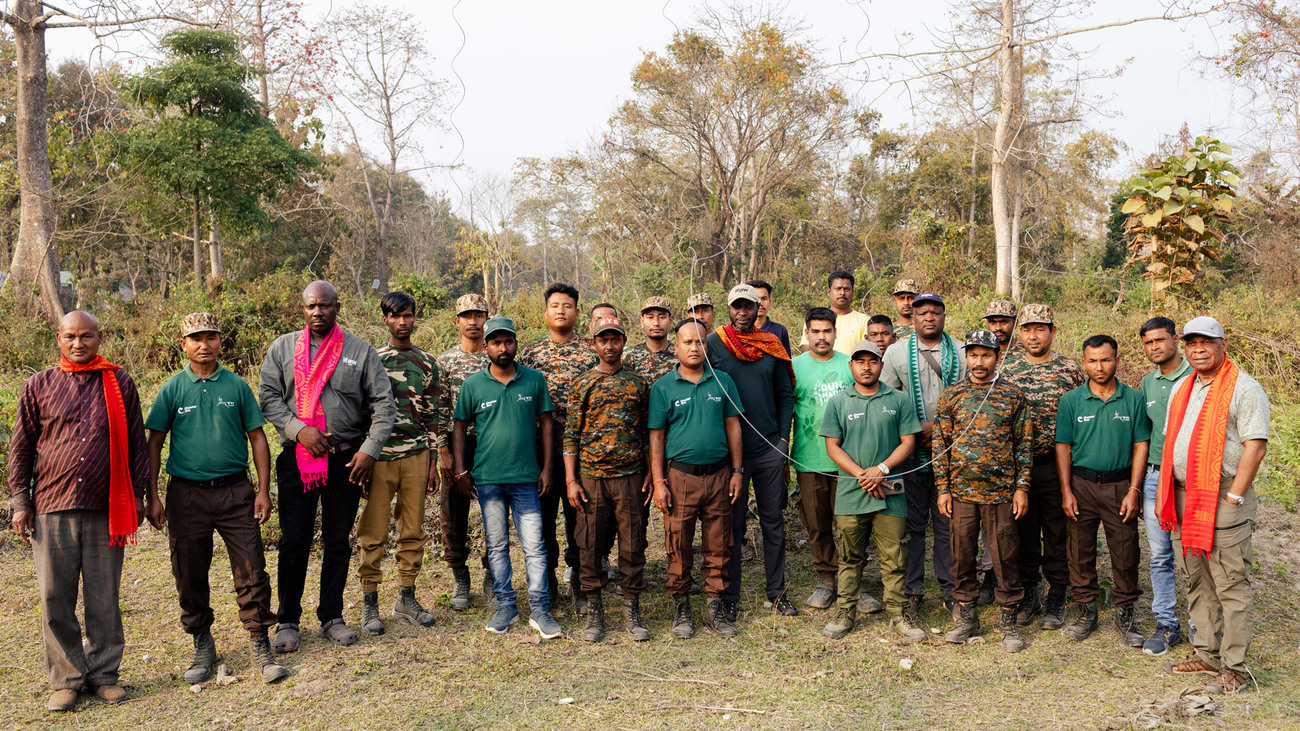
IFAW colleagues from Kenya, Malawi, and Zimbabwe, joined by WTI, meet with members of a Rapid Response Team in Central India, exchanging experiences and approaches to helping communities and wildlife coexist safely. I Photo: © IFAW-WT
It is a useful reminder that coexistence does not always mean removing wildlife when animals and people come into proximity. Sometimes it means creating enough space, knowledge, and patience for an animal to find its own way home.
Turning experience into lasting protection
Long-term protection also depends on strengthening the people and institutions responsible for managing these landscapes. IFAW and WTI provide training, equipment, and technical support to frontline Forest Department staff so they can better prevent wildlife crime, respond to conflict, and protect animals moving through the landscape.
Over the course of the project, 810 frontline forest staff have received training through a combination of wildlife crime prevention programmes and orientation on anti-snare and anti-electrocution work. Just as importantly, experience gained on the ground is informing efforts to strengthen and standardise approaches to these threats so successful practices can become embedded in longer-term wildlife protection.
This is how individual interventions can have an impact beyond a single patrol or corridor. Knowledge developed through years of field experience can strengthen the systems responsible for protecting wildlife across the wider landscape.
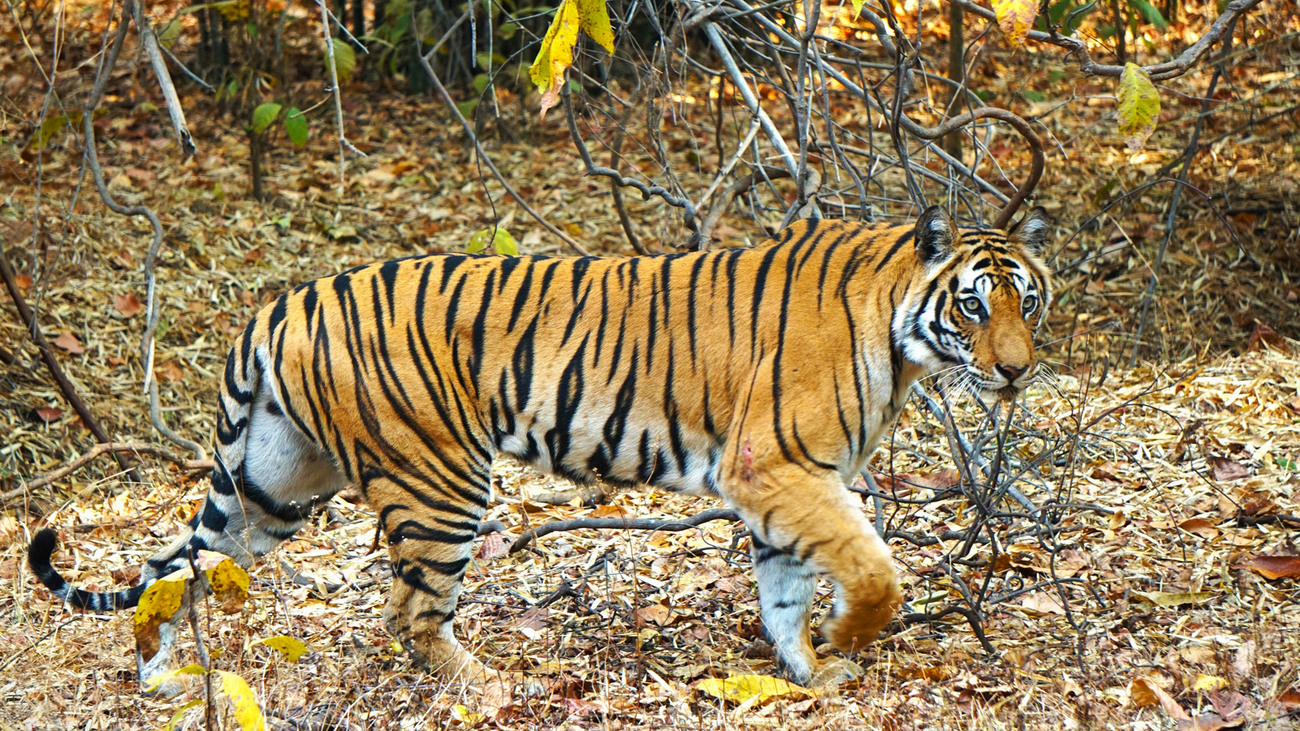
Bengal tigers move through the landscape of the IFAW–WTI Central India Tiger Corridor Project, which facilitates habitat connectivity to support long-term survival and biodiversity Photo: © IFAW-WTI
Learning across landscapes
Our visit to Nawegaon-Nagzira brought together IFAW colleagues from India, Kenya, and Zimbabwe who work in landscapes where communities live alongside different species but face many of the same challenges. Across East and southern Africa, IFAW’s Room to Roam initiative is working to secure and connect landscapes for elephants and other wildlife while supporting the people who live alongside them. In Central India, tigers, their prey, and other wildlife similarly depend on connected habitats that extend beyond the boundaries of protected areas.
Solutions cannot simply be transferred from one landscape to another. But sitting with women who proudly shared the products they had made, seeing how changes within a household can reduce reliance on forest resources, and exchanging experiences with colleagues working across India and Africa reinforced how much there is to learn from one another. Conservation knowledge moves too, between communities, countries, and people confronting similar questions about connectivity and coexistence.
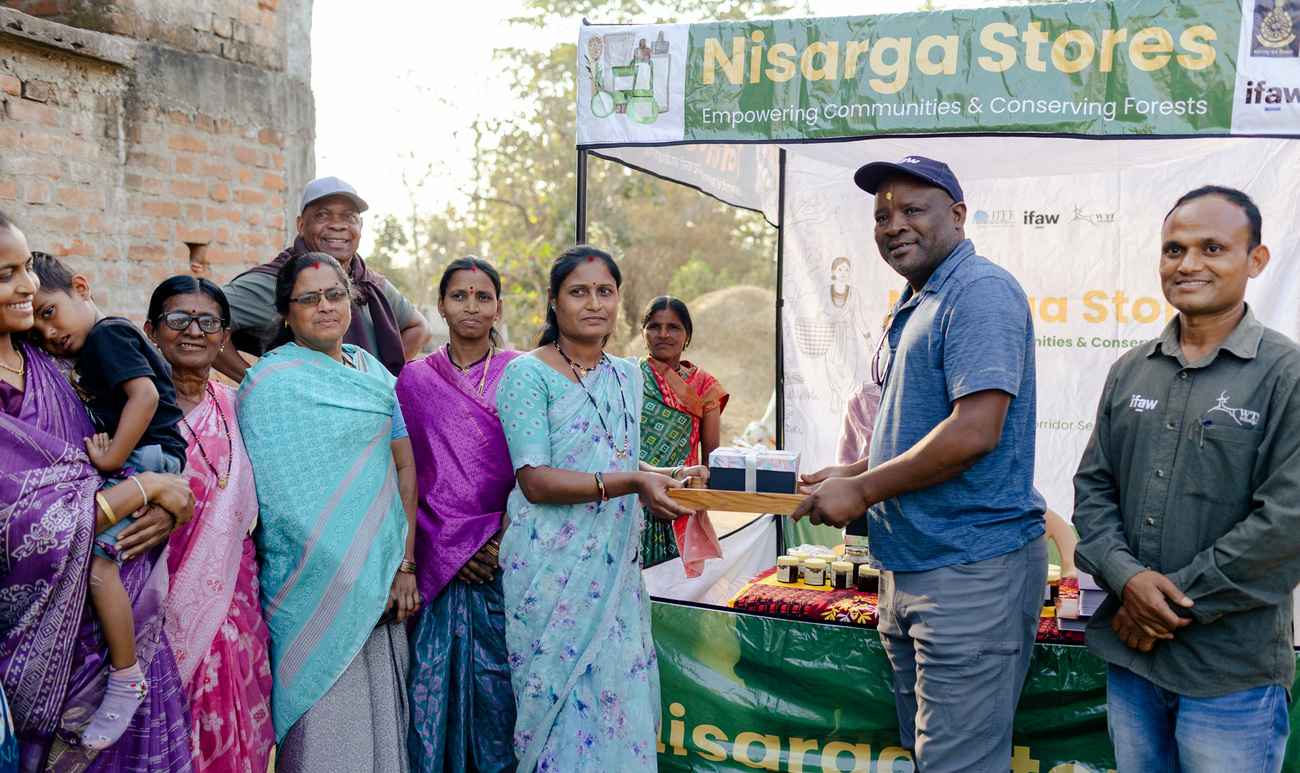
Women from a local livelihood enterprise present IFAW’s Enos Omandi with a selection of honey, turmeric, and other products they sell through a community-managed outlets supporting sustainable livelihoods. Photo: © IFAW-WTI
Keeping the pathways open
The recovery of tigers in the Nawegaon-Nagzira landscape is a sign of progress, but it also brings greater responsibility. Healthy tiger populations need space to disperse, access to prey and mates, connections to other populations, and people living alongside wildlife who have the tools and opportunities to participate in conservation solutions.
Across this landscape, camera traps and field surveys are helping teams understand how tigers use the spaces between protected areas. Rangers and Forest Department staff are removing snares and other threats. Communities are developing livelihoods that reduce pressure on forests, families are adopting alternatives to collecting firewood, and local teams are building their ability to respond when wildlife and people come into proximity.
Together, these actions create something larger than a corridor on a map. They help sustain a living, connected landscape where individual tigers can move, wildlife populations can remain healthy, other species can thrive, and people can build safer, more sustainable livelihoods alongside them.
The future of India’s tigers will not be secured within the boundaries of protected areas alone. It will depend on the pathways between them, and on the people working every day to keep those pathways open.
Related content
Our work can’t get done without you. Please give what you can to help animals thrive.