2027 North Atlantic right whale calving season
2027 North Atlantic right whale calving season
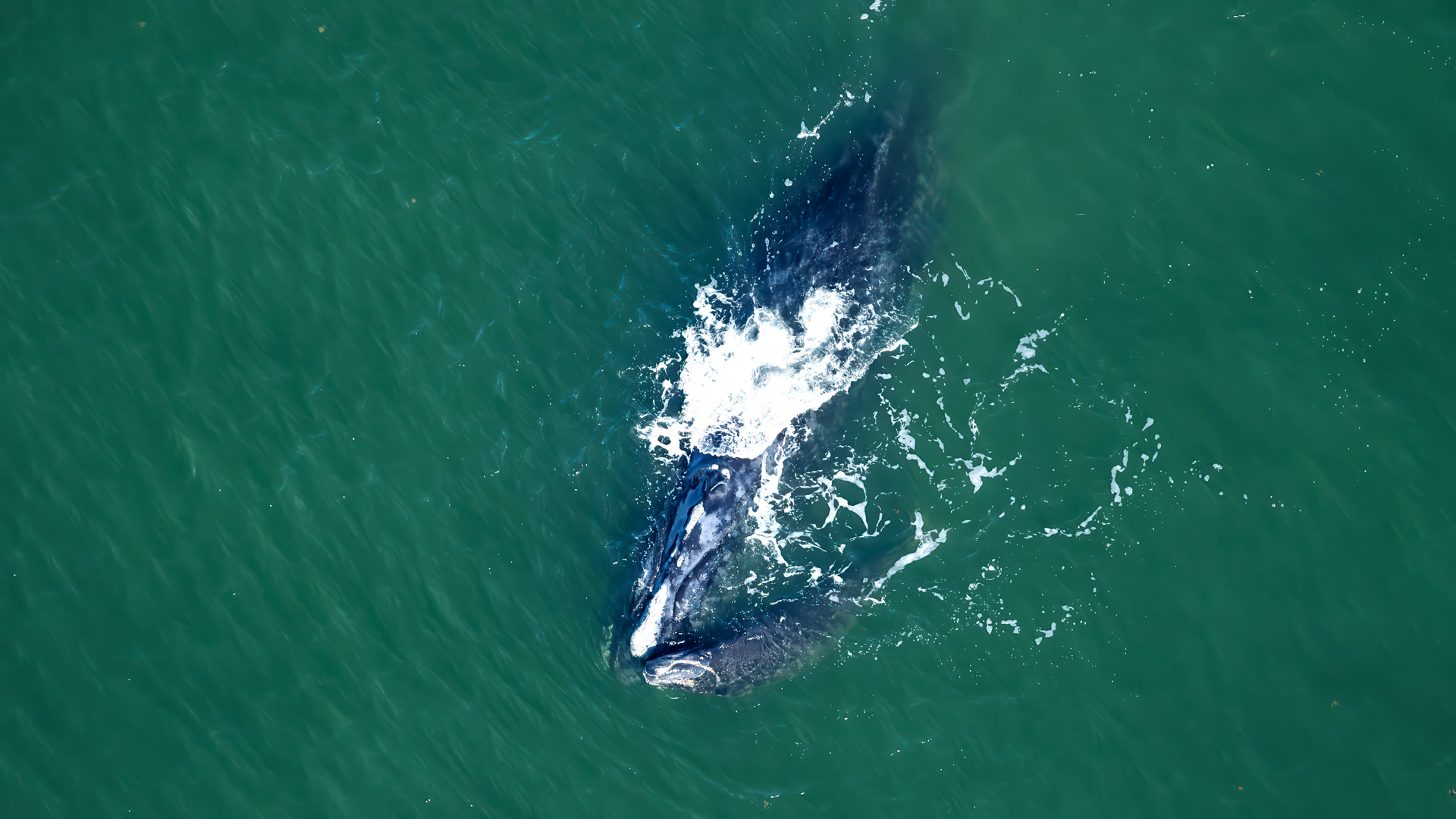
With only around 380 North Atlantic right whales remaining in the ocean, every individual matters for the survival of this critically endangered species. That’s why every year, in the southeastern US, we track the births of new North Atlantic right whale calves.
Sadly, North Atlantic right whales face threats in the form of vessel strikes, entanglement in fishing gear, ocean noise pollution, and climate change. They can live up to 70 years, but increasing fishing and boating activities—not to mention the imminent threat climate change poses to ocean temperatures—shorten the lifespans of these magnificent marine mammals, who are some of the largest living animals on Earth.
North Atlantic right whales are not reproducing fast enough to offset their deaths. Since NOAA declared an Unusual Mortality Event in 2017, there have been 43 documented right whale deaths, 42 serious injuries and 92 morbidities, which represents over 45% of the current North Atlantic right whale population. Further, research suggests that that only a third of right whale deaths are documented, so the death toll is likely much higher. In comparison, there have only been 124 births in this same period—and at least nine of those calves died in the same season they were born.
The North Atlantic right whale calving season begins each year in mid-November and ends around mid-April. With only 72 reproductive female North Atlantic right whales remaining, we keep a close watch on them and their new calves to help ensure their survival. Considering these current numbers, 20 new calf births would be considered a relatively productive calving season. However, given the high rate of mortality and injury, North Atlantic right whales need to have at least 50 new calves per year to recover and grow their population, an unlikely feat with so few reproductive females and the long time needed between calving. If the species fell to only 50 reproductive females, they would become functionally extinct.
To stay up to date with the latest 2027 North Atlantic right whale calving season news and receive updates about the births of new whale calves, bookmark this page and check back in regularly. You can also follow us on Instagram, Facebook, and TikTok for live updates.
10 November 2026 – Curlew kicks off calving season with her first calf
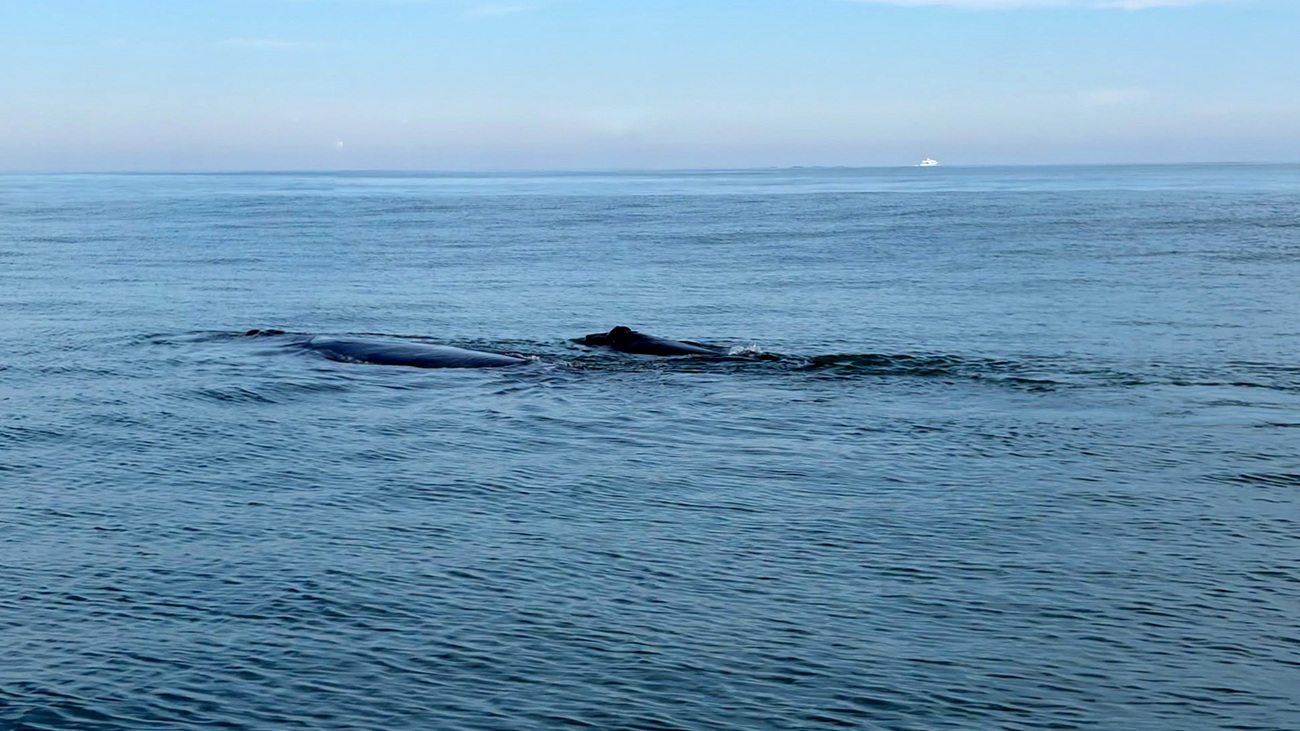
The 2026–2027 North Atlantic right whale calving season is off to an early start! Curlew (#4190), a 16-year-old first-time mother, was spotted with her calf off St. Augustine, Florida, five days before the official start of the season. The pair was discovered by two recreational boaters who reported their sighting to NOAA, demonstrating how everyday people can help monitor and protect these critically endangered whales.
Born in 2011 to Tusk (#2790), Curlew is no stranger to making headlines. In 2025, she was among the first North Atlantic right whales ever documented in the Bahamas, following an unusual months-long journey with another female, Koala (#3940). Curlew was named for a distinctive scar on her back resembling the curved bill of a shorebird, and she has survived four known entanglements.
With her first calf now by her side, Curlew brings welcome news for the species' recovery. And perhaps we'll see her former travelling companion Koala return to the calving grounds this season, too!
The North Atlantic Right Whale Catalog keeps track of every whale and whale calf identified by researchers. Every whale is assigned a four-digit number, but many are also given names—especially those that have unique physical features or interesting stories.
A record of 24 calves were born during the 2026 season. You can learn more in this summary for the 2026 calving season.
In the year prior (2025), researchers identified 11 new calves. More details here in the 2025 calving season report card.

Here’s how many right whale calves have been born since the 2007 season:
- 2026: 24 calves
- 2025: 11 calves
- 2024: 20 calves
- 2023: 12 calves
- 2022: 15 calves
- 2021: 20 calves
- 2020: 10 calves
- 2019: 7 calves
- 2018: 0 calves
- 2017: 5 calves
- 2016: 14 calves
- 2015: 17 calves
- 2014: 11 calves
- 2013: 20 calves
- 2012: 7 calves
- 2011: 22 calves
- 2010: 19 calves
- 2009: 39 calves
- 2008: 23 calves
- 2007: 23 calves
Between the years of 2007 and 2022, 15.7 calves were born on average each season. Since the Unusual Mortality Event that was declared in 2017, only 11 calves have been born on average each season.
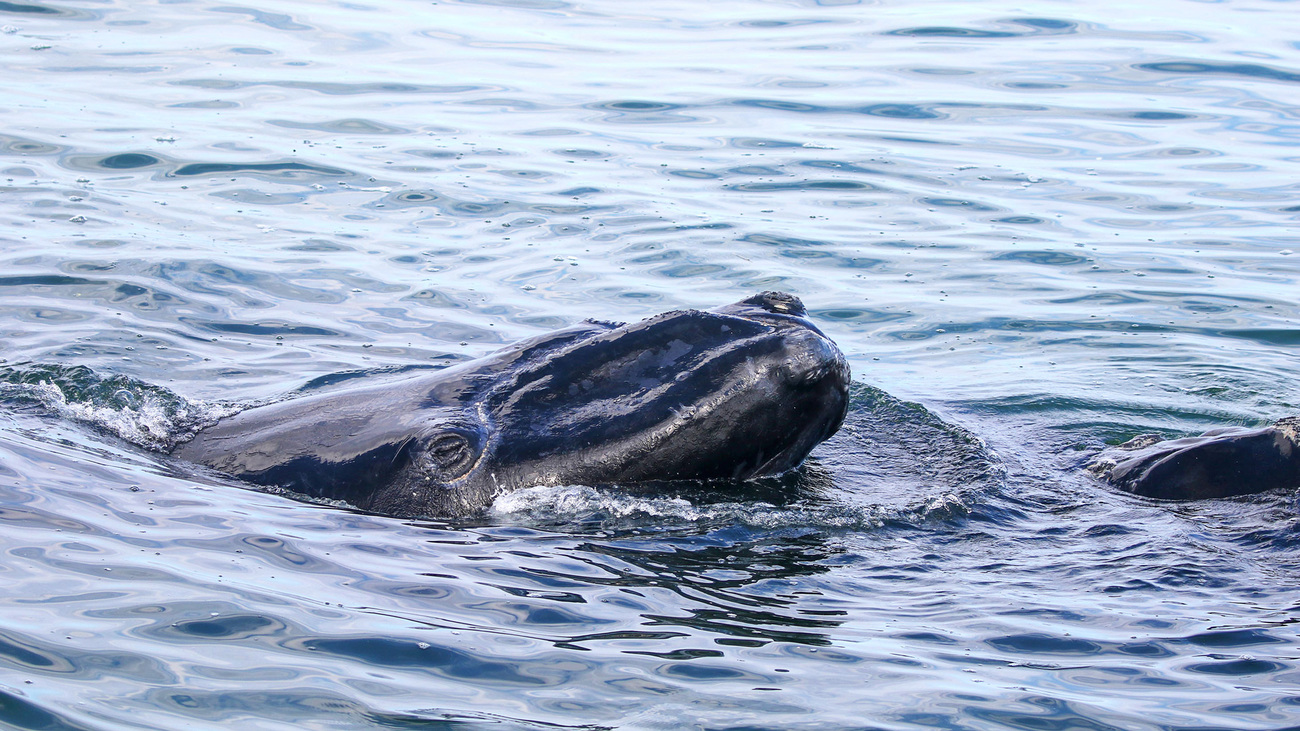
How reproduction works for right whales
Every year, North Atlantic right whales migrate more than 1,000 miles from their northern feeding grounds to the shallow, coastal waters in the southeastern US. This is where they breed and birth their calves.
Potential mothers are at reproductive risk due to escalating stressors in the environment. Research shows that the energetic impacts of sub-lethal entanglements and other stressors are stunting the growth of whales; shorter body lengths are associated with longer birth intervals and low birth rates.
Females that have severe injuries from entanglement have the lowest birth rates. As the health of female right whales declines, their birthing intervals increase.
How many babies do North Atlantic right whales have?
The gestation period for North Atlantic right whales is about one year long. After their year-long pregnancy, the mother gives birth to a single calf. Female North Atlantic right whales typically become sexually mature at 10 years old.
The calving interval for reproductive females is widening. Adult females previously gave birth to a calf every three years, but now they are only calving every six to 10 years, likely due to the additional stress of entanglement, climate change, and other threats.
How long do North Atlantic right whale calves stay with their mothers?
North Atlantic right whale calves are typically weaned at about one year old.
How big are North Atlantic right whale calves?
Newborn North Atlantic right whale calves are about 13 to 15 feet long and weigh about 2,000 pounds. As adults, they grow to 45 to 55 feet long and can weigh up to 70 tons.
How do we keep track of each individual North Atlantic right whale?
Individual whales are easily identified by callosities, which are raised patches of white roughened skin on their heads, and other distinct scars. North Atlantic right whales are the only whale species that has callosities. Each individual has a distinct pattern of callosities. Callosities appear white because these whales have cyamids, commonly known as whale lice, which are a type of skeleton shrimp parasite.
How do North Atlantic right whales socialize?
Right whales can be observed actively socializing at the ocean’s surface. Whales doing so are known as surface-active groups (SAGs). Their mating occurs in these SAGs. They communicate with each other using low-frequency groans and pulses, which is why ocean noise pollution has such a negative impact on whales.
How do mother and calf North Atlantic right whales interact and bond?
Just like many other mammals, right whale mothers and their calves show strong attachments to each other. A calf often shows affection by swimming on its mother’s back. They also butt heads, and a mother may roll over to swim upside down and hold her calf with her flippers. Young whales need to stay with their mother for eight to 17 months and cannot survive on their own at this age.
Despite living in the ocean, whales are mammals and need to drink milk as babies. Some whale species drink more than 150 gallons of milk per day and gain 100 pounds per day in their first few months, consuming 2% to 10% of their body weight in milk every day. Once they’re old enough, North Atlantic right whales feed on copepods (tiny crustaceans) and zooplankton by taking in water and filtering it through their baleen plates.
As you might imagine, drinking milk underwater is a challenging feat. Whales don’t have lips, so the calves can’t suckle like other mammals—instead, they get into position beneath their mothers, who then eject a pressured stream into their mouths.
Right whale mother and calf pairs are especially hard to find because they tend to ‘whisper’ to their calves instead of producing easily recognizable up calls, which can make it harder to acoustically detect them. This is why ‘real-time’ detections cannot be relied upon and why more protections are needed.
Generally, when baby whales are born, they are delivered tail first to prevent drowning, but in some situations, they are born headfirst.
Fittingly, since baby whales are called calves, adult female whales are called cows, and adult male whales are called bulls.
How do researchers monitor North Atlantic right whales?
Researchers track and monitor North Atlantic right whales because their populations are so low and threatened by human activity. Scientists observe them from the air, shore, underwater, or on a boat.
In NOAA’s Stellwagen Bank National Marine Sanctuary, an acoustic monitoring network of buoys and gliders equipped with hydrophones helps scientists detect North Atlantic right whales in the Boston Channel. These acoustic data are uploaded to WhaleAlert, a mobile app developed by IFAW, Stellwagen Bank, and Conserve.IO designed to report whale sightings and reduce the risk of vessel strikes.
IFAW is also supporting international research in the waters between Greenland and Iceland, where autonomous underwater gliders are helping scientists investigate whether right whales are returning to historic habitats as ocean conditions change.
Beyond monitoring whale movements, technology is also helping protect them. Mariners can now receive alerts via automatic identification system (AIS) technology deployed throughout North Atlantic right whale habitats. Integrated into many GPS systems, AIS delivers safety and navigation messages to all vessels 65 feet and longer, as well as many smaller vessels voluntarily equipped with the technology.
Scientists at IFAW and Stellwagen Bank are looking towards right whale prey to learn more about aggregations of whales. When right whales feed on tiny crustaceans called copepods, they trigger the release of a compound called dimethyl sulfide (DMS) into the water. By analyzing DMS, researchers hope to uncover links to right whale distribution—insights that could support the development of a predictive tool to help implement protective measures before whales arrive in a given area.
With support from Allen Family Philanthropies, IFAW is advancing research that combines whale tagging and prey studies, including DMS analysis, to better understand whale movements and inform conservation measures.
Monitoring North Atlantic right whales is no easy task, but through a combination of research, innovation, and observation techniques, we’re gaining critical insights into their migratory patterns—insights that help us better address the risks facing this endangered species.
Can I see North Atlantic right whales?
Whale watching is a great economic alternative to whaling. As long as it is done correctly, it does not endanger North Atlantic right whales. IFAW has worked with communities to develop safe, sustainable whale watching practices, in which the operators and their customers take responsibility and implement measures to protect whales and the ocean.