Centre for Wildlife Rehabilitation and Conservation - India
Near Kaziranga National Park, animals are being threatened by a single highwayKaziranga’s rhino comeback: Chandra & Kanai return to the wild
Kaziranga’s rhino comeback: Chandra & Kanai return to the wild
January 21, 2026
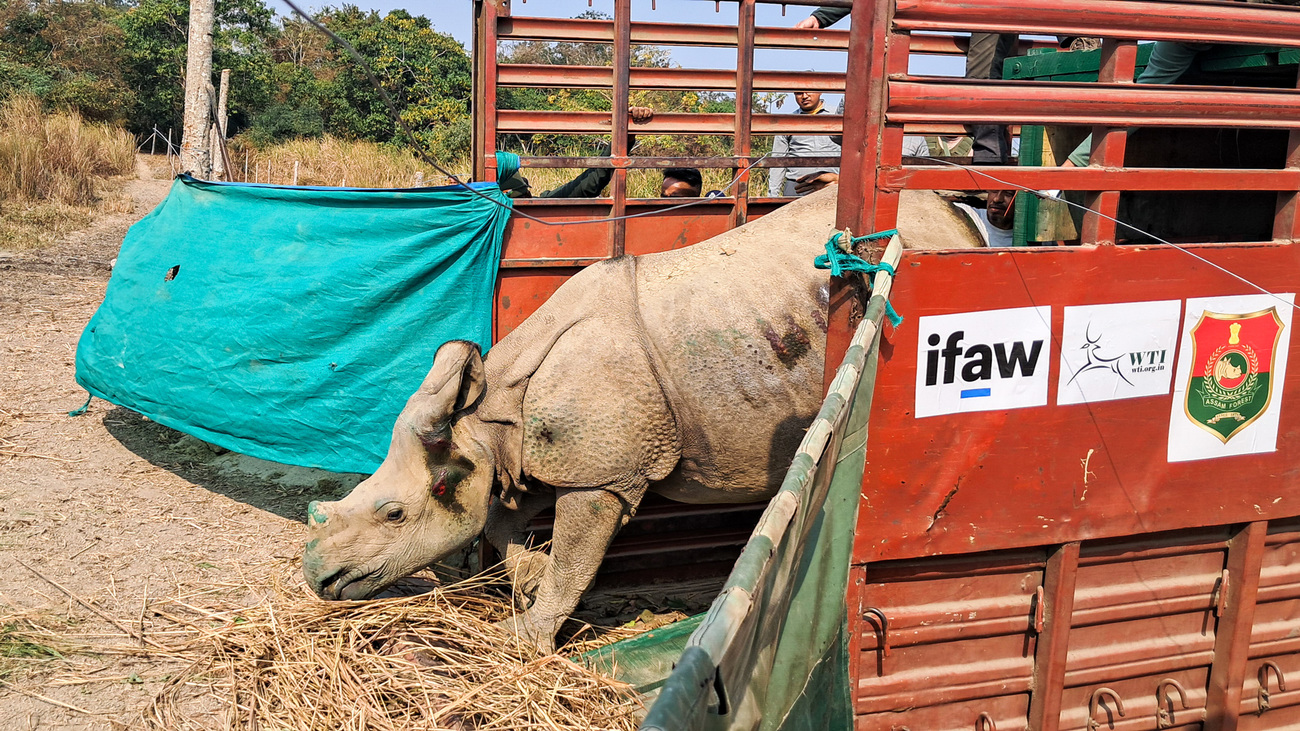
Chandra exits the transport crate into the pre-release enclosure. Photo: © Rathin Barman/WTI
(21 January 2026 – Kaziranga National Park, India) — Two young greater one‑horned rhinoceros, Chandra and Kanai, have been successfully moved today from the Centre for Wildlife Rehabilitation and Conservation (CWRC) to Kaziranga National Park, marking the latest milestone in sustained efforts to restore and protect India’s iconic rhino populations. The move follows international conservation translocation protocols and will see both rhinos spend time in pre‑release enclosures before full reintegration into the park’s wild habitats.
Established in 2002 as a collaborative initiative between the Assam Forest Department, Wildlife Trust of India (WTI) and International Fund for Animal Welfare (IFAW), CWRC has become a cornerstone of wildlife rescue and rehabilitation in the region—particularly during the annual monsoon season, when flooding regularly threatens young rhinos and other wildlife.
Since its inception, CWRC teams have responded rapidly to wildlife in distress, rescuing and caring for thousands of animals. More than 7,397 individuals representing 357 species have passed through CWRC to date, with approximately 4,490 (65%) successfully returned to the wild, including 25 hand‑raised rhinos previously translocated to protected areas such as Manas and Kaziranga.
“We are immensely proud of Chandra and Kanai, whose journey from vulnerable calves to candidates for wild release exemplifies what sustained, science‑based conservation can achieve,” said Neil Greenwood, Program Director at IFAW. “Their progress reflects the dedication of veterinarians, keepers, forest officials and our partners at WTI. Today’s translocation not only restores two individuals to their ancestral home but also reinforces our shared commitment to safeguarding this species against ongoing threats.”
Chandra was rescued in August 2020, separated from his mother at approximately one month of age. Known for his calm demeanour and close bond with his keeper, Mr Hareshwar Das, Chandra overcame chronic gastroenteritis and has matured into a reserved yet robust young rhino.
Kanai, rescued in August 2021, was named in celebration of Lord Krishna’s birth, reflecting local Assamese traditions. Energetic and inquisitive, Kanai once navigated a challenging swim out of a deep gorge during monsoon rains, an adventurous episode that encapsulated his spirited nature and resilience.
Details of the translocation operation underscore the collaborative and scientifically rigorous approach taken by all stakeholders. Following permissions under the Wildlife (Protection) Act, 1972, a Site Selection Committee identified suitable locations for pre‑release conditioning. The translocation was overseen by a team of veterinarians and experienced animal keepers, with support from Kaziranga National Park officials, range officers and subject matter experts.
“WTI and IFAW, in partnership with the Assam Forest Department, have demonstrated how rehabilitation of individual animals back to the wild can impact conservation of a species and landscapes for the past two decades,” said Dr. Bhaskar Choudary of WTI. “With Kanai and Chandra, we have completed translocation of 25 orphaned greater one horned rhinoceros in their natural habitats.”
Both the rhinos will move from reintegration phase to the wild within about two months of acclimatisation.
The greater one‑horned rhino, Rhinoceros unicornis, has made a remarkable recovery from an estimated 200 individuals in the early 20th century to thousands now roaming protected areas in India and Nepal. However, the species remains listed as Vulnerable, facing enduring risks from poaching, habitat loss and the seasonal flooding of the Brahmaputra and its flood plains.
CWRC’s work is a vital part of the solution: each monsoon, specialised rescue teams help reunite calves with their mothers whenever possible and rehabilitate those that cannot be returned. For rhinos that complete the Centre's care protocols, translocation to protected parks—such as Manas National Park, where reintroduced rhinos have now established multi‑generational populations—is key to long‑term species resilience.
Beyond individual rescues, the IFAW‑WTI partnership has advocated for expanded landscape protections around the Greater Manas Landscape, contributing to the establishment of more than 772 km² of additional protected areas. Their measurable impact includes thousands of lives saved, dozens of rehabilitated rhinos reintroduced, and thriving wild‑born offspring that signal healthy population dynamics.
ENDS
Visual editors: Assets available for download and sharing here: https://spaces.hightail.com/space/KVOznLIgLJ
Press contact:
Stacey Hedman
Senior Communications Director, IFAW
m: +1 508 737 2558
e: shedman@ifaw.org
About IFAW (International Fund for Animal Welfare)
IFAW is a global non-profit helping animals and people thrive together. We are experts and everyday people, working across seas, oceans, and in more than 40 countries around the world. We rescue, rehabilitate, and release animals, and we restore and protect their natural habitats. The problems we’re up against are urgent and complicated. To solve them, we match fresh thinking with bold action. We partner with local communities, governments, non-governmental organisations, and businesses. Together, we pioneer new and innovative ways to help all species flourish. See how at ifaw.org
About WTI
The Wildlife Trust of India (WTI) is a leading wildlife conservation action institution, dedicated to protecting India's wildlife and their habitats. Founded in 1998, it works in partnership with local communities, IPOs and governments to manage emerging wildlife challenges, implement conservation strategies in protecting species and landscapes and work for the welfare of individual wild animals in distress. WTI strives to prevent and/or mitigate threats to the country's natural heritage through practical, on-ground solutions that drive meaningful and lasting conservation impact.
Related content
Our work can’t get done without you. Please give what you can to help animals thrive.