Community Engagement
African traditional leaders sign landmark declaration to protect wildlife and communities
African traditional leaders sign landmark declaration to protect wildlife and communities
October 30, 2026
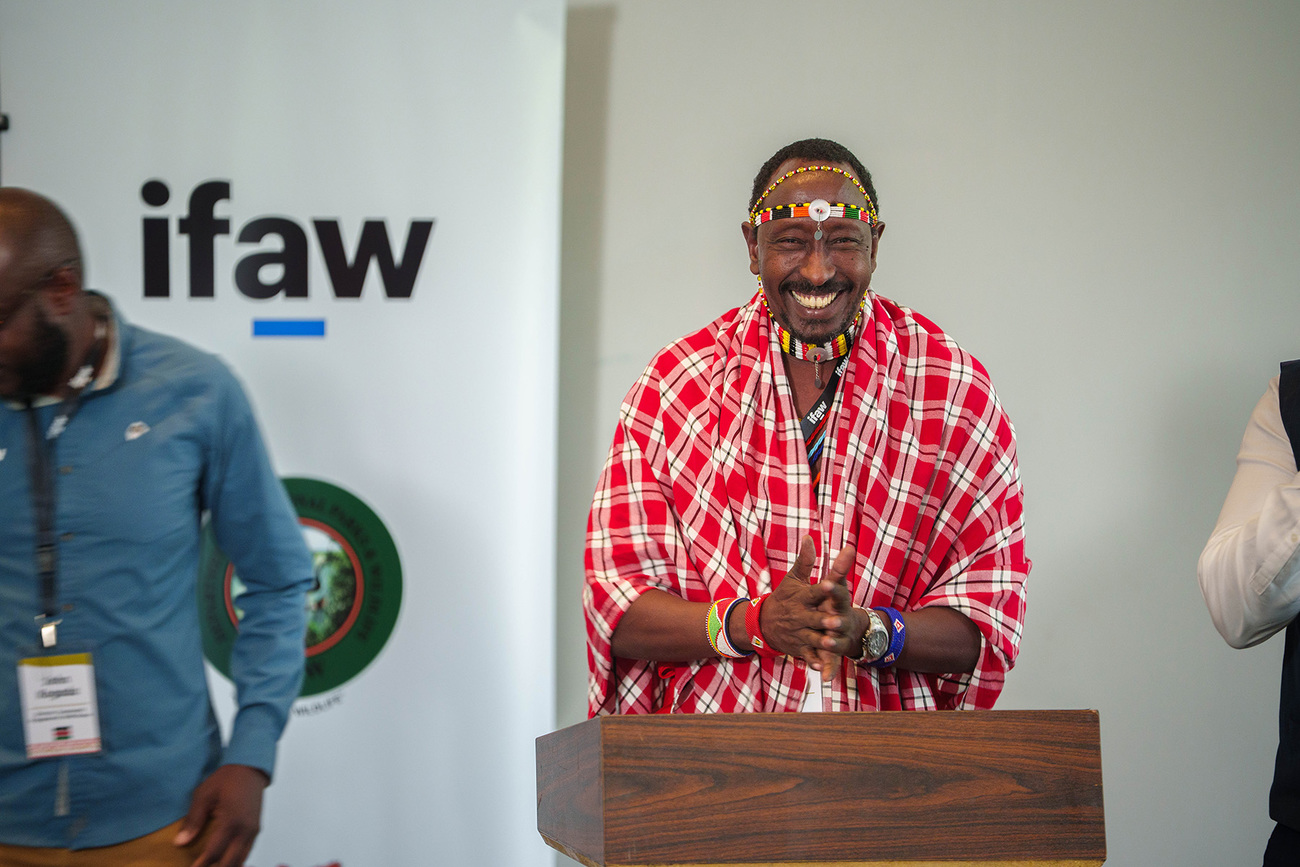
Tom Lesarge, Senior Leader for the Samburu Community, Kenya Photo: © Christina Pretorius
(LUSAKA, Zambia, 28 October 2026) –The fifth summit of the African Traditional Leaders Conservation Network (ATLCN) closed in Lusaka today, with traditional and Indigenous leaders from across Africa pledging to strengthen wildlife conservation and support communities.
Representatives from eight African nations—Kenya, Zambia, Malawi, Zimbabwe, Namibia, Botswana, Benin and Ghana—signed the Lusaka Declaration, committing to a series of actions to support a future where people and wildlife can thrive and coexist.
IFAW President & CEO, Azzedine Downes, said: “The declaration made today in Lusaka represents a significant step forward in amplifying the voices of traditional leaders in conservation across Africa.”
“It goes beyond broad commitments by clearly outlining what traditional leaders hope to achieve and making specific requests to national governments to recognise and meaningfully include them in conservation planning, decision-making and implementation.”
“This is an important step towards ensuring that traditional leaders have a stronger voice and a more defined role in shaping conservation policies and protecting the landscapes and communities they represent.”
Tom Lesarge, senior leader of the Samburu Community in Kenya, said the 5th ATLCN Declaration builds on leaders’ commitments to prioritise community conservancies, bringing traditional knowledge into conservation, and strengthening partnerships between traditional leaders, communities, governments, and conservation partners.”
“Our goal is to put communities at the heart of conservation and ensure that both people and wildlife benefit,” said Lesarge.
Signed at the conclusion of each annual ATLCN meeting, the Declaration sets out shared commitments to address the challenges facing communities and the natural environment.
Under the theme “Strengthening traditional leadership for human-wildlife coexistence, cultural stewardship and connected landscapes”, leaders identified rising human-wildlife conflict and climate change as pressing challenges for communities.
Many also raised concerns about limited opportunities for young people in traditional leadership, calling for the next generation to be empowered to lead conservation efforts, protect biodiversity and help shape a sustainable future for people and wildlife.
Chieftainess Mwanya, Grace Banda of Zambia, said she was committed to the long-term success of her community: “I want to see livelihoods sustained in my community for generations to come. By raising awareness of human-wildlife coexistence, we have seen tourism grow, creating more job opportunities for young people.”
The ATLCN is supported by the International Fund for Animal Welfare (IFAW) through its Room to Roam initiative, which recognises community involvement as essential to lasting conservation success.
The Lusaka Declaration sets out seven priorities for action:
- Embed traditional leadership in conservation: Give traditional leaders a formal role in conservation decisions, land-use planning and natural resource management.
- Deliver the Room to Roam vision: Secure wildlife corridors, reconnect fragmented habitats and strengthen cross-border conservation so elephants and other wildlife can move safely between habitats.
- Reduce human-wildlife conflict: Expand community-led prevention and response measures, supported by fair compensation and relief mechanisms.
- Safeguard Indigenous knowledge: Document traditional practices, pass knowledge on to younger generations and apply it to conservation and climate adaptation.
- Support youth-led innovation: Invest in young conservation leaders, entrepreneurs and practical technologies such as SkyWatch, championed by IFAW President and CEO Azzedine Downes.
- Restore ecosystems and build climate resilience: Expand reforestation, watershed restoration and climate-smart agriculture to help communities withstand drought and other climate pressures.
- Mobilise resources for conservation: Strengthen the ATLCN, build partnerships and secure long-term funding for local and regional action.
The Declaration supports IFAW’s Room to Roam vision to secure and reconnect important wildlife habitats and corridors across eastern and southern Africa. Connected landscapes give elephants and other wildlife space to move in search of food, water and suitable habitat, while helping people and wildlife share the landscape.
Room to Roam recognises that lasting conservation depends on strong partnerships among communities, traditional leaders, governments and conservation organisations. Through the ATLCN, IFAW supports locally informed approaches that protect biodiversity, strengthen livelihoods and build more resilient landscapes for people and wildlife.
Ends
About International Fund for Animal Welfare (IFAW)
IFAW is a global non-profit helping animals and people thrive together. We are experts and everyday people, working across seas, oceans, and in more than 40 countries around the world. We rescue, rehabilitate, and release animals, and we restore and protect their natural habitats. The problems we’re up against are urgent and complicated. To solve them, we match fresh thinking with bold action. We partner with local communities, governments, non-governmental organizations, and businesses. Together, we pioneer new and innovative ways to help all species flourish. See how at ifaw.org
Media Contact:
Zanji Sinkala
Communications Contractor
m: +260 97 889 1875
e: zanjisinkala1@gmail.com
Christina Pretorius
Communications Director, Africa
m: +27 82 330 2558
e: cpretorius@ifaw.org
Related content
Our work can’t get done without you. Please give what you can to help animals thrive.