Disaster Response
IFAW expands support as wildlife rescue centers remain under pressure in France
IFAW expands support as wildlife rescue centers remain under pressure in France
September 15, 2026
Byanka and rescued fawns recover after France’s extreme summer
September 15, 2026
Months after extreme heat and wildfires put wildlife and rescue centres across France under extraordinary pressure, many of the animals affected still require care. IFAW is continuing to support frontline responders, including the Centre de soins de la faune sauvage poitevine (CSFSP), where animals injured by fire and extreme heat are recovering.
Our support is helping CSFSP care for animals already in rehabilitation while strengthening the centre’s ability to respond when extreme temperatures put wildlife at risk in the future.
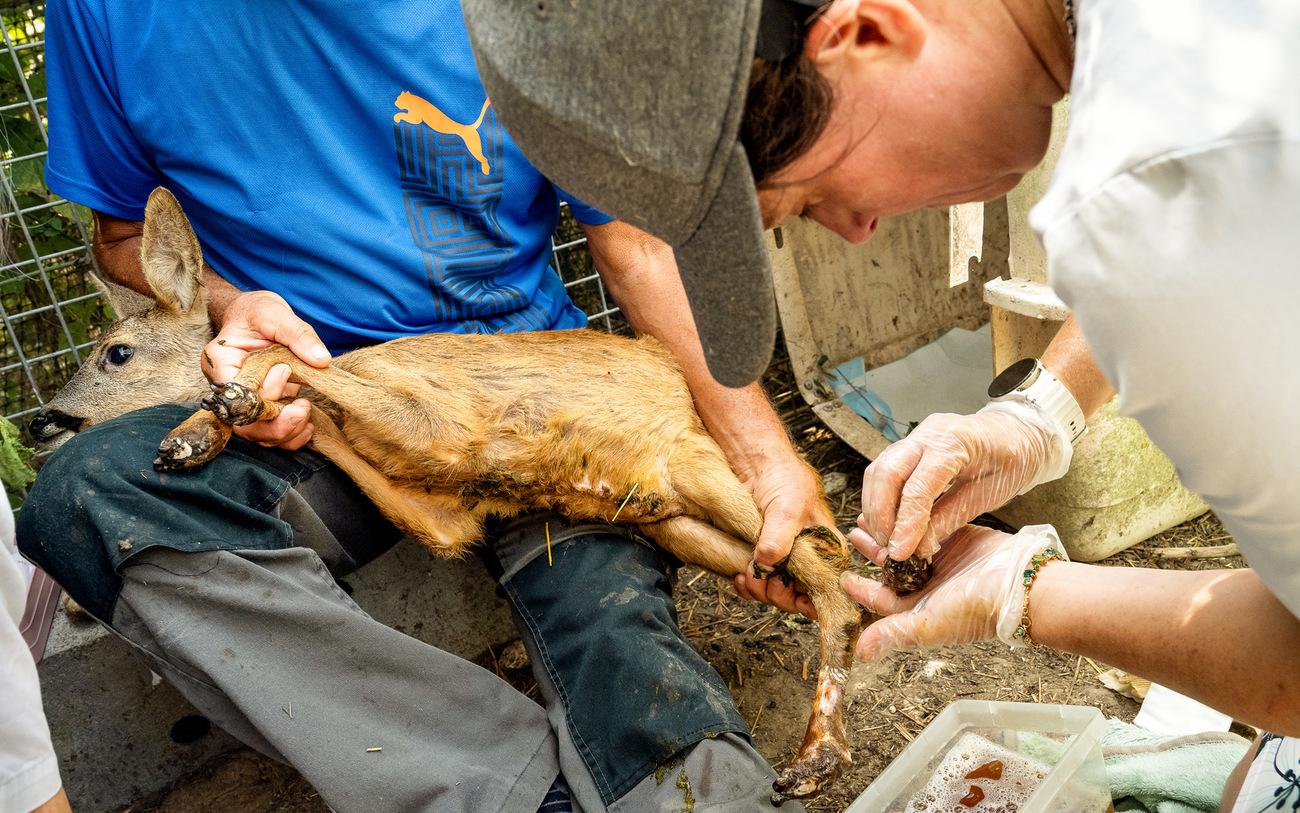
A deer named Byanca had her legs burned in wildfires in Gironde, France, during the summer of 2026 is being treated at Centre de soins de la faune sauvage poitevine. Photo: © JF Fort / Hans Lucas
Byanka recovers from severe burns
Among the animals receiving care is Byanka, a young female deer found following the severe wildfires that swept through Gironde this summer. She arrived with serious burns to her hooves and faces a long recovery.
Every day, the centre’s team watches over her with constant care. Caretakers clean and treat her wounds, manage her pain, and do everything they can to promote her recovery. Three of her hooves may regrow in the coming months, although the prognosis for the fourth remains uncertain and an amputation may still be necessary.
Despite the suffering she has endured, Byanka is showing remarkable resilience. Surrounded by dedicated professionals, she is receiving the specialised care she needs to hopefully one day return to a more peaceful life.
Seven young fawns take a step closer to release
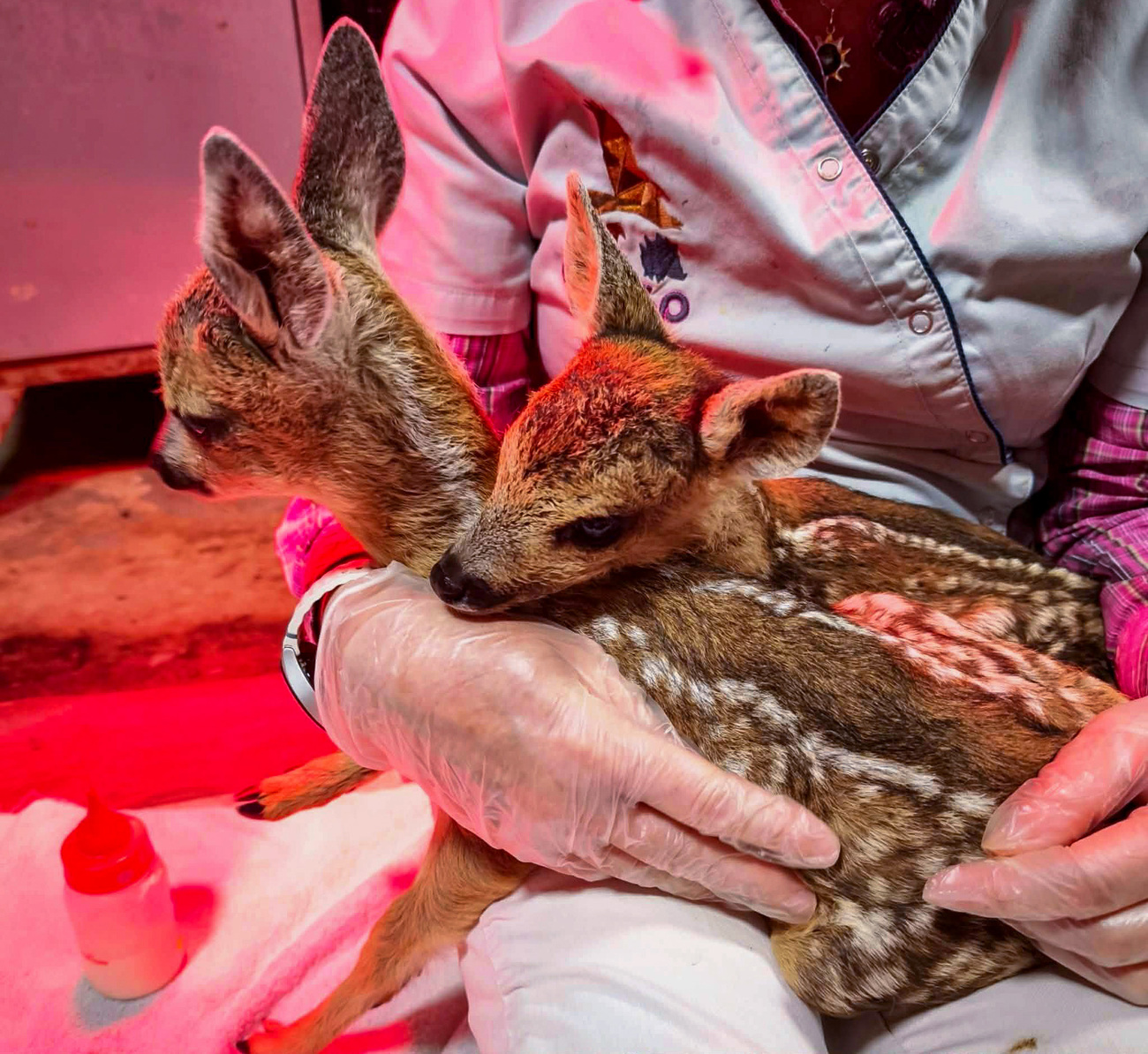
Two fawns affected by the wildfires in Gironde, France, during the summer of 2026 are being treated at Centre de soins de la faune sauvage poitevine. Photo: © JF Fort / Hans Lucas
The CSFSP has also been caring for seven young fawns affected by this summer’s extreme heat. Manala, Trésor, Peppa, Georges, Résine, Lucky, and Blondie were rescued after suffering during the heatwave and have spent the past several months recovering.
They have now moved to a large outdoor enclosure, an important milestone in their rehabilitation. This new phase allows them to thrive in an environment closer to their natural habitat and represents a significant step toward their future release into the wild.
Their progress is a hopeful reminder that rescue is only the beginning. For many wild animals affected by disasters, rehabilitation can require weeks or months of specialised food, veterinary treatment, safe spaces, and dedicated care before release is possible.
Strengthening care for the next extreme summer
IFAW support is helping CSFSP meet those immediate needs while also increasing its capacity to care for wildlife during future periods of extreme heat.
A significant part of the funding will help install air conditioning in the centre’s new infirmary wing. During periods of extreme heat and large influxes of animals, temperatures previously made this space unsuitable for use. Cooling the infirmary will allow the centre to safely use this additional capacity when animals need it most.
Funding is also helping to cover the animals’ daily care such as food and veterinary supplies and treatments. Food typically consists of fresh lettuce, endives, apples, and pellets tailored to their dietary requirements. Injured or burned animals also require healing creams, specialised bandages, antibiotics, and pain relief medication.
Giving wildlife a second chance
Byanka and the seven recovering fawns are among many animals still living with the consequences of France’s extreme summer. Squirrels, hedgehogs, turtles, deer, and other wildlife continue to depend on rescue centres for treatment and rehabilitation.
IFAW’s support for CSFSP builds on our wider emergency response for France’s wildlife rescue network this summer, helping centres manage increased admissions, strengthen staffing, improve cooling systems, and provide food and care for animals in need.
Behind each recovery are wildlife carers, veterinarians, and volunteers working day after day to help individual animals heal. By supporting their work and strengthening the facilities they depend on, we can help give more animals the chance to recover and, whenever possible, return to the wild.
IFAW expands support as wildlife rescue centres remain under pressure in France
August 31, 2026
Following a period of extreme heat and severe wildfire conditions across France, wildlife rescue centres are still working under pressure. IFAW is providing a second round of emergency funding to help centres meet their most urgent needs.
Earlier this summer, IFAW provided emergency funding to the Réseau de soins Faune Sauvage, France’s wildlife rescue network, benefiting 21 wildlife rescue centres responding to a dramatic influx of animals affected by extreme heat. The network's centres took in 2,396 additional animals compared to the same time period of the previous year (May to August).
That support is already making a tangible difference:
- Eight centres have been able to hire additional wildlife carers, increasing their capacity to care for rescued animals during one of the busiest periods of the year.
- 19 centres have used the funding to help animals cope with extreme temperatures, including through fans, misting systems, and air conditioning, or to purchase insects needed to feed rescued swifts.
But the pressure has not eased. At least 70% of wildlife rescue centres reached capacity in June and July, forcing some to temporarily stop accepting new animals. That is why IFAW is providing additional emergency funding to the network, helping address critical gaps in food and staffing as centres continue caring for animals in distress.
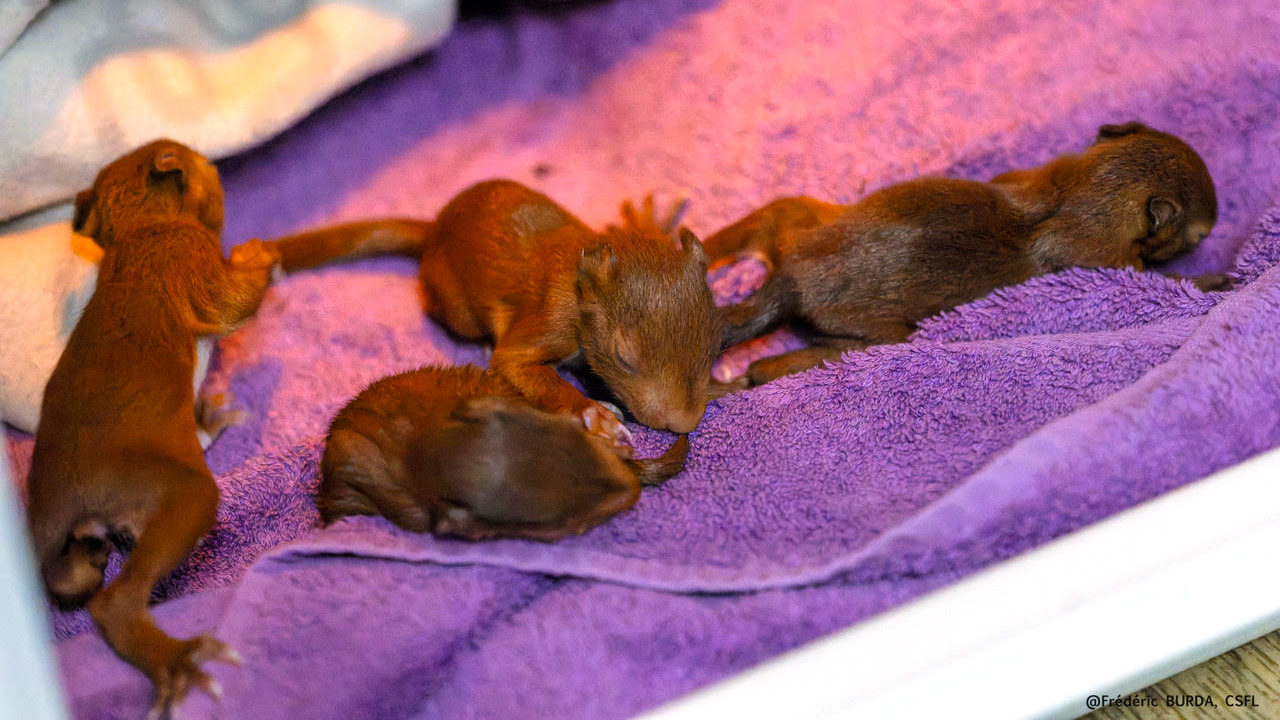
Heat-stressed baby squirrels recovers at a wildlife rescue centre during excessive heat in France. Photo: © Frédéric Burda – CSFL
Caring for wildlife through an extreme summer
Swifts, swallows, house martins, hedgehogs, and other wildlife continue to suffer the effects of prolonged heat and drought.
Young birds can fall prematurely from dangerously hot nests, while hedgehogs may become severely dehydrated as dry conditions also reduce the insects they depend on for food.
Centres are also caring for foxes, weasels, roe deer, and other wildlife affected by heat stress, dehydration, habitat loss, and displacement.
The challenge extends beyond extreme heat. France is experiencing a particularly severe wildfire season, with approximately 119,000 hectares burned as of 6 August.
Relatively few animals reaching rescue centres are direct wildfire casualties. Tragically, many animals caught in severe fires do not survive long enough to be rescued. Those that escape can face another struggle as fire destroys the food, water, shelter, and habitat they depend on.
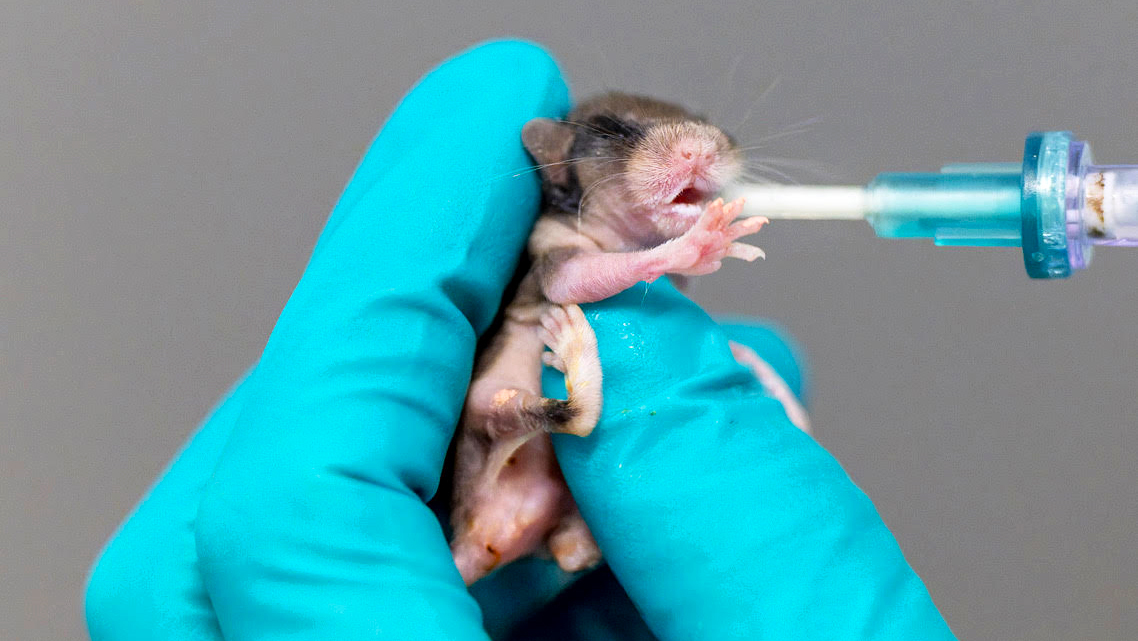
A heat-stressed baby garden dormouse recovers at a wildlife rescue centre during excessive heat in France. Photo: © Frédéric Burda – CSFL
Giving wildlife carers the resources to respond
Our aim is to help these centres purchase food, including the large quantities of insects required for young insectivorous birds, and provide additional staffing for animals requiring intensive feeding, treatment, and rehabilitation.
During an emergency of this scale, these practical resources matter. More wildlife carers mean more capacity to treat animals. Cooling equipment can provide relief from dangerous temperatures. Reliable food supplies help give young and recovering animals the nutrition they need to survive.
By working through the Réseau de soins Faune Sauvage, IFAW can help direct resources to wildlife rescue centres facing the greatest needs across France.
Behind every animal receiving treatment is a wildlife carer, veterinarian, or volunteer working to give that individual the best possible chance of recovery. And thanks to IFAW supporters around the world, those teams have additional resources to continue their work through this extraordinary summer.
France's wildfire season leaves wildlife as the invisible victims
July 29, 2026
France is facing a particularly alarming wildfire season. With nearly 11,000 wildfires recorded by the Civil Protection Agency and more than 115,000 hectares burned, the area affected by mid-July had already exceeded the total burned during the entire previous fire season.
Driven by climate change, France’s wildfire season is also growing longer, extending beyond the traditional July-August period into June through October. Drier air and soil mean that vegetation remains highly flammable for longer periods.
Thousands of wild animals fall victim
Thousands of hectares are being destroyed by fire, and countless wild animals are dying, displaced, or left struggling to survive. Mass mortality among insects, reptiles, amphibians, birds and mammals, both large and small, represents a significant ecological loss that is often overlooked and, in many cases, irreversible.
Many animals are killed directly by the flames. Others die from a lack of food, water, and shelter when their habitats are destroyed. Animals fleeing wildfires may also suffer injuries, become more vulnerable to predators, or be struck by vehicles as they cross roads in search of safety. Some displaced wildlife may also come into conflict with humans as they seek refuge closer to towns and villages.
Wildlife rescue centres on the front lines
French wildlife rescue centres are currently caring primarily for animals affected by extreme heat, with relatively few animals arriving as direct victims of wildfires. Sadly, many animals are unable to escape the flames and never make it to rescue. Others that do survive may arrive later after fleeing burned areas, suffering from dehydration, exhaustion, or other injuries.
“Behind every statistic is an animal in real distress”
Aurore Morin, Campaigner at IFAW, said:
“The figures for the number of hectares burned and animals injured here in France are staggering. Since the end of May, an unusually early and relentless heatwave—with temperatures exceeding 40°C, drought and now an exceptionally severe wildfire season—has pushed the country’s wildlife rescue centres to their limits.
“Fawns collapsing in the middle of the road, exhausted swifts, dehydrated hedgehogs: the centres are overwhelmed, and behind every statistic is an animal in real distress. It is a stark reminder of the consequences climate change is already having on wildlife, right on our doorstep.”
As this crisis unfolds, IFAW continues to support France's wildlife rescue network as frontline teams work tirelessly to care for the animals that can still be saved.
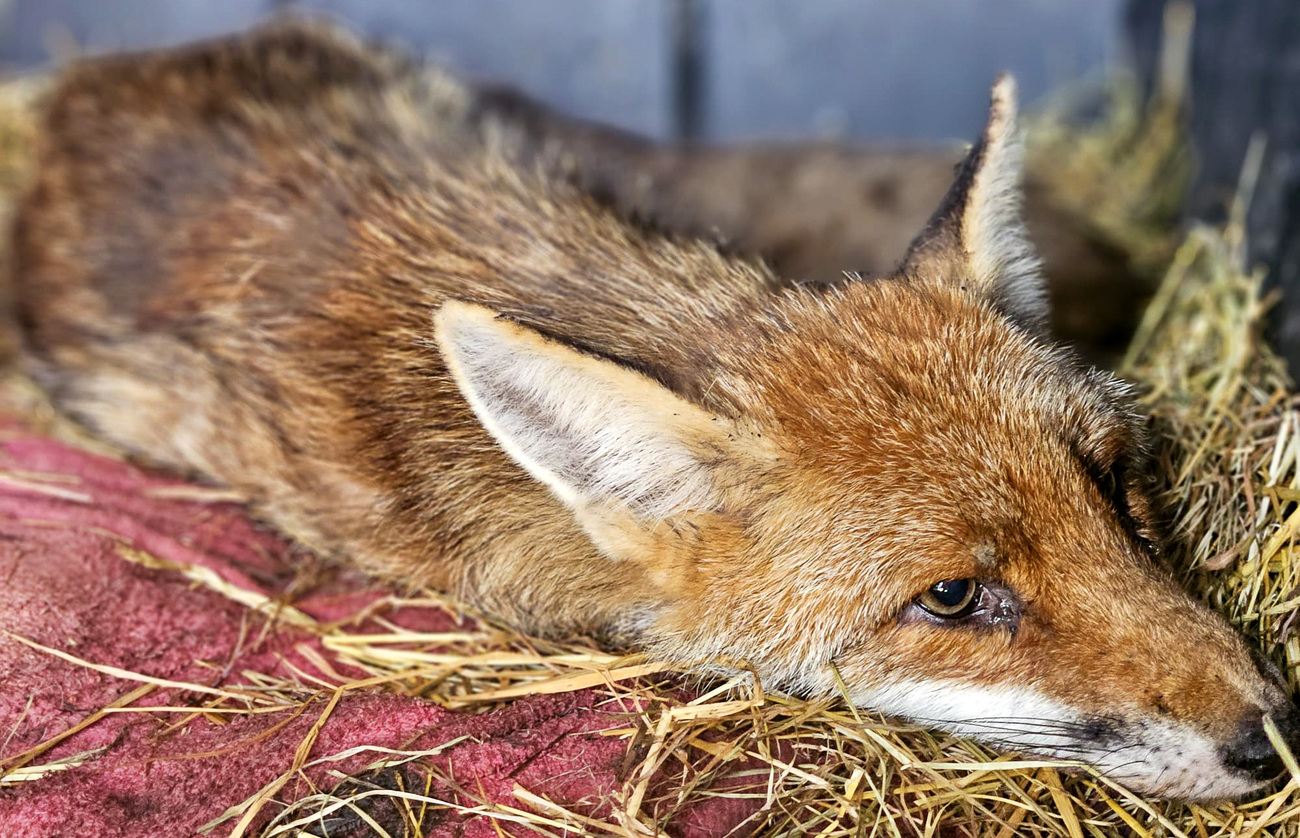
A fox recovers at a wildlife rescue centre during excessive heat in France. Photo: © Réseau centres de soins
Wildlife rescue centers overwhelmed by extreme heatwaves
July 21, 2026
France's summer has barely begun, yet thousands of wild animals are already struggling. Record-breaking heatwaves and devastating wildfires are destroying habitats, separating families, and leaving exhausted, dehydrated, and injured wildlife with nowhere to turn.
More than 35,000 hectares of wildlife habitat have gone up in flames, already exceeding the total burned throughout all of 2025.
As forests turn to ash, wild animals lose their homes in an instant. Hedgehogs, foxes, squirrels, weasels, and birds are suffering, and rescue centres are now overflowing with record numbers of animals in need of urgent care.
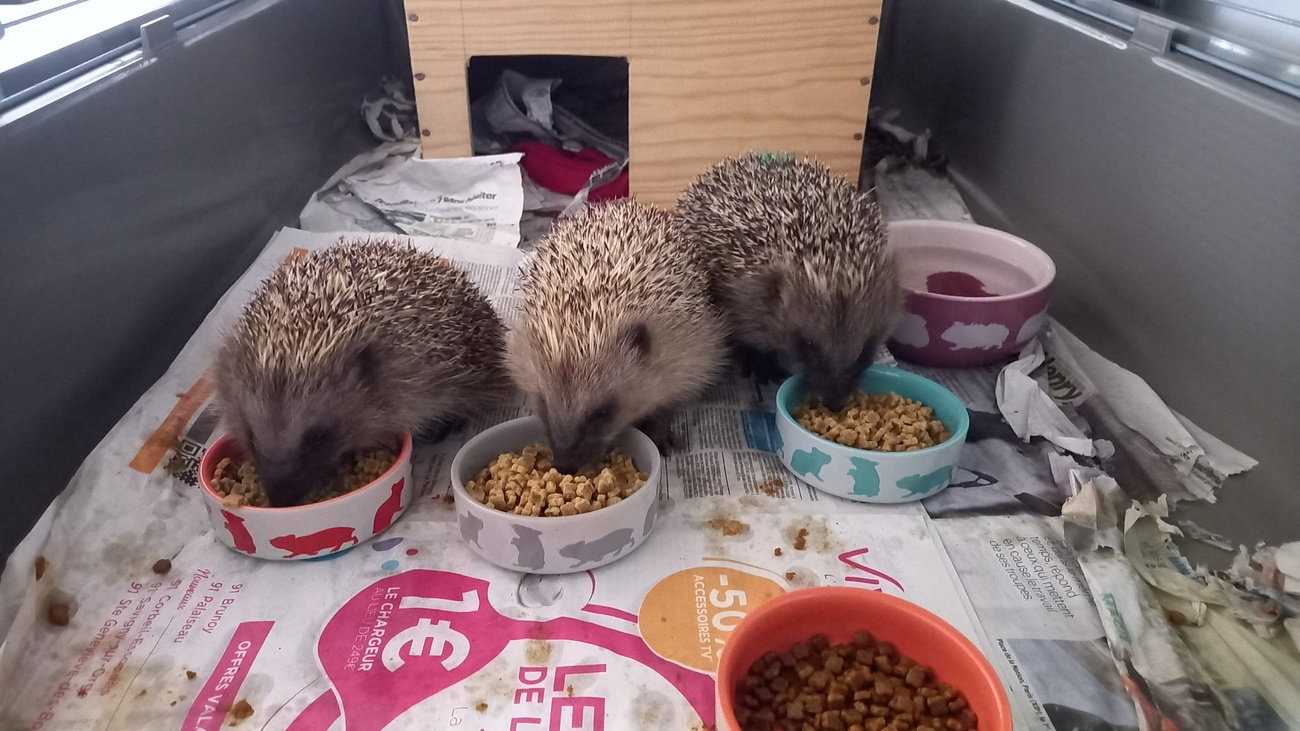
Hedgehogs recover at a wildlife rescue centre during excessive heat in France. Photo: © Faune Essonne
The crisis has come during peak breeding season, where centres are already operating at maximum capacity caring for young animals. In June alone, 20 wildlife rescue centres admitted more than 8,750 animals—a 30% increase over last year. At least 70% of centres have reached capacity, forcing some to temporarily stop accepting new animals that desperately need help.
The impact on animals
The extreme heat has had severe consequences for wild animals. Nest temperatures have become lethal for many young birds, particularly common swifts, swallows and other insectivorous species, causing nestlings to fall prematurely or suffer from dehydration and heat stress. Hedgehogs are also arriving in unprecedented numbers due to dehydration and reduced food availability as prolonged drought affects insect populations, which they rely on for food.
Animals like fawns are also affected. This young fawn was found in the middle of the road; due to heat stress and dehydration, it no longer had the strength to stand up. It lay exhausted on the hot concrete while its mother called out to it loudly from five metres away. Fortunately, the animal could still be saved.
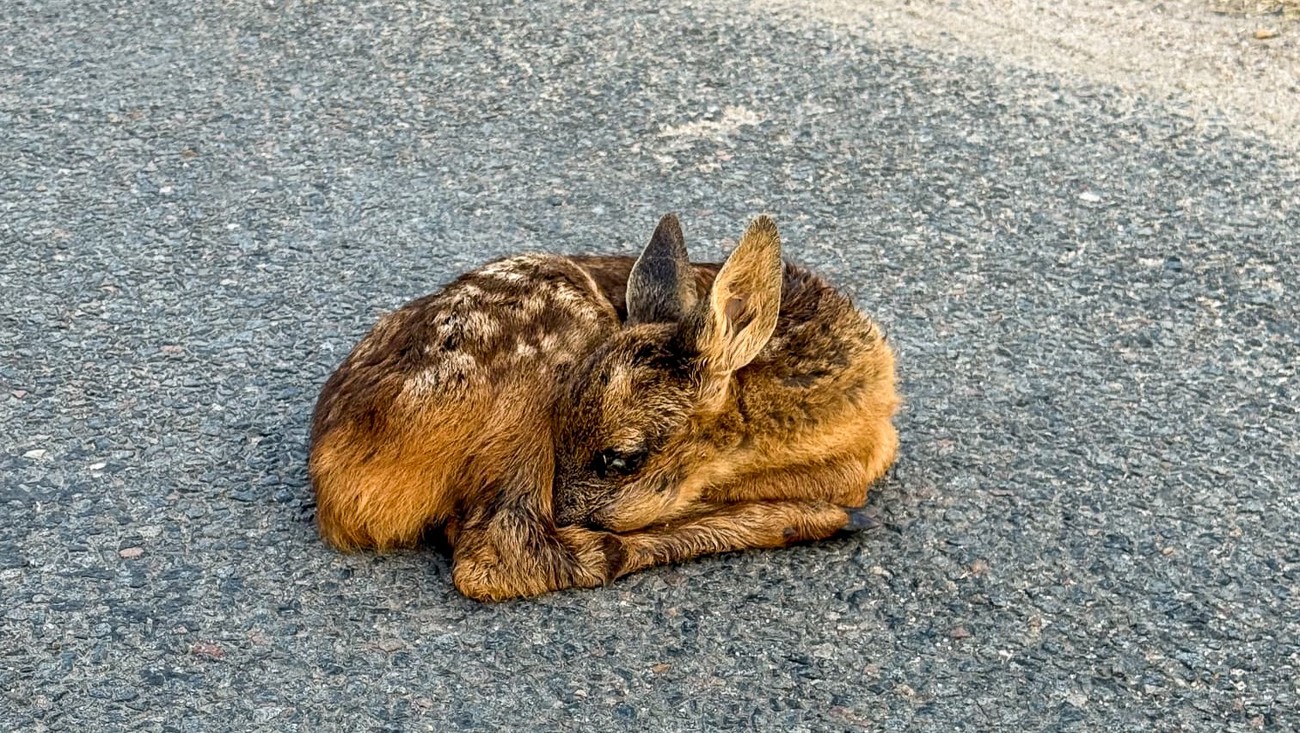
A heat-stressed fawn lies exhausted on a road after becoming severely dehydrated during excessive heat in France. Photo: © Réseau Centres de Soins Faune Sauvage
How IFAW is helping
To help with this wildlife emergency, IFAW is supporting the Réseau de soins Faune Sauvage, France’s wildlife rescue network, with life-saving funds. The funding will go toward wildlife care staff to maintain intensive feeding schedules for orphaned and juvenile wildlife, and emergency food supplies.
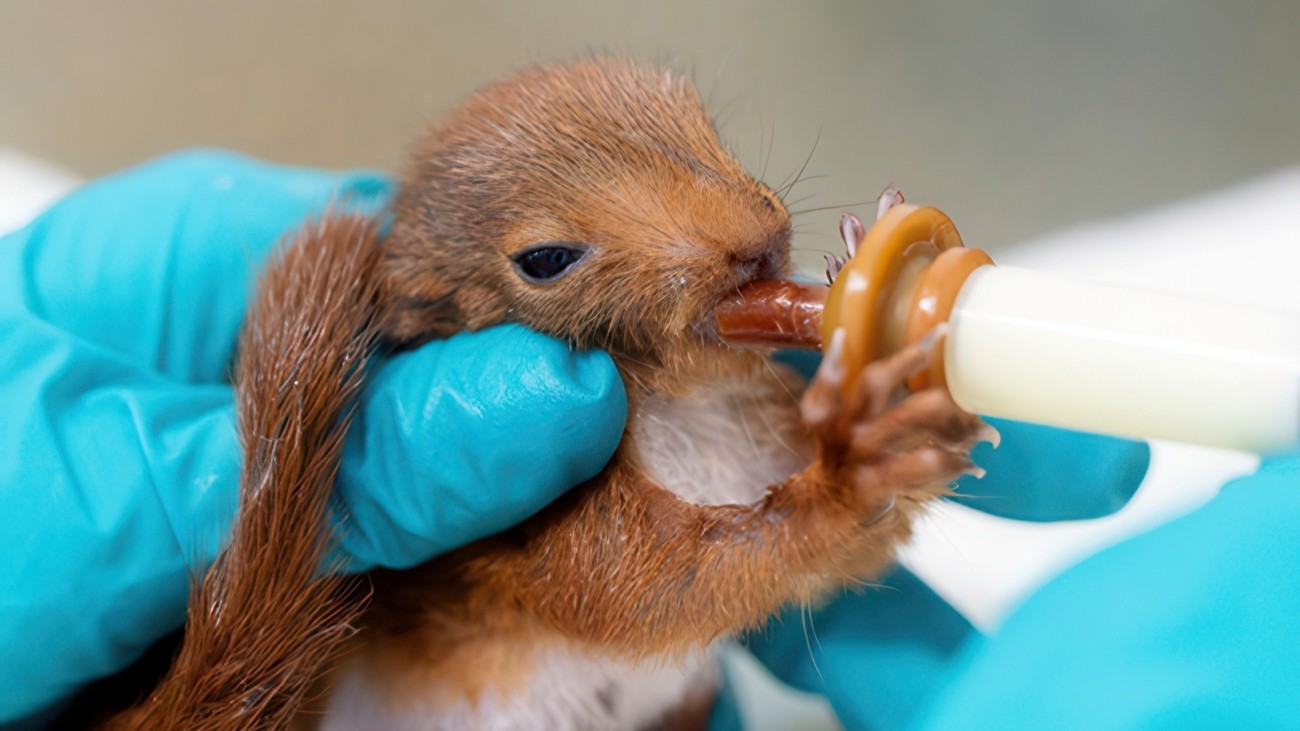
A young squirrel is hydrated at a wildlife rescue centre during excessive heat in France. Photo: © Frédéric Burda - CSFL
As extreme weather events become more frequent, wildlife rescue centres are playing a critical role in giving vulnerable animals a second chance at survival. IFAW is proud to support frontline responders working tirelessly to care for animals during this crisis.
Related content
Every problem has a solution, every solution needs support.
The problems we face are urgent, complicated, and resistant to change. Real solutions demand creativity, hard work, and involvement from people like you.
DonateIFAW affiliates are registered as tax-exempt nonprofit organizations in several countries. Depending on where you reside, your donation may qualify for a tax deduction or benefit. See the pull-down menu at the bottom right of this page to see how IFAW operates in your country.