Blog
Young conservation leaders take action in Zimbabwe
Read moreAfrican traditional leaders unite to strengthen wildlife conservation
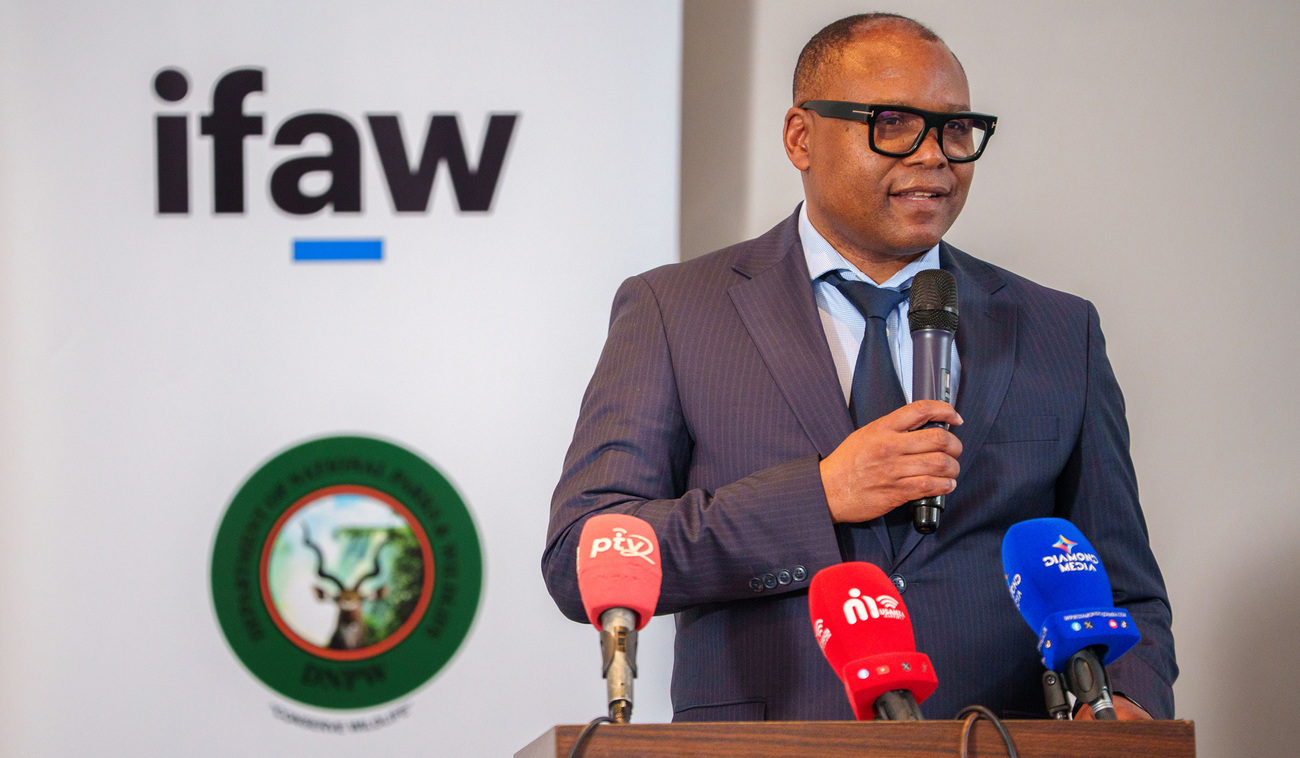
(Lusaka, Zambia – 28 October 2026) — Zambia’s Permanent Secretary in the Ministry of Tourism, Evans Muhanga, has called for conservation efforts that put communities first, as traditional leaders from across eastern and southern Africa gather in Lusaka to address growing threats to wildlife and natural habitats.
“The government firmly believes that conservation initiatives must be designed and implemented with people, for people, and for the benefit of both communities and the environment. Conservation should never be imposed on communities,” Muhanga said.
“Effective conservation depends on the knowledge, wisdom and leadership of local communities and traditional institutions. IFAW’s work with traditional leaders demonstrates that conservation and community development can go hand in hand.”
Muhanga was addressing the fifth summit of the African Traditional Leaders Conservation Network (ATLCN), which brings together traditional authorities, senior government officials, conservation experts, researchers, community representatives and development partners to develop practical responses to environmental threats across the region.
The gathering comes amid growing concerns over habitat fragmentation, expanding infrastructure and changing land use, which are disrupting wildlife migration routes and placing additional pressure on communities. Forecasts of El Niño conditions during the 2026-27 season also raise concerns about worsening drought and water shortages.
Traditional leaders have a key role to play. Their influence over land management, community decisions and conflict resolution can help shape solutions that protect ecosystems while reflecting the needs and knowledge of people living alongside wildlife.
Azzedine Downes, president and CEO of the International Fund for Animal Welfare (IFAW), urged delegates to put community needs at the centre of conservation.
“What I've heard from communities that have suffered crop losses, damage, and loss of life is that they want three things: they want to feel safe, they want to be healthy and have access to medical services, and they want their children to go to school.
“But I think we need to change the narrative to livelihoods with wildlife. That's where I rely on all of you to guide me so that we can put strategies in place. It's not livelihoods from wildlife; it's livelihoods with wildlife.”
Tom Lesarge, a senior leader of Kenya’s Samburu community, highlighted the importance of traditional knowledge in managing natural resources.
“Traditional communities have always coexisted with wildlife, and it is that traditional knowledge that has guided them in the management of their natural resources, and that needs to be embedded in the laws of the countries in which we all operate.”
The summit supports IFAW’s Room to Roam vision, which aims to secure and reconnect important wildlife habitats and corridors across eastern and southern Africa. Connected landscapes give elephants and other wildlife space to move between habitats in search of food, water and safe places to live, while helping communities and wildlife share the landscape.
Room to Roam recognises that lasting conservation depends on strong partnerships among communities, traditional leaders, governments and conservation organisations. By bringing these voices together, the summit aims to strengthen locally informed approaches that protect biodiversity, support livelihoods and build more resilient landscapes for people and wildlife.
Ends
Contact:
Christina Pretorius
Communications Director, Africa
m: +27 82 330 2558
e: cpretorius@ifaw.org
Every problem has a solution, every solution needs support.
The problems we face are urgent, complicated, and resistant to change. Real solutions demand creativity, hard work and involvement from people like you.
Unfortunately, the browser you use is outdated and does not allow you to display the site correctly. Please install any of the modern browsers, for example:
Google Chrome Firefox Safari