Cleaning up plastic pollution on East Africa’s coast
Cleaning up plastic pollution on East Africa’s coastFrom source to ocean: why policy is Kenya’s strongest tool against marine plastic pollution
From source to ocean: why policy is Kenya’s strongest tool against marine plastic pollution
10 June 2026
By Victor Murunga-IFAW PMEL Manager, Lillian Mulupi-IFAW Project Manager Marine Conservation and Ben Wandago-IFAW Kenya Country Director
On December 28th, 2025, a whale washed ashore at Leopard Beach in Kwale County. A necropsy revealed a plastic container lodged in its intestine. It was a tragic image, but it also underscored that marine plastic pollution cannot be addressed through beach cleanups alone; it requires a strong policy-driven approach.
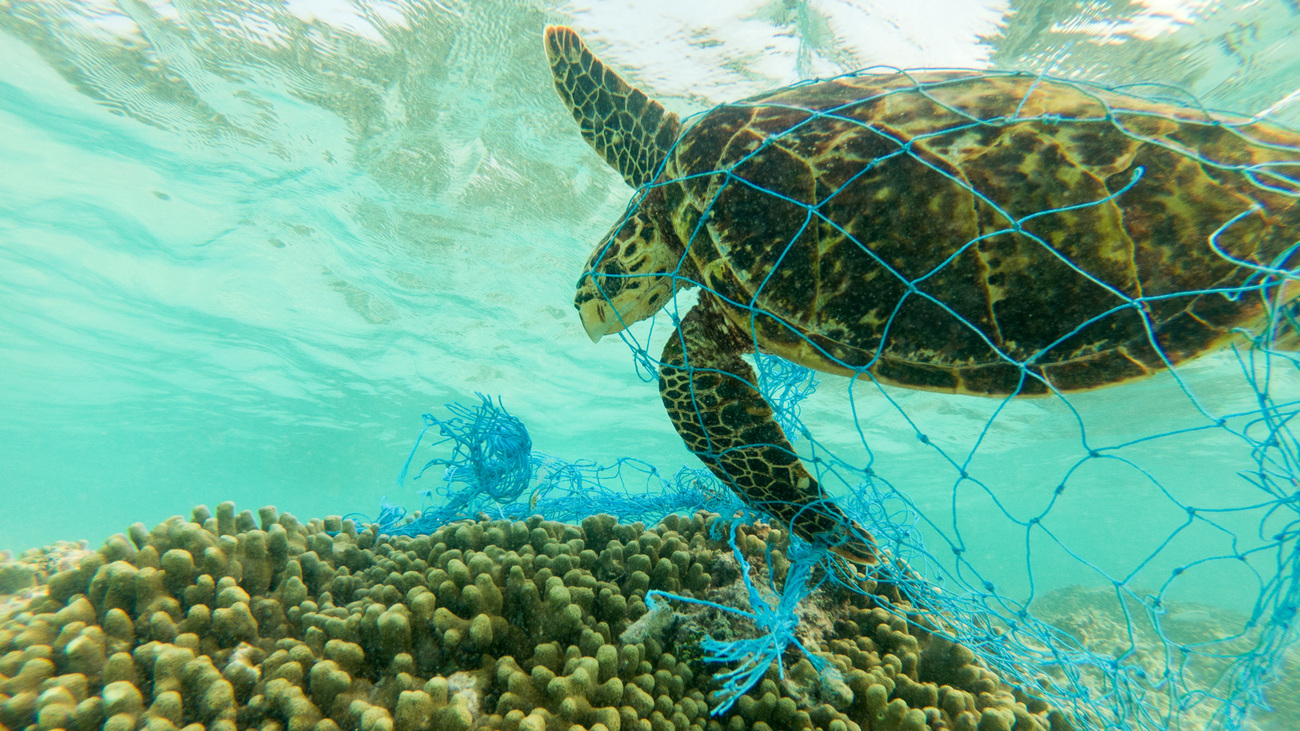
A green sea turtle entangled in discarded fishing net swims underwater in the Indian Ocean. © Aryfahmed via Getty Images/iStockphoto
Kenya has earned global recognition for bold environmental leadership. The 2017 ban on single-use plastic bags and the 2020 prohibition of plastics in protected areas signaled serious political will. Yet along the coastline—from Kwale to Kilifi to Lamu—coral reefs, seagrass beds, and endangered marine megafauna remain under mounting pressure from plastic debris. Polyethylene Terephthalate (PET) bottles, multilayer packaging, and microplastics continue to flow into the Indian Ocean.
In Kenya, much of it begins its journey from small inland urban centers and major cities such as Nairobi and Mombasa. Carried by drainage systems and major rivers like the Tana and Sabaki, plastic waste travels silently downstream until it reaches our coast. By the time it appears on beaches—or in the stomach of a whale—it is already the final chapter of a long chain of policy implementation gaps.
For years, marine conservation efforts have focused on beach cleanups, ocean skimming, and reactive waste collection. These efforts are visible and important, but they do not address the structural drivers of pollution. The core issue lies upstream.
Kenya already has important tools to make this happen. The Sustainable Waste Management Act of 2022 and the Extended Producer Responsibility Regulations of 2023 provide a strong foundation. The challenge now is ensuring these policies are fully implemented and effectively enforced.
Too often, responsibility ends when a product is sold. Meanwhile, waste collection and recycling infrastructure, particularly along inland transport corridors and in growing urban areas, struggles to keep pace. As long as plastic has little value after use, much of it will continue to be discarded and eventually find its way into waterways. If we are serious about protecting Kenya’s marine biodiversity, policy must lead. First, we must strengthen Extended Producer Responsibility. EPR should not be a compliance checkbox; it must be enforceable, measurable, transparent and ensure that producers bear the financial and physical responsibility for the entire lifecycle of their products. A robust “polluter pays” monitoring framework—tracking corporate brands found in riverine and coastal waste—can shift accountability from communities to producers. Plastic neutrality commitments, tax incentives for recycled inputs, and mandatory standardized packaging would create systemic change.
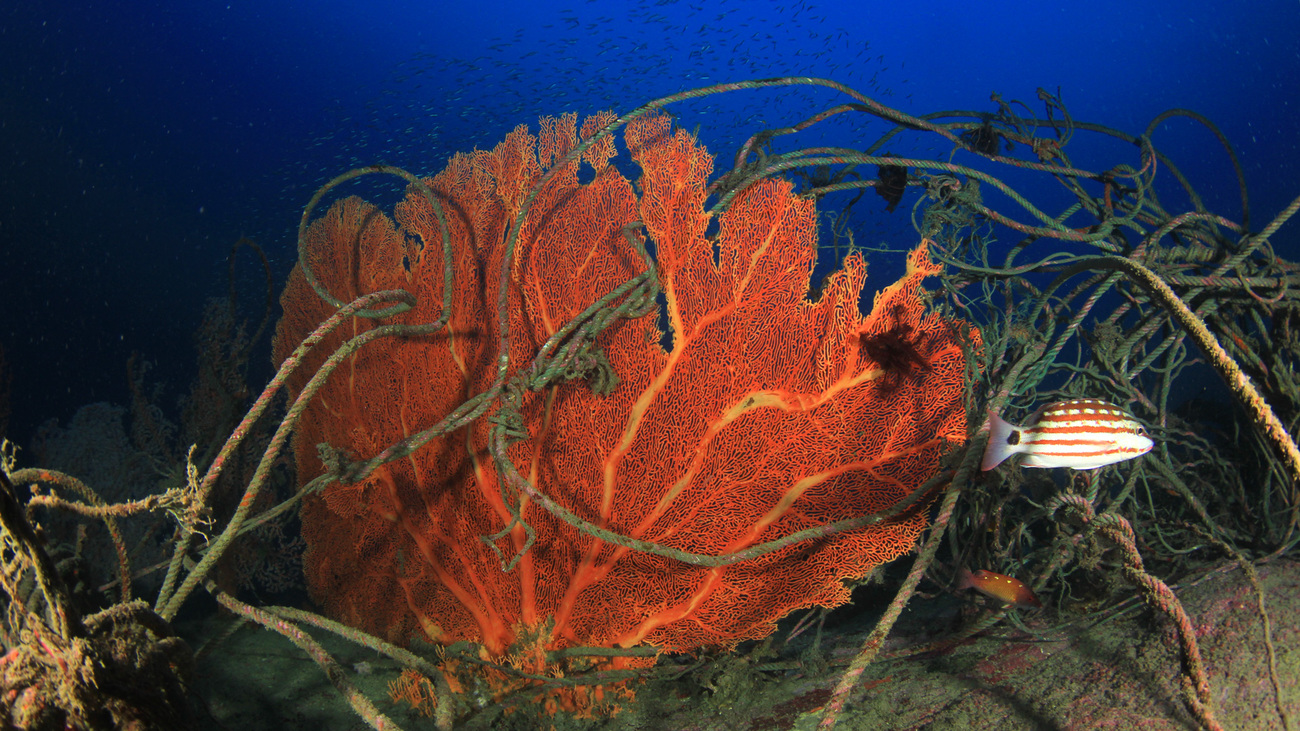
Fan coral damaged by old ropes and discarded net in the Indian Ocean.
County governments have an equally important role to play. Embedding upstream plastic controls within County Integrated Development Plans ensures that waste management is not treated as an afterthought but as a funded priority. Local enforcement of sand harvesting, dumping, and riverbank degradation is essential to prevent plastic from entering waterways in the first place.
Practical solutions on the ground are also essential. Low-cost trash booms installed at strategic inland hotspots can capture plastic before it reaches the ocean. But these must be coupled with circular economy hubs that shred, aggregate, and return plastic into manufacturing value chains. When river collection becomes a livelihood opportunity for youth and community groups, environmental protection and economic resilience align.
As Kenya prepares to convene global leaders for the Our Ocean Conference, there is an opportunity to demonstrate what effective action looks like. Marine plastic pollution is not an isolated environmental issue; it is a policy challenge that cuts across waste management, urban planning, trade, and governance.
The good news is that solutions already exist.
By strengthening policies, improving implementation, investing in local action, and holding polluters accountable, we can stop much of this plastic before it ever reaches the ocean. Doing so will help protect marine wildlife, support coastal communities, and ensure healthier oceans for generations to come.
The whale that washed ashore in Kwale should not be remembered only as a victim of plastic pollution. It should also serve as a reminder that the choices we make upstream can determine the future of life downstream.
Related content
Every problem has a solution, every solution needs support.
The problems we face are urgent, complicated, and resistant to change. Real solutions demand creativity, hard work and involvement from people like you.