Updates
IFAW expands support as wildlife rescue centers remain under pressure in France
Read moreOil spill threatens wildlife along Mexico’s Gulf coast
A recent oil spill along Mexico’s Gulf coast, first detected mid-March, is causing escalating harm to marine ecosystems and coastal wildlife. Early reports indicate damage to coral reefs, contamination of critical habitats, and growing risks to marine species. While the precise cause remains under investigation, authorities have suggested a combination of a petroleum tanker incident and possible natural seabed leaks.
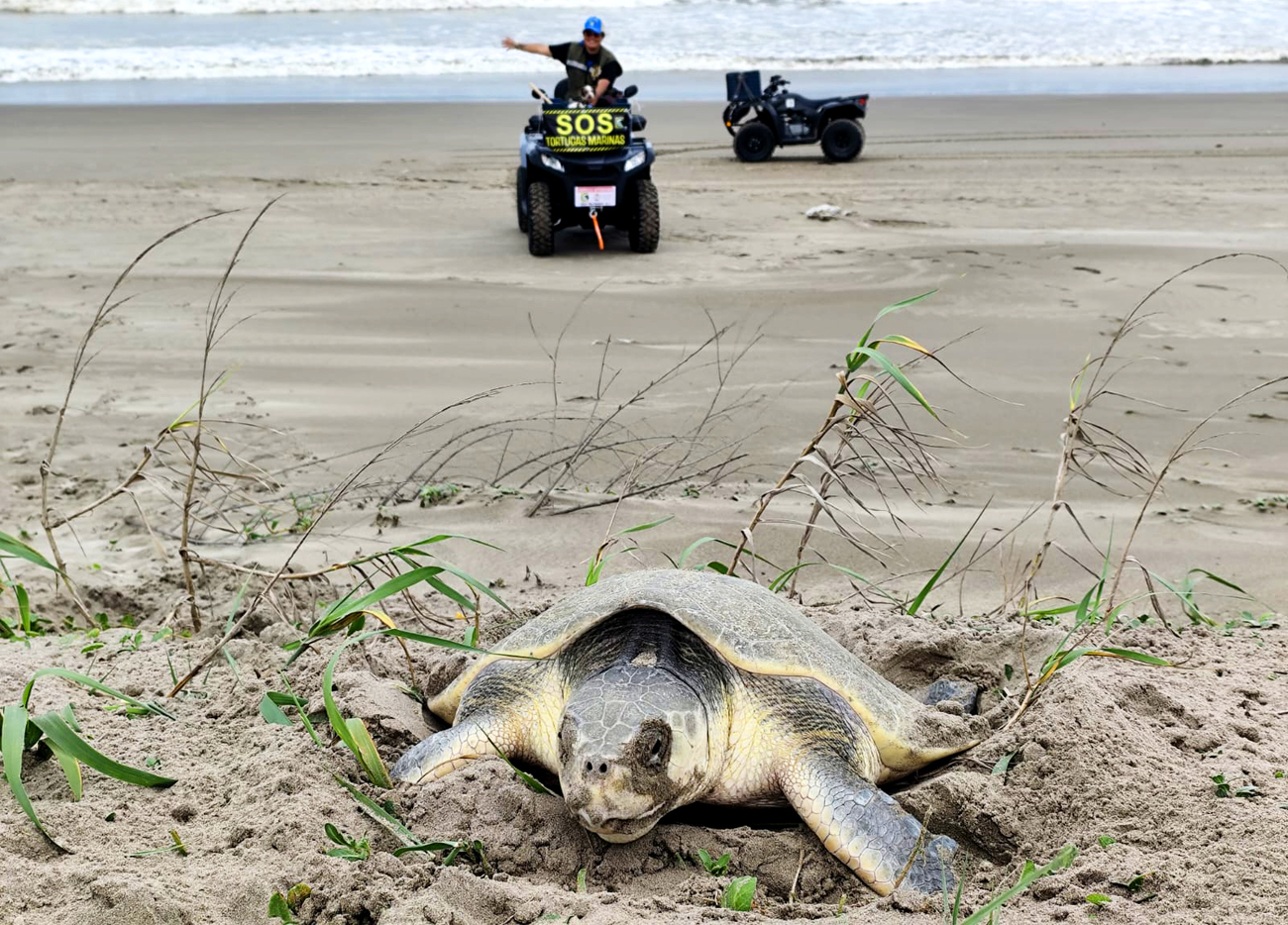
The spill coincides with the start of the nesting season for the olive ridley sea turtle, which began on 24 March. Along the coasts of Veracruz and Campeche, at least 24 local turtle camps are now preparing for increased strandings and the likelihood of oil reaching nesting beaches they monitor and protect.
This is a critical window. The actions taken now will directly affect both adult turtles coming ashore to nest and the survival of the next generation.
IFAW is working alongside trusted local partners to strengthen preparedness and protect both wildlife and the people responding on the ground. Our immediate support has focused on equipping frontline responders with personal protective equipment (PPE), enabling them to safely assess and assist oiled animals.
We are also planning to deliver virtual training on oiled wildlife response protocols for local partners, including Grupo Tortuguero del Estado de Veracruz. This training will help ensure responders are prepared to act quickly and safely when affected animals are found.
Our long-time collaborator, Dr. Valeria Ruoppolo, has provided technical guidance on response needs, while additional expert support has helped verify that the equipment procured meets appropriate standards for wildlife care.
IFAW’s ability to respond quickly is grounded in long-standing relationships with conservation networks and wildlife experts across the region. These partnerships allow us to act in coordination with those who know these ecosystems best and are already working to protect them.
In addition to Veracruz, support is being extended to Campeche, where park rangers from Isla Aguada Natural Protected Area are being equipped. We are also in contact with turtle camps in Tamaulipas to assess their preparedness and determine whether additional support is needed.
Together, these efforts are strengthening readiness across Mexico's extensive coastline at a critical moment for wildlife and coastal communities.
Oil spills can have devastating and long-lasting impacts on wildlife and the people who depend on healthy coastal ecosystems. With your support, we can act quickly to equip responders, protect vulnerable species, and support recovery efforts when animals are found.
Donate today to help IFAW respond to wildlife in crisis and provide urgent care when it is needed most.
Every problem has a solution, every solution needs support.
The problems we face are urgent, complicated, and resistant to change. Real solutions demand creativity, hard work and involvement from people like you.
Unfortunately, the browser you use is outdated and does not allow you to display the site correctly. Please install any of the modern browsers, for example:
Google Chrome Firefox Safari