Blog
Australia's ivory trade didn’t disappear, it went online
Read moreIFAW rushes urgent support for vulnerable puffins after devastating floods in France
In the weeks following the storms along France’s Atlantic coast, thousands of puffins washed ashore exhausted and severely malnourished.
In total, 2,500 puffins stranded between Bordeaux and the Basque Country were rescued and treated by three wildlife care centres in southwest France. Puffins are classified as Vulnerable on the IUCN Red List, making every rescue meaningful for the future of the species.
To respond quickly to the surge of stranded seabirds, IFAW released emergency funds to the Réseau Centres De Soins Faune Sauvage to establish an emergency stabilisation centre directly on the coast. The network deployed a team of 12 volunteer caregivers, trainers, and veterinarians from wildlife care centres across France, who set up a triage and stabilisation station at a rescue post provided by the Capbreton town hall.
This temporary centre allowed rescuers to stabilise the birds for several days before transporting them to rehabilitation facilities. Providing care close to where the birds were found helped limit mortality during transport and reduced pressure on already busy wildlife hospitals managing the influx of stranded animals.
When the puffins arrived at the stabilisation centre, many were cold, weak, and dehydrated after struggling through severe conditions at sea. Care teams first focused on warming the birds and rehydrating them for 24 to 48 hours. Once their condition improved, veterinarians gradually reintroduced food through a feeding tube before transitioning the puffins back to solid fish.
After stabilisation, the birds were transported to three authorised wildlife care centres—Hegalaldia, Paloume, and LPO Aquitaine—where rehabilitation continued. Specialists carefully washed each puffin using established protocols to restore the waterproofing of their feathers, which is essential for seabirds that depend on fully functional plumage to survive in the ocean. The birds were then placed in rehabilitation pools where they could rebuild their strength and natural behaviours before returning to the wild.
After weeks of care, the rescued puffins began returning to the ocean. The final group of rehabilitated puffins was released on Sunday, 15 March, marking an encouraging milestone after a large-scale rescue effort coordinated by wildlife care centres, volunteers, local authorities, and IFAW supporters.
9 March 2026
Following exceptional rainfall and severe flooding across parts of France, wildlife has been left struggling in the aftermath. Torrential storms have overwhelmed coastal habitats, leaving seabirds exhausted, injured, and in urgent need of care.
In response, IFAW is rushing emergency funds to Réseau Centres De Soins Faune Sauvage as they rescue and rehabilitate around 1,500 puffins affected by the storms. Acting quickly in the critical first days after the floods, local rescue teams are working tirelessly to save birds that would otherwise not survive.
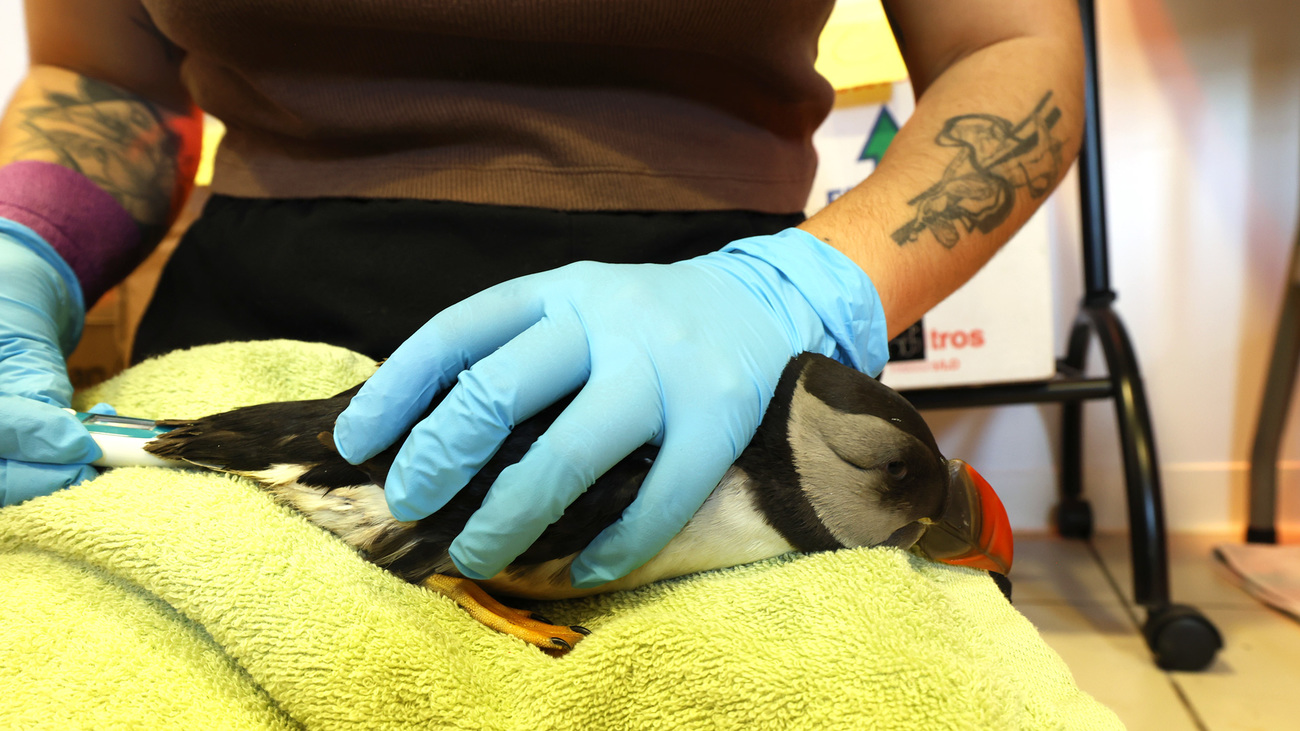
The birds impacted are Atlantic puffin, a species currently listed as Vulnerable on the IUCN Red List due to significant population declines across its range.
Already under pressure from climate change, shifting fish stocks, and habitat disturbance, these storms have delivered another blow. Buffeted by strong winds and relentless rain, many puffins have been found weak, waterlogged, and unable to return to sea.
Rescue teams are carefully collecting the birds from affected coastal areas and transporting them to specialist wildlife care centres, where they can be stabilised and treated. Once in care, each puffin is gently cleaned and dried to restore the natural waterproofing of their feathers. They are rehydrated and given nutritional support to rebuild strength, while veterinary teams monitor them closely for injuries, exhaustion, and infection. Only when they are stable and strong enough will they be released back into the wild.
Without this intervention, many of these seabirds would not survive.
IFAW’s emergency grant is supporting the urgent transportation of 1,500 rescued puffins from storm-affected coastlines to wildlife hospitals and care facilities. It is also funding rehydration treatment, stabilisation, specialist cleaning, and the ongoing daily care the birds require while they recover.
By acting quickly and working through trusted local partners, IFAW is helping ensure rescue teams have the resources they need, when every hour matters.
Extreme weather events are becoming more frequent and more intense, placing growing pressure on wildlife and the organisations working to protect them. For species like the Atlantic puffin, already facing long-term population decline, emergency response can make a critical difference.
While we respond to urgent crises, IFAW also supports local rescue teams to build skills, resources, and preparedness, helping protect vulnerable species before the next disaster strikes.
We will continue to monitor the situation and share updates as rescue and rehabilitation efforts progress.
Every problem has a solution, every solution needs support.
The problems we face are urgent, complicated, and resistant to change. Real solutions demand creativity, hard work and involvement from people like you.
Unfortunately, the browser you use is outdated and does not allow you to display the site correctly. Please install any of the modern browsers, for example:
Google Chrome Firefox Safari