Press releases
Animal heroes from around the world honoured at the IFAW Animal Action Awards
Read moreSearching a changing ocean for a disappearing whale species
In the vast North Atlantic, some of the world's rarest whales are moving through waters where few people are watching.
North Atlantic right whales are among the most intensively studied whale species on Earth. With only about 380 individuals remaining, researchers have catalogued every known whale and can identify each one by the unique pattern of raised patches of skin, known as callosities, on its head, along with other distinguishing markings and scars.
Much like a fingerprint, no two callosity patterns are the same. This enables researchers to recognise individual whales and follow them throughout their lives—lives which could extend upwards of 100 years, if not for the deadly, human-caused threats they navigate each day.
This close monitoring has transformed our understanding of North Atlantic right whales, helping scientists see population trends, document births and deaths, track injuries from fishing gear and vessel strikes, and measure the success of conservation efforts.
Yet despite decades of research and one of the world's most comprehensive photo-identification catalogues, there are still significant gaps in what we know. At certain times of the year, some whales remain unaccounted for. Where are they going?
Answering this question has become even more urgent as climate change reshapes the North Atlantic. As ocean temperatures, currents, and ecosystems change, the tiny copepods that North Atlantic right whales depend on for food are shifting too. The whales are following their prey into new and, in some cases, historic waters, leaving scientists racing to find out where they are going and what risks they may encounter along the way.
This summer, an international team of scientists and conservation partners is expanding their search to the remote waters between Greenland and Iceland. Using an autonomous underwater glider capable of listening for whales over several months, the team hopes to learn whether North Atlantic right whales are once again inhabiting waters that were historically important for the species.
Verified sightings of North Atlantic right whales in European waters remain exceptionally rare. But in 2024, a North Atlantic right whale was confirmed off the coast of Ireland for the first time in 114 years after being identified by its distinctive callosity pattern. Researchers have documented only a handful of confirmed sightings of North American-catalogued whales in European waters over recent decades, including off Iceland, offering tantalising evidence that at least some individuals still make transatlantic journeys. This scientific expedition aims to build on those observations and better understand whether these waters are becoming a key part of the species’ range again.
The Cape Farewell Grounds, off the southeastern tip of Greenland, were once an important feeding area for North Atlantic right whales. The abundance of whales also attracted commercial whalers to the area, whose activities contributed to the species’ dramatic decline.
More than a century later, North Atlantic right whales remain critically endangered, and with only about 70 reproductively active females alive, every opportunity to better understand where these whales travel and feed contributes to their recovery.
Answering that question is not easy. The waters between Greenland and Iceland are vast, remote, and challenging to monitor consistently using ships or aircraft. Researchers need tools that can travel long distances, operate for extended periods, and detect whales even when no people are nearby.
That’s where an underwater robot comes in.
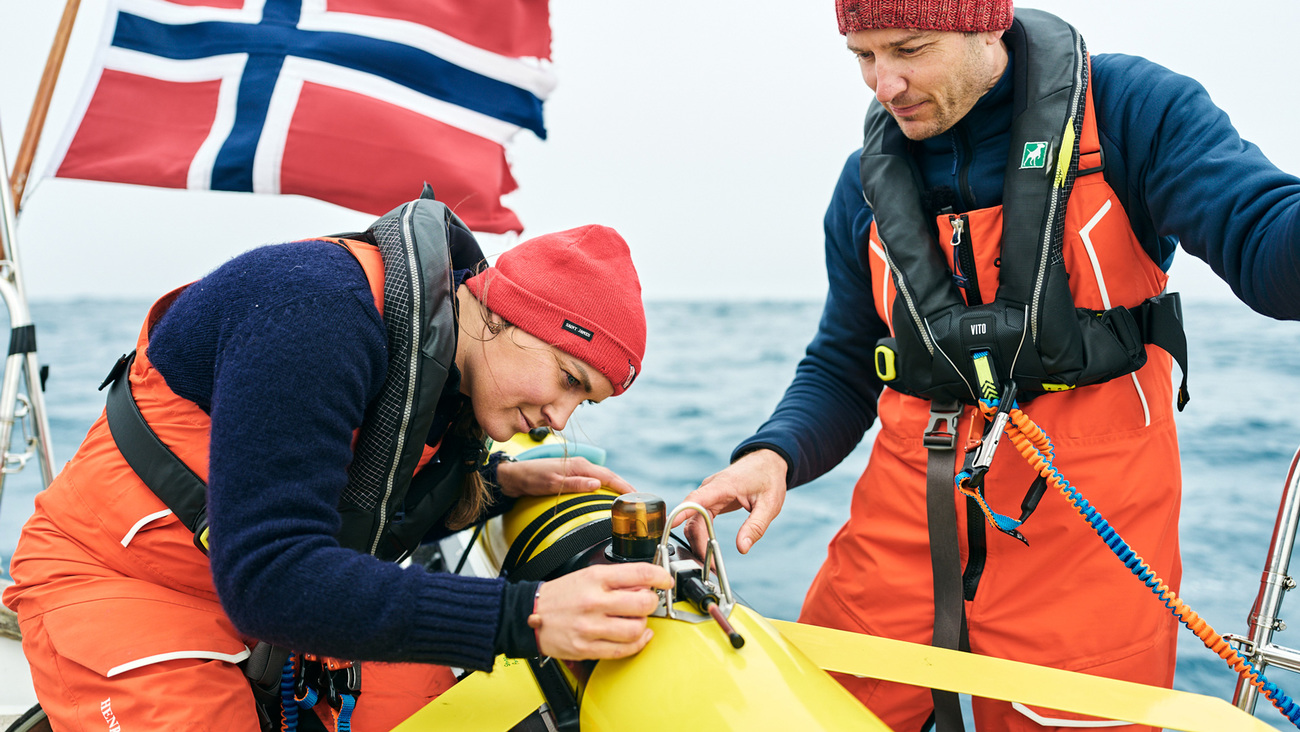
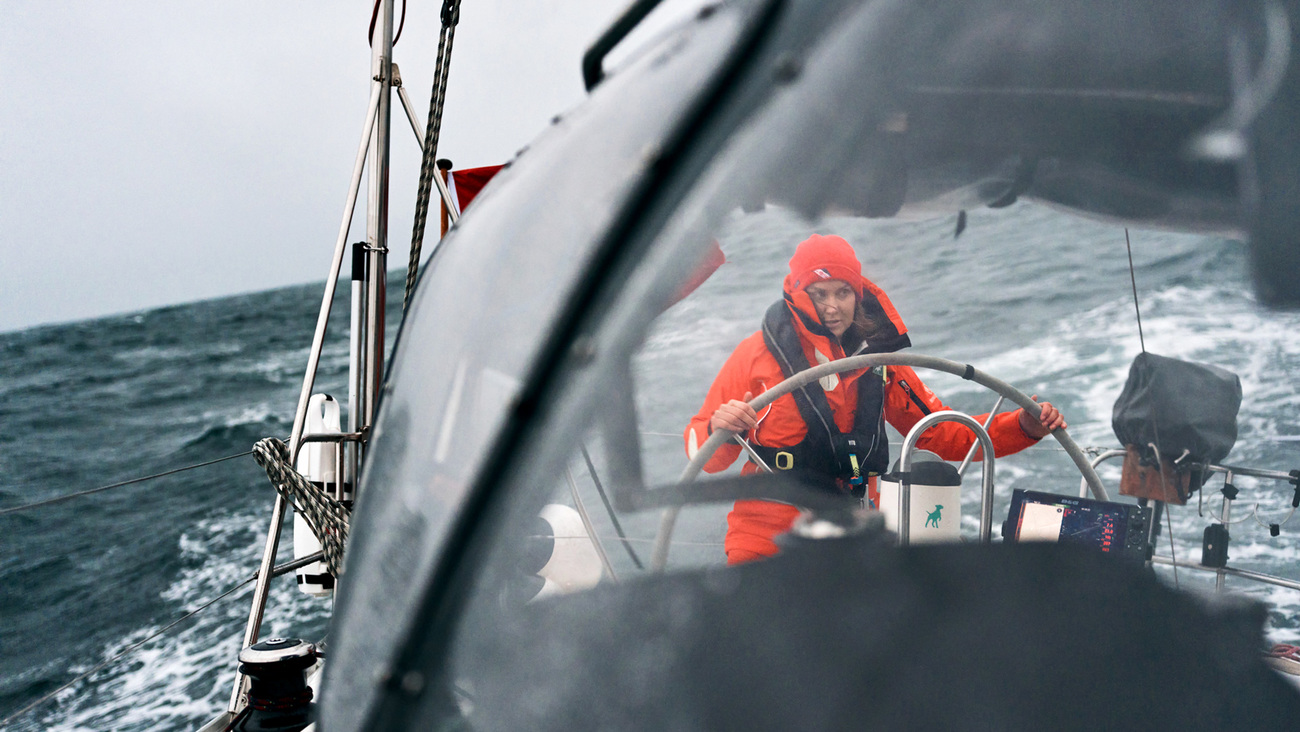
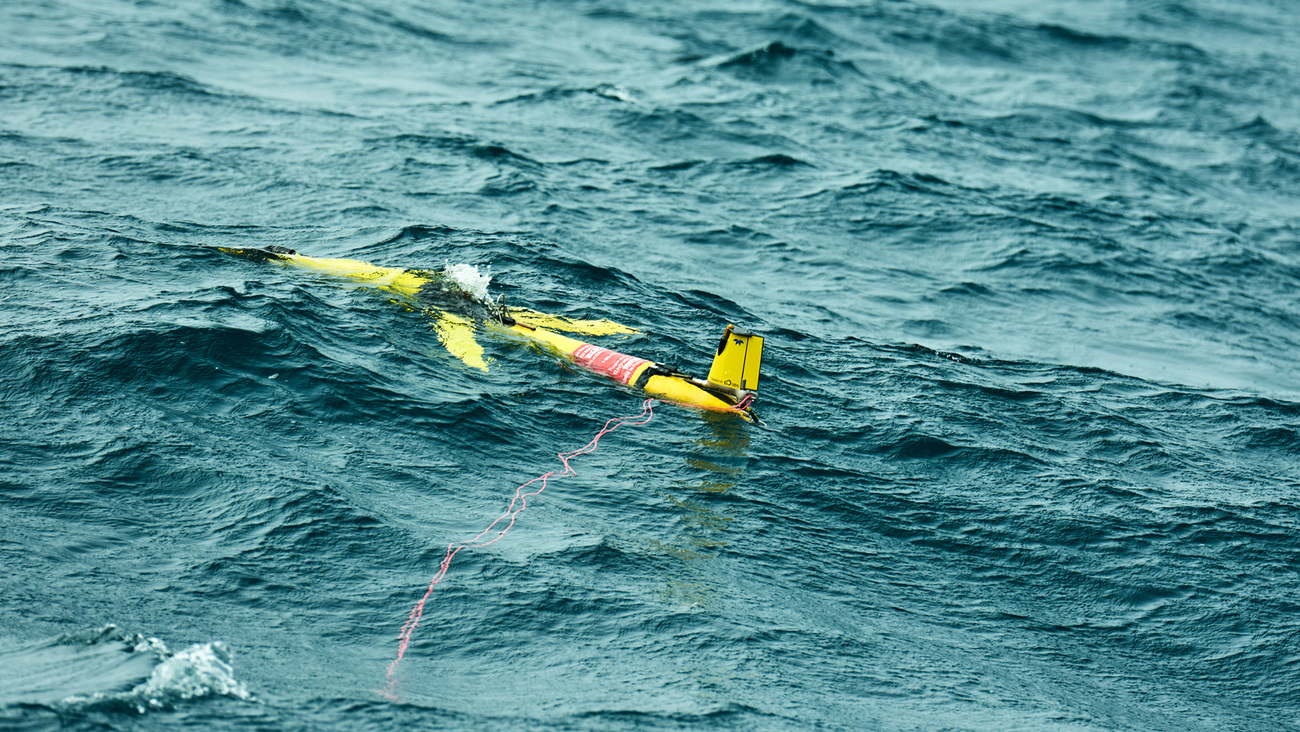
This July, researchers deployed an autonomous underwater vehicle known as a Slocum glider from the research vessel SV Barba. The glider will travel through the Cape Farewell Grounds and Denmark Strait before being recovered off Iceland in late September 2026.
Rather than relying on scientists to see whales from the surface, the glider will listen for them. Equipped with an underwater microphone called a hydrophone, the vehicle continuously monitors the sounds of the ocean and detects the calls of large whales.
Acoustic data will be transmitted via satellite to an acoustician in Canada, who will analyse the recordings and identify the species present. Confirmed detections will then be shared through WhaleMap, allowing researchers to follow findings from the expedition while the glider is still at sea.
The glider is also equipped with sensors that measure ocean conditions, including temperature and depth. By collecting acoustic and environmental data at the same time, researchers can begin to build a clearer picture of which whales are present and the conditions they encounter.
For researchers, the ability to listen continuously across such a large and remote area offers an important opportunity. Ships can only be in one place at a time, and visual surveys depend on weather, daylight, and sea conditions. An autonomous glider can spend months at sea, quietly gathering information from places that would otherwise receive little sustained monitoring.
North Atlantic right whales depend on dense concentrations of tiny organisms called copepods for food. To survive, whales must find areas where billions of these small animals gather. Changes in ocean temperature, currents, and productivity drastically affects food availability.
As the climate changes, the distribution of copepods is changing, too. Over the past 15 years, the changing climate has brought whales into areas where conservation measures were not designed for their presence, creating new challenges for scientists and governments working to protect them.
The Gulf of St Lawrence offers a stark example. As North Atlantic right whales began appearing there in greater numbers, they entered busy fishing grounds and shipping routes, prompting Canada to introduce new measures to reduce the risks of entanglement and vessel strikes. Entanglement in fishing gear and collisions with vessels remain the two leading causes of human-caused mortality for North Atlantic right whales.
As Arctic sea ice declines and shipping routes become more accessible, vessel traffic is expected to increase in parts of the region. Understanding whether North Atlantic right whales are using these waters can help scientists identify emerging risks and inform monitoring and conservation efforts.
Whales do not recognise national boundaries. Understanding their movements requires collaboration across them. This project brings together researchers and partners from the US, Canada, Greenland, Iceland, and Norway, combining expertise in whale biology, acoustic monitoring, oceanography, autonomous technology, and field research.
The glider will be piloted by the Ocean Tracking Network at Dalhousie University in Canada, while researchers across several institutions will analyse acoustic and environmental data. The expedition team aboard SV Barba will deploy the glider within the Cape Farewell Grounds, beginning a journey that will continue through September before the vehicle is recovered near Iceland.
IFAW is supporting the international effort alongside scientific and research partners. By contributing to collaborative research that expands our understanding of where North Atlantic right whales travel, IFAW is helping scientists build the knowledge needed to protect whales as their environment changes.
‘North Atlantic right whales travel across vast areas of ocean, and no single organisation or country can fully understand or protect them alone,’ said Sharon Livermore, Director of Marine Conservation at IFAW. ‘By bringing together expertise, technology, and knowledge from across the North Atlantic, this project can help fill important gaps in our understanding of where individual whales are going as their ocean environment changes. International collaboration like this is essential if we are to ensure that conservation efforts can adapt and follow whales wherever they travel.’
The project also demonstrates how new technologies can expand the reach of conservation science. Autonomous vehicles, satellite communications, acoustic monitoring, and international data-sharing platforms are making it possible for researchers to study wildlife across areas that would once have been prohibitively difficult or expensive to monitor.
There is no guarantee the glider will detect a North Atlantic right whale during its journey. That uncertainty is inherent in research involving rare animals across an enormous ocean, but the value of the expedition is not dependent on a single detection.
The survey will provide information about the presence of multiple whale species and environmental conditions across a region where sustained monitoring has been limited. If North Atlantic right whales are detected, the findings could provide important evidence to guide conservation efforts. If they are not detected, researchers will still have valuable information that can help refine future searches and deepen our understanding of the changing North Atlantic.
For North Atlantic right whales, the stakes are high. Every individual animal matters to the survival of the species, and protecting them requires understanding how their lives are changing alongside the ocean they depend on.
Our work can’t get done without you. Please give what you can to help animals thrive.
Unfortunately, the browser you use is outdated and does not allow you to display the site correctly. Please install any of the modern browsers, for example:
Google Chrome Firefox Safari