Phillip Kuvawoga
How a ranger station transformed Hwange’s Makona landscape
How a ranger station transformed Hwange’s Makona landscape
Phillip Kuvawoga | 10 November 2026
IFAW’s partnership with ZimParks began with the Makona Ranger Station. It enabled patrols to reach areas once considered too remote and fundamentally changed one of Hwange National Park’s most important landscapes.
The goal of the partnership wasn’t merely the infrastructure—rather, it was about what it made possible. Conservation is rarely transformed by a single building, but it is changed by the people who work from it, the communities who benefit from it, and the wildlife it protects.
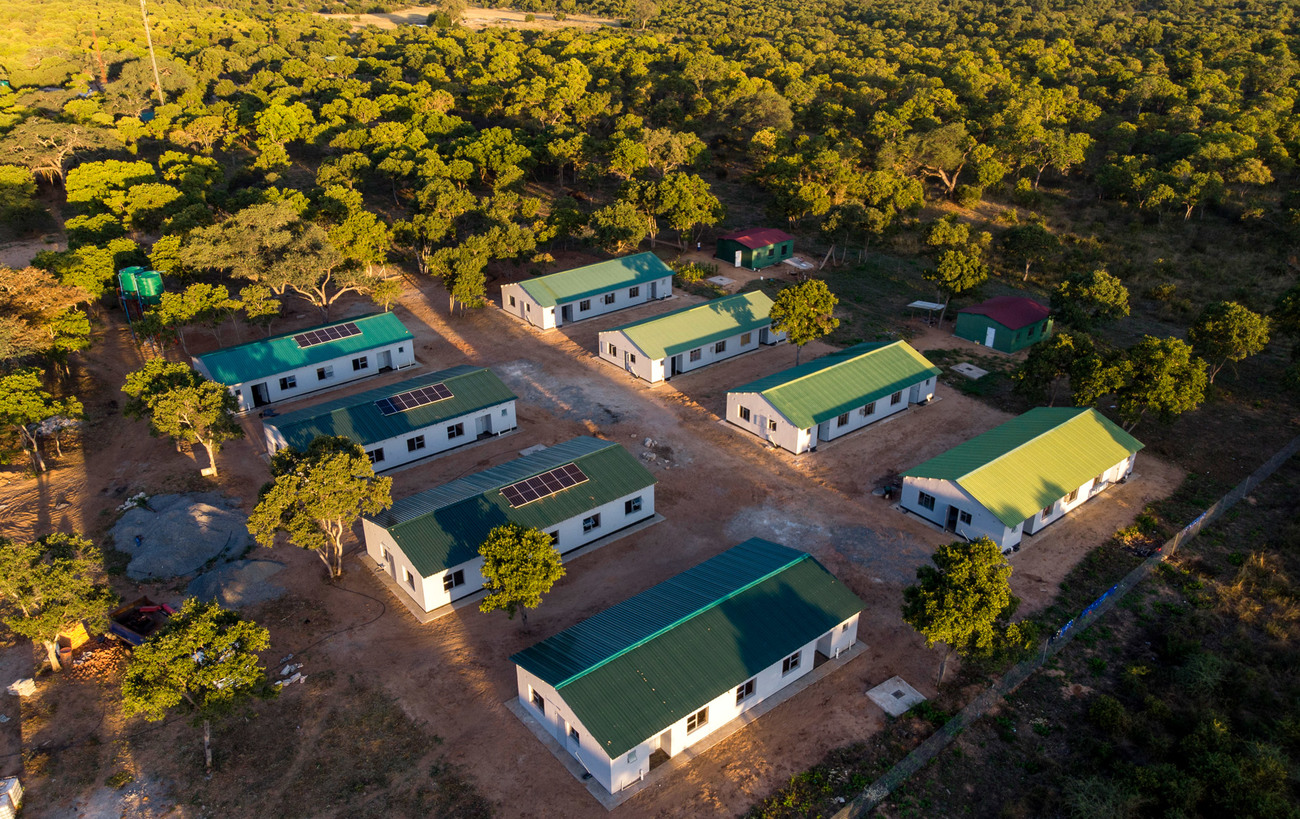
Aerial view of housing for rangers and their families at Makona substation, Hwange National Park’s first modern-era ranger station. Photo: David Brazier / © IFAW
A landscape that demanded action
Long before Makona became a symbol of hope, it represented one of Hwange’s greatest conservation challenges.
Situated in the park’s southern reaches, Makona is vast, remote, and ecologically significant. Its importance extends far beyond the park’s boundaries. As part of the Kavango–Zambezi Transfrontier Conservation Area (KAZA TFCA), Makona lies within the Hwange–Makgadikgadi wildlife dispersal area, a vital landscape that enables elephants, lions, African wild dogs, and other wide-ranging species to move between Zimbabwe and Botswana. Protecting Makona therefore helps secure a connected landscape—ensuring that animals can continue to roam, ecosystems remain resilient, and communities benefit from a thriving natural heritage.
Yet its remoteness also made it vulnerable. The devastating cyanide poisoning of 300 elephants and other species in Hwange National Park in 2013 shocked Zimbabwe and the world. While wildlife crime was never confined to one location, the tragedy exposed the realities facing those tasked with protecting such an enormous landscape, including vast distances, limited infrastructure, and resources spread too thin.
For ZimParks, strengthening the management of Makona became both a conservation priority and a national responsibility. For IFAW, it became an opportunity to invest not only in wildlife protection, but in the systems and communities that make conservation effective.
Building capacity, not just infrastructure
When IFAW and ZimParks signed their partnership agreement in 2019, the objective was bigger than constructing buildings. Our vision was to strengthen the ability of Zimbabwe’s protected area authority to conserve the park over the long term, and Makona became the foundation.
We supported the construction of a modern ranger station, providing accommodation for 22 full-time rangers and their families. It included offices, operational facilities, and the infrastructure needed to maintain a permanent conservation presence in this once-isolated part of Hwange National Park. We knew that protected areas are only as strong as the teams entrusted to safeguard them.
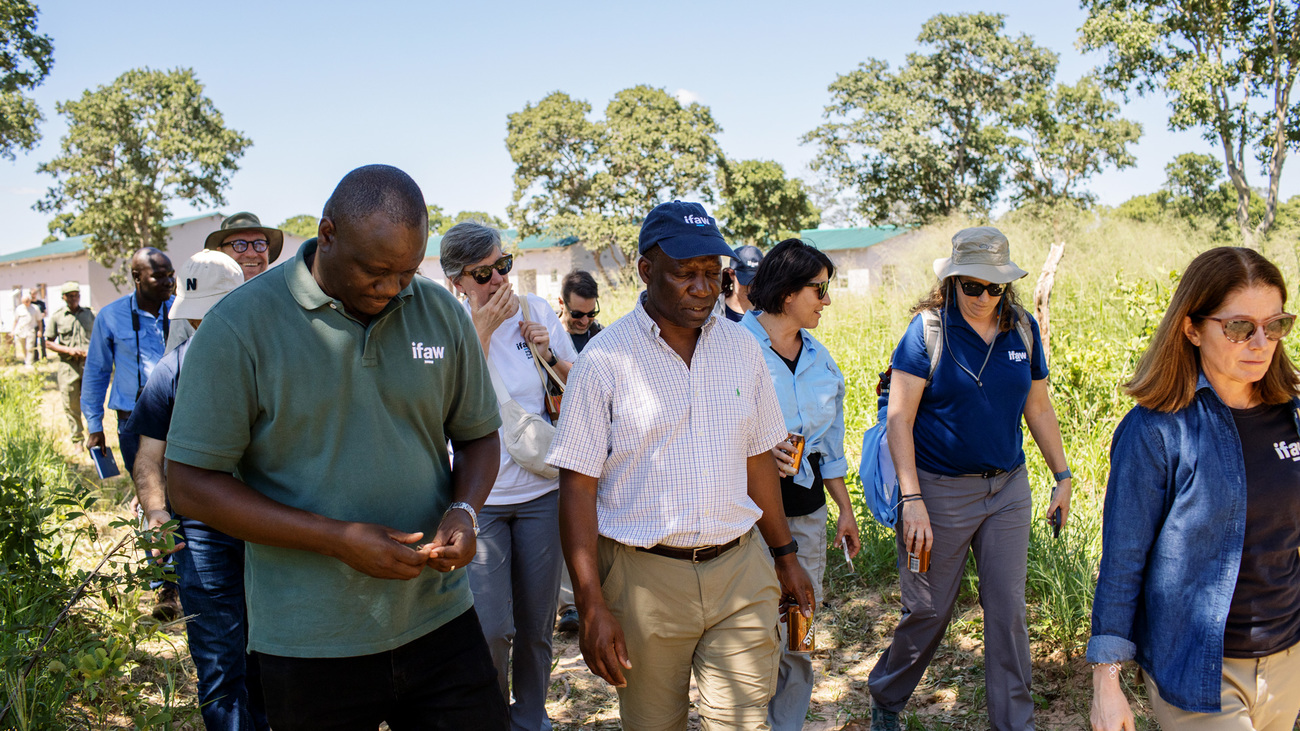
Visiting IFAW staff learn about Makona Substation prior to opening in Hwange National Park, Zimbabwe. Photo: Stacey Hedman / © IFAW
One investment became many
The completion of the Makona Ranger Station became the catalyst for something much bigger. Over the past six years, the IFAW–ZimParks partnership has continued to respond to evolving conservation priorities while advancing a shared vision for the Greater Hwange Landscape. Guided by IFAW's Room to Roam initiative, the partnership has invested in protecting and connecting landscapes, strengthening conservation institutions, supporting communities, and securing safe movement for wildlife across one of Africa's most important ecological corridors.
Our work has included fixing patrol roads, providing operational vehicles, restoring the Nyamandlovu Pan, and upgrading the Hwange canine unit. The partnership has also expanded its footprint beyond Hwange National Park into the adjacent Matetsi Safari Area–Unit 5, a strategically important landscape within the Greater Hwange ecosystem. Here, investments in ranger accommodation, wildlife monitoring, and elephant collaring help strengthen protected area management while supporting landscape connectivity across the wider Hwange–KAZA conservation landscape.
At the same time, we’ve also strengthened tourism infrastructure, enhancing the visitor experience while reinforcing the value of conservation-led tourism.
Each investment strengthens ZimParks’ ability to conserve wildlife and protect the landscapes that sustain both people and nature. This work is made possible through strong partnerships. Alongside ZimParks, IFAW collaborates with organisations including Speak Out For Animals (SOFA), Wild is Life, Dete Animal Rescue Trust (DART), BirdLife Zimbabwe, and local communities, bringing together complementary expertise to advance wildlife conservation, community development, and human-wildlife coexistence.
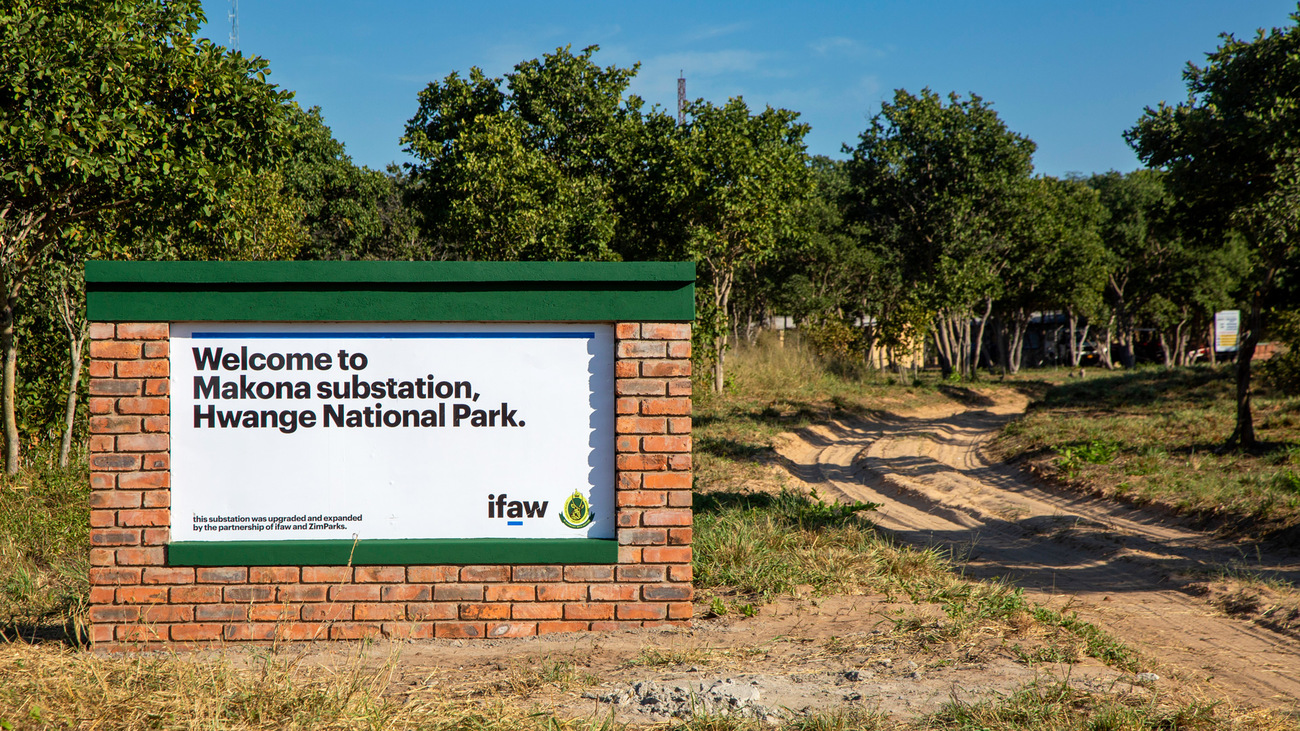
Sign at Makona substation, Hwange National Park’s first modern-era ranger station. Photo: David Brazier / © IFAW
Conservation begins with people
Perhaps the greatest lesson I take away from Makona is that conservation cannot succeed inside a protected area alone; it must also succeed beyond its boundaries. Communities neighbouring Hwange National Park experience both the benefits and the challenges of living alongside wildlife: elephants damage crops, predators kill livestock, water is often scarce, and livelihood opportunities can be limited.
Having recognised this, our partnership has expanded its focus beyond park infrastructure to include community well-being. We’ve supported the installation of predator-proof bomas, solar-powered boreholes, and community gardens. In addition, we’ve provided students with school fees, textbooks, and bicycles, while strengthening primary response teams to mitigate human-wildlife conflict.
“Together, we’ve also helped deploy GPS satellite collars and EarthRanger software, transforming how conservation teams understand elephant movements and mitigate risks.”
The journey continues
In 2023, IFAW renewed our partnership with ZimParks and signed a 20-year co-management agreement for Matetsi Safari Area Unit 5, reinforcing our shared commitment to securing one of the region's most important wildlife landscapes. Makona shows what’s possible when government, communities and conservation partners work towards a common goal. But the work is far from over. Climate change, wildlife crime and increasing human-wildlife conflict continue to test the resilience of both people and nature. That's why we remain committed to building on what we've started—strengthening conservation, supporting communities, and securing connected landscapes where wildlife and people can thrive together.
"When people think about Makona, they often see the ranger station,” states ZimParks Director General Professor Edson Gandiwa. “What I see is something much bigger. I see rangers better equipped to protect wildlife, communities working alongside conservation, elephants moving through a safer landscape, and a partnership that has continued to grow from one investment into a long-term commitment to Hwange. Conservation is never finished. Every milestone creates the opportunity—and the responsibility—to do more."
Related content
Our work can’t get done without you. Please give what you can to help animals thrive.