CARE – Brazil, Guyana, Congo, and Uganda
Empowering frontline officers to rescue animals from wildlife traffickingImproving care for trafficked wildlife in Uzbekistan
Improving care for trafficked wildlife in Uzbekistan
25 March 2026
Every year, wild animals are intercepted at borders around the world, seized by customs officers before they can enter the illegal wildlife trade. But confiscation is only the first step in protecting this wildlife. Without the right care, facilities, and procedures, these animals may still face serious risks after they are rescued. In Uzbekistan, we are working together to change this.
In February, wildlife experts, government officials, and animal care specialists gathered in Tashkent for a two-day training course on the safe handling and care of confiscated wild animals. The training was organised by IFAW and the Institute of Zoology of the Academy of Sciences of Uzbekistan as part of IFAW’s CARE (Confiscated Animals Rescue and Enforcement) programme.
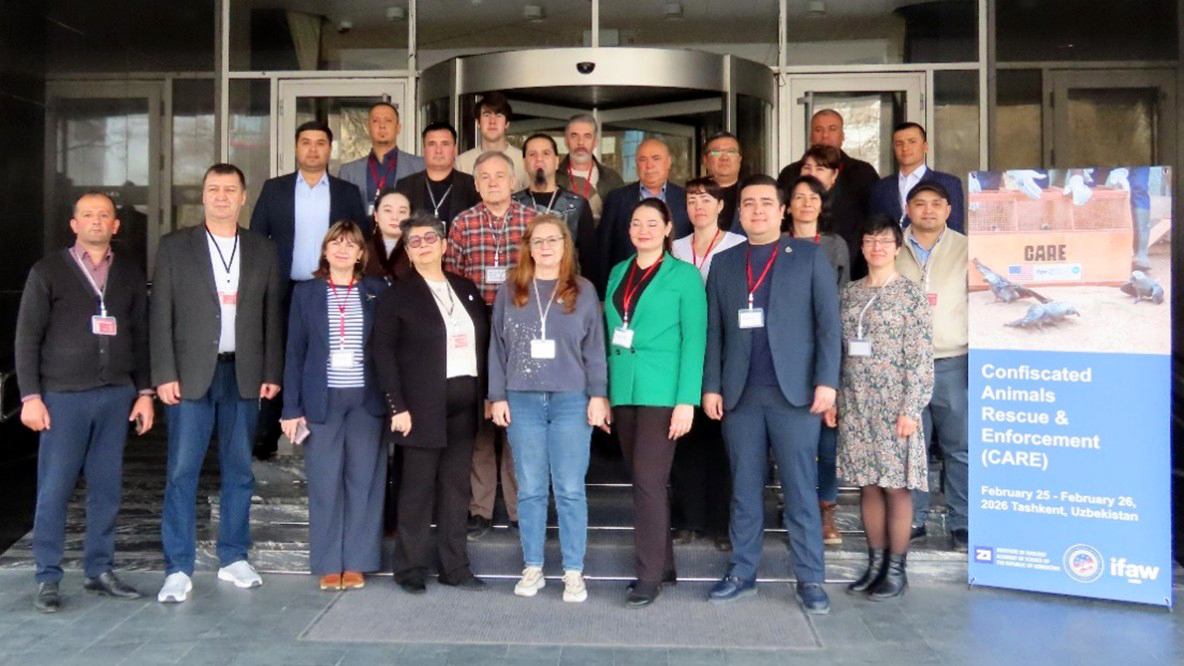
Experts come together to improve care for trafficked wildlife at the CARE training of the trainers workshop held in Uzbekistan in February 2026. Photo: © Alexander Episov
The goal was clear: to ensure animals rescued from trafficking receive the professional care they need while supporting the officers responsible for handling these animals safely.
Strengthening the frontline response to wildlife trafficking
The training included representatives from the Institute of Zoology, the Tashkent Zoo, the National Committee for Ecology and Climate Change of Uzbekistan and was led by IFAW experts.
Delivered in a “train-the-trainers” format, the workshop aimed to equip these experts with the knowledge necessary to safely manage confiscated wildlife and to share these techniques with their colleagues across the country.
Confiscated animals often arrive in poor condition after long journeys in cramped, hidden containers. Officers must quickly determine how to handle them safely, assess their health, and even document evidence for legal proceedings.
The workshop allowed the delegates to gain technical expertise in species identification, animal health assessments, evidence management, animal handling and welfare, and reducing the risks associated with zoonotic disease transmission.
The hands-on sessions also allowed participants to practise using personal protective equipment and learn handling techniques designed to ensure both the health and wellbeing of the animals and the safety of the officers.
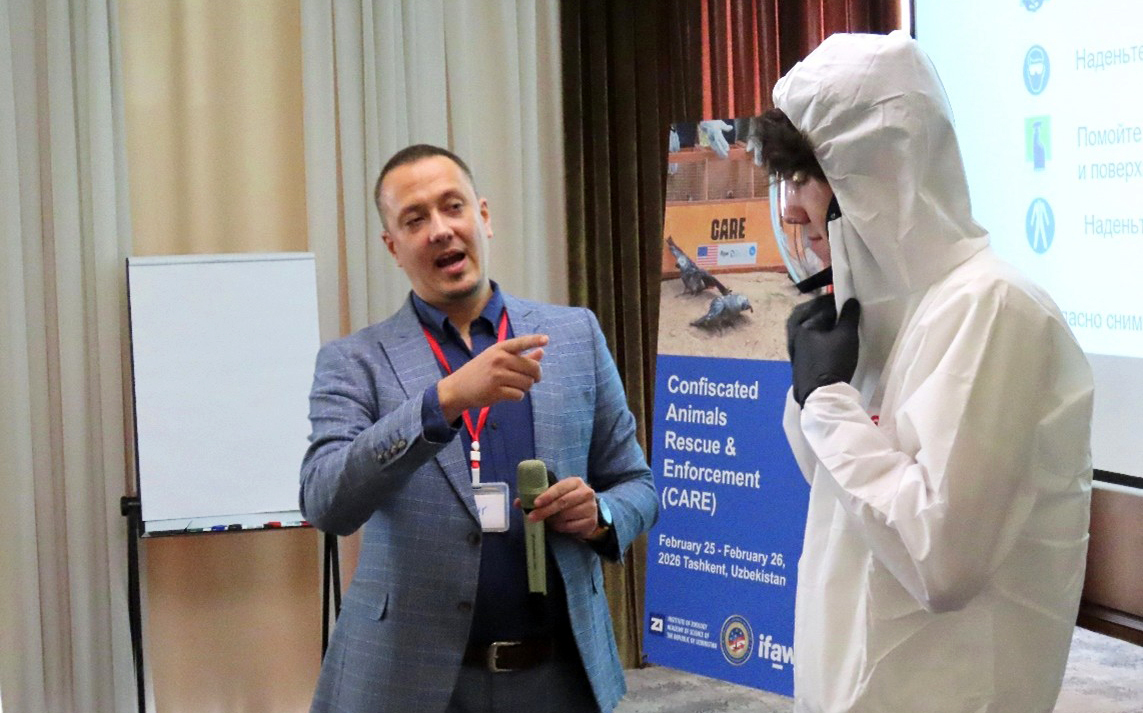
Demonstration of the use of personal protective equipment at the CARE training of the trainers workshop held in Uzbekistan in February 2026. Photo: © Alexander Episov
Ensuring care after confiscation
One of the most complex challenges in wildlife crime cases is what happens to the animals after they are seized. Where should they go? Who provides veterinary care for them? How can authorities ensure these animals are properly documented as evidence while also safeguarding their welfare? We brought Uzbekistan’s experts together to discuss these challenges and their solutions.
Experts from Tashkent Zoo and the wildlife nursery at Zarafshan National Park shared their experience in rehabilitating animals and providing temporary housing for confiscated wildlife. Their insights highlighted the importance of having trained staff and appropriate facilities ready and available for live animals seized.
Participants from the National Committee for Ecology and Climate Change also discussed the documentation and procedural regulation gaps that exist in Uzbekistan’s current legislative framework regarding the period from the moment of seizure until a final court decision determining future of the confiscated animal(s).
For the specialists from the Institute of Zoology, it is important to involve qualified experts in these legal cases and include genetic DNA analysis as part of this.
Building a better future for rescued wildlife
As a result of this meeting and training, the experts recognised the urgent need for adequate infrastructure to care for confiscated wildlife in Uzbekistan. They support establishing a national rehabilitation centre dedicated to caring for wildlife rescued from illegal trade—one that could provide veterinary care, temporary housing, and legal support for animals intercepted at the border, particularly for reptiles and birds frequently trafficked through the region. Ideally, this centre would be in proximity to Tashkent International Airport to allow authorities to respond quickly when trafficked animals are discovered during international transport.
The delegates also underscored the importance of developing regional rehabilitation centres for native species across the country, and strengthening the ability and capacity of the Tashkent Zoo to care for animals seized, such as primates, wild cats, and other wildlife.
Giving rescued animals a second chance
Behind every confiscation is an individual animal that has already endured significant hardship. Ensuring those animals receive proper care requires coordination between scientists, veterinarians, enforcement officers, and conservation organisations.
By bringing these groups together and strengthening their technical skills, the CARE programme helps create the systems and dialogue needed to give confiscated wildlife a second chance.
With continued collaboration between national institutions and international partners like IFAW, Uzbekistan is taking important steps towards strengthening its response to wildlife trafficking, helping to ensure rescued animals have a safer path forward.
This training is made possible thanks to support from the US Department of State Bureau of International Narcotics and Law Enforcement Affairs.
Related content
Our work can’t get done without you. Please give what you can to help animals thrive.