Read more
Fishers and rescuers unite in Scotland to protect entangled whales
Fishers and rescuers unite in Scotland to protect entangled whales
28 May 2026
There was friendly competition over grapple throws, jokes traded across boats, and even a few engine repairs carried out dockside between training sessions. But beneath the banter on Scotland’s west coast this May was a serious shared purpose: helping whales survive one of the ocean’s most dangerous human-caused threats.
Over three days in Kyle of Lochalsh and Skye, fishers, marine mammal rescuers, researchers, aquaculture staff, and conservation organisations came together for a specialised whale disentanglement workshop aimed at improving how Scotland responds to marine animal entanglements.
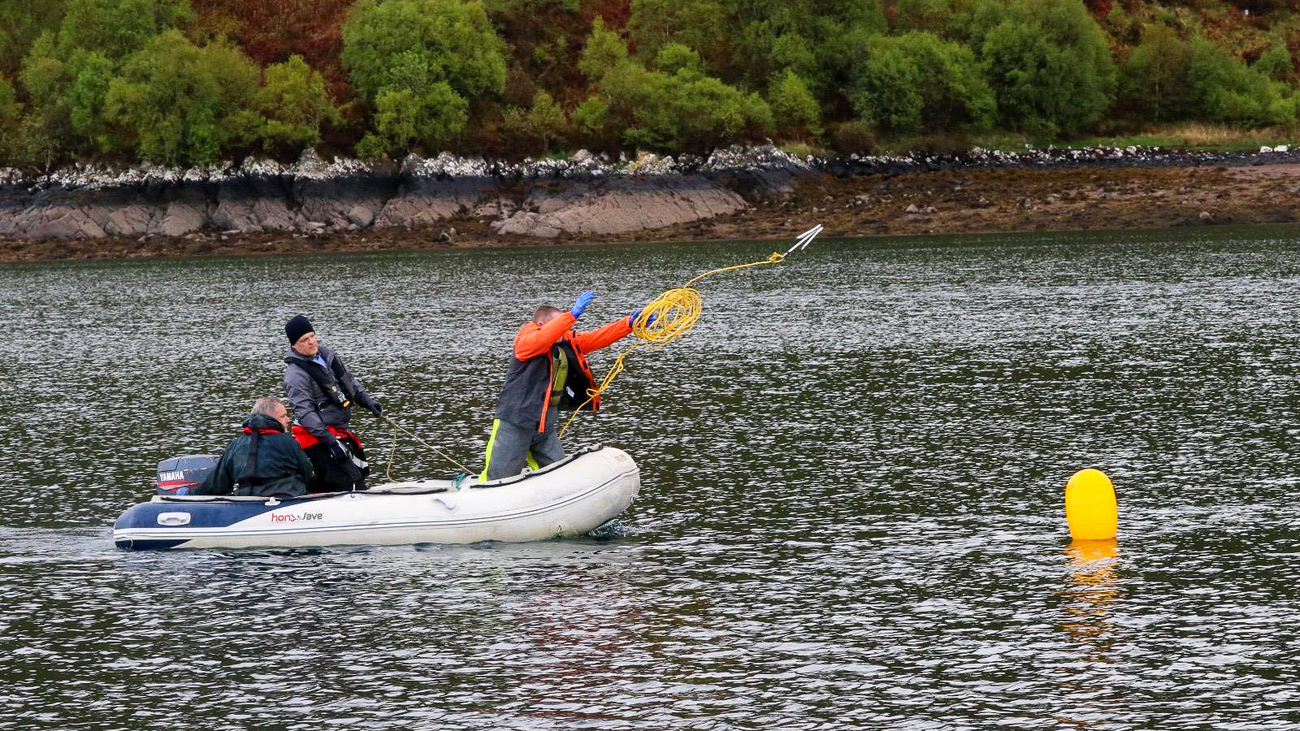
Marine experts, local stakeholders and conservation partners participate in specialised disentanglement training hosted by SEA in Scotland to support safer responses to whale entanglements. Photo: Ellie MacLennan / © Scottish Entanglement Alliance (SEA)
Hosted by the Scottish Entanglement Alliance (SEA) and supported by the Scottish Government, DEFRA, and the International Whaling Commission, the workshop brought together participants from coastal communities across Scotland, including Shetland, the Western Isles, Clyde, and Arbroath.
The training was led by Brian Sharp, director of the marine mammal rescue team at IFAW, and an International Whaling Commission large whale disentanglement trainer. Alongside responders from British Divers Marine Life Rescue and other partners, participants spent three days sharing knowledge, practising response techniques, and strengthening relationships that could one day help save whales’ lives.
Importantly, this was only the second workshop of its kind ever held in Europe.
Why whale entanglement is a growing concern
Entanglement in fishing rope and gear remains one of the leading human-caused threats to whales worldwide. Animals can suffer deep injuries, exhaustion, infection, impaired feeding, and, in many cases, death.
In Scottish waters, the issue is becoming increasingly urgent.
A 2023 study by SEA estimated that around 30 minke whales and six humpback whales become entangled in Scottish fishing gear every year. Data from the Scottish Marine Animal Stranding Scheme has recorded 112 cetacean entanglements since 1992, with nearly half occurring within the last six to seven years.
The most commonly reported species entangled in Scottish waters are basking sharks and minke whales, followed by humpback whales and leatherback turtles. Entanglements have also been documented in species including orca, fin whales, sperm whales, Risso’s dolphins, porbeagle sharks, and Sowerby’s beaked whales.
As habitats shift and humpback whales increasingly feed closer to Scotland’s coastline, encounters between whales and fishing gear are becoming more common, making collaboration between fishing communities and rescue teams more important than ever.
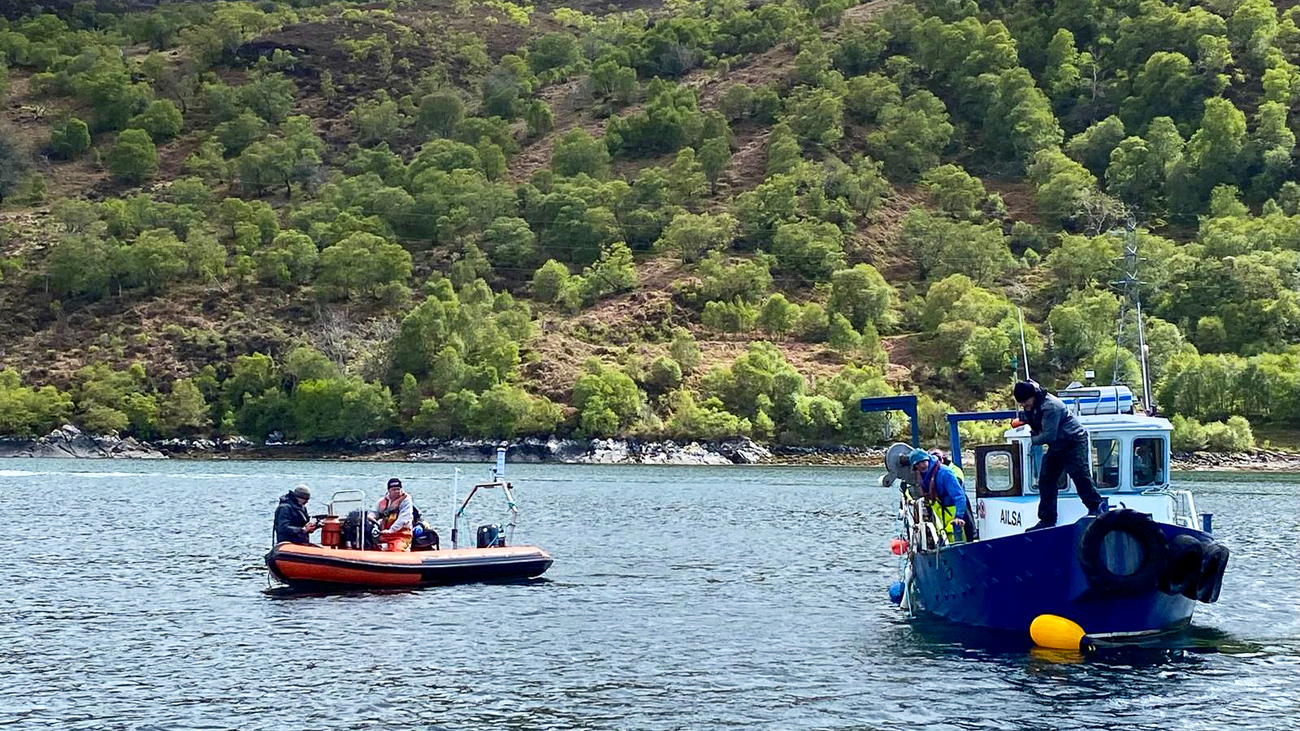
Marine experts, local stakeholders and conservation partners participates in the disentanglement training. Photo: Ellie MacLennan / © Scottish Entanglement Alliance (SEA)
Fishers are often first on scene
For all the specialised rescue equipment and veterinary expertise involved in disentanglement, successful responses frequently begin with the people already working at sea. Fishers are often the first to spot entangled animals. Their knowledge of local waters, fishing gear, weather conditions, and vessel manoeuvring can play a critical role in safe and effective responses.
“Creel fishermen have got all the skills necessary for disentanglement already, and what was useful about the training was showing them how to use those skills in a particular way for disentanglement,” said Susannah Calderan, SEA partner and sinking rope project coordinator. “It also gave participants confidence in those skills and an awareness of the risks that need to be considered.”
That spirit of collaboration was central to the workshop.
“It was great to see fishermen, rescuers, and biologists coming together to share knowledge and experience to provide a better outcome for whales in life-threatening situations,” said Sharp. “Every perspective is needed to respond to these emergencies.”
Participants took part in classroom discussions and on-the-water exercises, including grapple throwing, vessel manoeuvring, and cutting scenarios. Responders from British Divers Marine Life Rescue also demonstrated how trained teams grapple a free-swimming whale during a disentanglement operation.
Throughout the workshop, participants exchanged practical knowledge drawn from years spent on the water—whether navigating around fishing gear, handling vessels in difficult conditions, or safely coordinating during emergencies.
One fisher who attended the workshop said the opportunity to be included in the conversation was especially meaningful.
“It's hopefully something I'll never have to use, but very useful to have the knowledge just in case and also just nice to be included,” he said. “Too often we as fishermen are not, and it can be really frustrating to want to get involved in these sorts of things that affect us directly but the opportunity just isn’t there.”
He also highlighted how the training created opportunities for both fishers and responders to learn from one another.
“There are a lot of elements involved in a successful disentanglement, for example kit, boats, expertise, and it was good to see BDMLR working with the fishermen because each brings different skill sets,” he said. “BDMLR train regularly but they’re rarely in amongst fishing boats and gear and this was a great opportunity for them to learn from us, and also for us to learn what BDMLR can bring to the table.”
Prevention comes first
The workshop comes as partners across Scotland continue testing negatively buoyant rope and other practical measures designed to reduce the risk of whale entanglements before they happen. While disentanglement training is essential, organisers stressed throughout the workshop that rescue is not the ultimate goal.
“We always want to remind people that disentanglement is not the answer, prevention is,” said Sharp. “But it is important to have people ready that can use their skills and experience to keep both people and whales safe when called upon.”
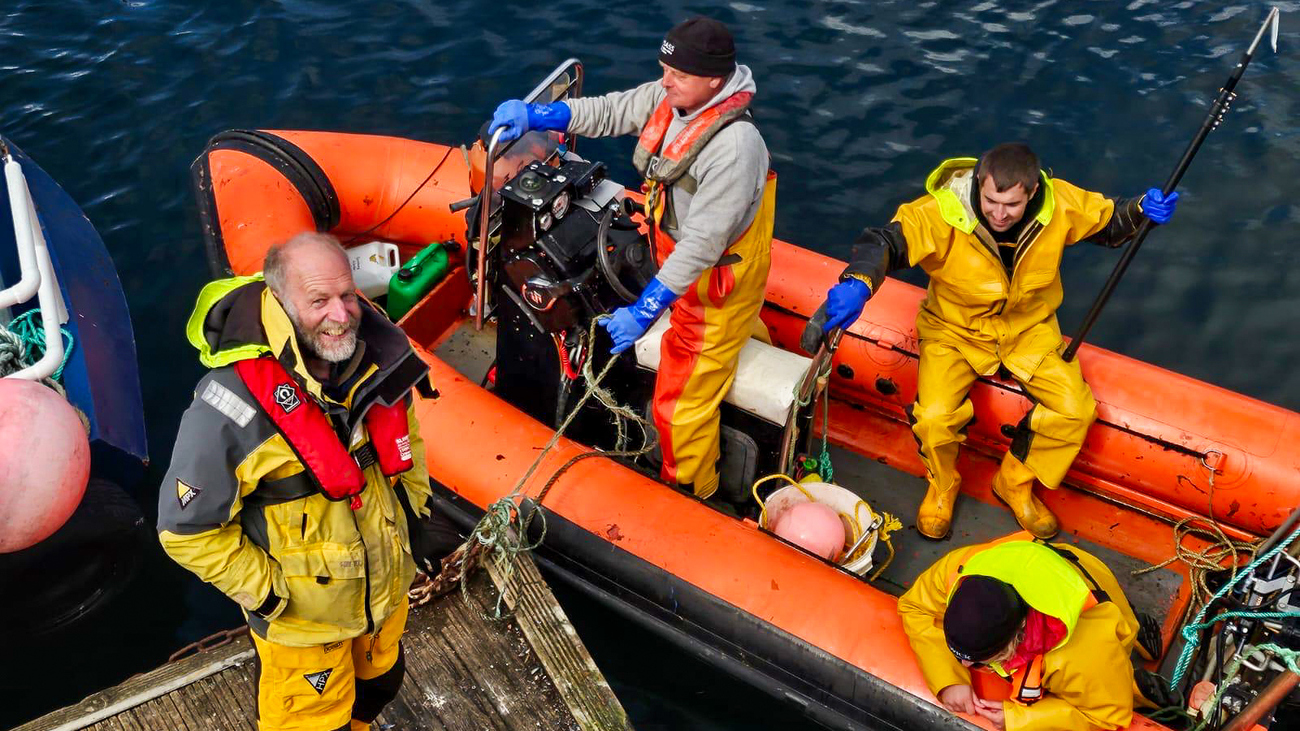
Marine experts, local stakeholders and conservation partners participate in training hosted by SEA in Scotland to support safer responses to whale entanglements. Photo: Ellie MacLennan / © Scottish Entanglement Alliance (SEA)
SEA works closely with Scotland’s inshore fishing industry to better understand the scale and causes of marine animal entanglements and develop practical solutions that reduce risk while supporting sustainable fisheries and coastal livelihoods.
That work aligns with broader Scottish and UK commitments to reduce bycatch and protect marine ecosystems, but at its core, the workshop focused on something simpler: building trust, communication, and shared stewardship between the people most connected to the sea.
Several fishers commented on how much they appreciated the opportunity to work alongside colleagues from other parts of Scotland whom they would not ordinarily meet, as well as Sharp travelling from the US to lead the training.
Global expertise shared locally
For more than 27 years, IFAW’s marine mammal rescue programme has helped advance rescue science and veterinary care for marine mammals around the world.
Based on Cape Cod, Massachusetts, one of the world’s hotspots for dolphin mass strandings, the team has developed innovative rescue techniques and veterinary approaches that are now shared globally via IFAW’s Academy of Rescue and Conservation—established with the generous support of the Suzanne McGraw Foundation. To date, IFAW has helped train responders in more than 24 countries.
IFAW has also supported disentanglement efforts in the UK for many years, including sponsoring the initial training of British responders at the Center for Coastal Studies in the US in 2008.
The Scotland workshop continued that long-standing international collaboration while reinforcing a simple but powerful idea: protecting whales requires people from different backgrounds and professions working together.
As whale entanglements continue to challenge coastal communities around the world, partnerships like these offer hope—not only for safer responses when emergencies happen, but for preventing them altogether.
Related content
Every problem has a solution, every solution needs support.
The problems we face are urgent, complicated, and resistant to change. Real solutions demand creativity, hard work and involvement from people like you.