Neree Pateman
Australia's ivory trade didn’t disappear, it went online
Australia's ivory trade didn’t disappear, it went online
Neree Pateman | 8 October 2026
Most Australians assume the ivory trade ended decades ago. But it hasn't disappeared, it's moved online, according to new research from Adelaide University’s Wildlife Crime Research Hub.
Between January and June 2025, researchers tracked Australian auction houses, dealer webstores and Facebook Marketplace, and found elephant ivory worth more than AU$1.2 million advertised for sale. Almost none of it came with any proof that it was legally acquired.
The study identified 1,698 ivory listings from 70 vendors, worth AU$653,101 in completed auction sales and a further AU$573,997 in webstore asking prices. Another 99 listings turned up on Facebook Marketplace. Most of what's for sale is small carved collectables, including netsuke, figurines, and jewellery. And it's concentrated in just three states, with New South Wales, Victoria, and Queensland accounting for 97% of listings.
Every ivory carving represents part of an elephant's tusk. Collectively, these listings reveal a domestic market that continues to create opportunities for wildlife crime.
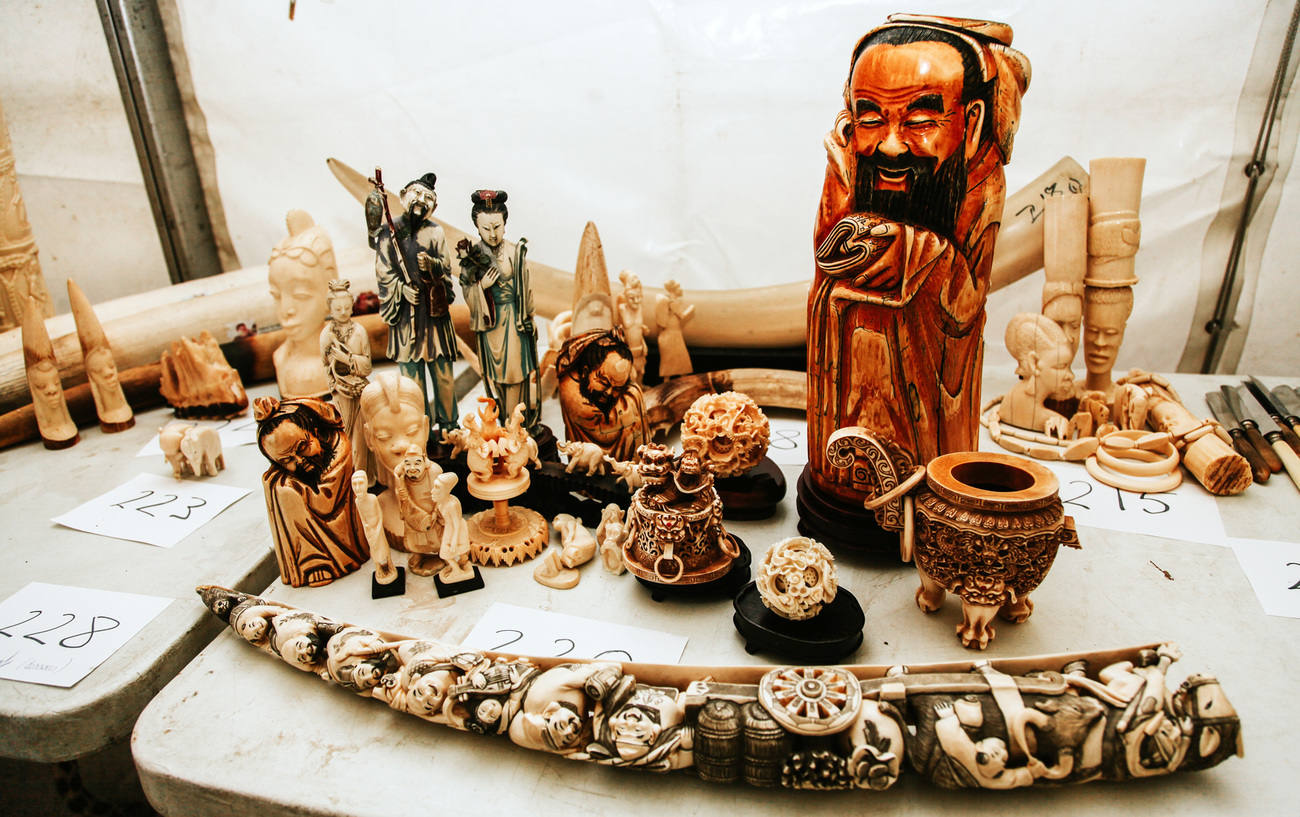
Ivory objects before destruction. Photo: Elisabeth Perotin / © IFAW
A trade running on trust
Documentation was the exception, not the rule. Only three of the 1,698 listings included any at all. About a quarter mentioned some form of provenance, and just 9% named a country of origin.
That's not really a surprise once you look at how the rules work. Ivory is controlled at the border, where illegal importation carries penalties of up to AU$310,000 and 10 years' imprisonment. But once an item is inside the country, responsibility for policing its sale falls to the states and territories, and none require a seller to prove an item's material, age, or lawful entry at the point of sale. In an online listing, a piece carved from a recently poached elephant can look identical to a genuine antique.
The public already gets it
Recent YouGov polling commissioned by IFAW, in collaboration with Humane World for Animals and Born Free Foundation, found that 95% of Australians believe or assume, that buying and selling ivory domestically is already illegal. It isn’t.
The same poll found that 97% of Australians think it's important for the government to introduce a ban, including 59% who say it's extremely important. Most people are more than ready for a ban. The government just hasn't delivered one.
An elephant never forgets, and neither should our government. Australians haven't forgotten this promise, and the polling shows they overwhelmingly want it delivered.
Seven years and counting
IFAW's 2016 Under the Hammer report first exposed the scale of this trade and helped prompt a parliamentary inquiry. The following year, the Australian government committed to closing the domestic market, and every state and territory agreed to find a way to do it.
Yet seven years after governments agreed to close the domestic ivory market, ivory continues to be openly bought and sold online. Every day that loophole remains open is another day wildlife traffickers can exploit a system built on trust rather than proof.
The stakes extend beyond ivory. The proposed domestic trade ban would also cover rhino horn, helping Australia close markets for products linked to species already facing serious extinction risks.
The latest research shows that Australia’s domestic ivory market has not disappeared. It has simply changed where and how it operates. Closing that market would deliver on a commitment made seven years ago and remove an avenue through which ivory of uncertain origin can continue to be traded.
It is time for Australia to deliver the ban it promised. You can help keep the pressure on. Add your name to our petition calling on the Australian government to deliver its 2019 promise and close the domestic ivory and rhino horn market.
Related content
Every problem has a solution, every solution needs support.
The problems we face are urgent, complicated, and resistant to change. Real solutions demand creativity, hard work and involvement from people like you.