Lusaka Elephant Nursery - Zambia
Rescuing orphaned elephants and returning them to the wildFrom rescue to release: how two orphaned elephants are finding freedom in Zambia
From rescue to release: how two orphaned elephants are finding freedom in Zambia
January 22, 2026
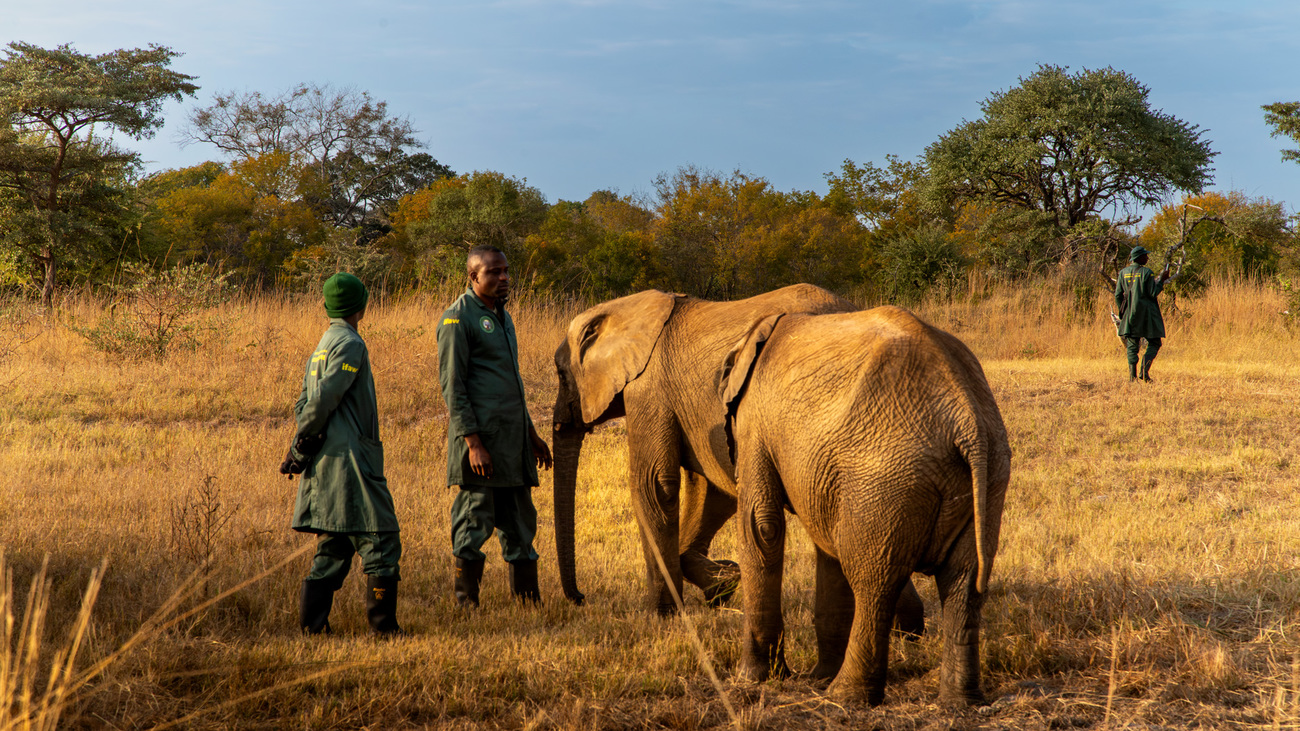
Elephant calves and their keepers in Kafue National Park. Photo: Jesse Maree / © IFAW
This journey marked a powerful milestone in their long rehabilitation, and in the broader mission of IFAW’s Room to Roam initiative, which envisions connected, safe landscapes where elephants and other wildlife can move freely across borders.
From rescue to recovery
Chikumbi and Ndewa were both rescued in distressing conditions and lovingly raised at the Lusaka Elephant Nursery, operated by Game Rangers International (GRI) with support from IFAW. For two to three years, expert caregivers provided unwavering dedication to help them overcome physical and emotional trauma. This preparation was essential for the next phase of their journey—to live among other orphaned elephants, grow independence, and one day, roam free in the wild.
“The Elephant Orphanage Project (EOP) was established in 2008,” says Rachael Murton, GRI’s Wildlife Rescue Director, “in response to the rescue of multiple elephants orphaned due to poaching. Since that time, thanks to our incredible donors and partners, we have expanded across two locations: the Nursery in Lusaka National Park, which cares for vulnerable orphans at the point of rescue and during initial rehabilitation, and, once they are old enough and strong enough, the Release Facility in Kafue National Park, for gradual release back into the wild.”
EOP responds to calves orphaned by poaching, human‑wildlife conflict, and drought. Under the care of dedicated elephant rescue rangers, these orphans receive nutrition, nurture, and the companionship of other young elephants—forming the surrogate herds critical to social development and long‑term survival. Over the years, EOP has cared for dozens of calves. Today, the Lusaka Elephant Nursery is home to four orphans beginning their recovery, while 12 are edging toward life back in the wild at the Kafue Release Facility.
A delicate operation with high stakes
“Getting the elephants into a transport vehicle is challenging every year,” Rachael explains. “We don’t have a truck designed for elephants once they graduate from the nursery, so we must hire one. They don’t recognise it—and they won’t go near it.”
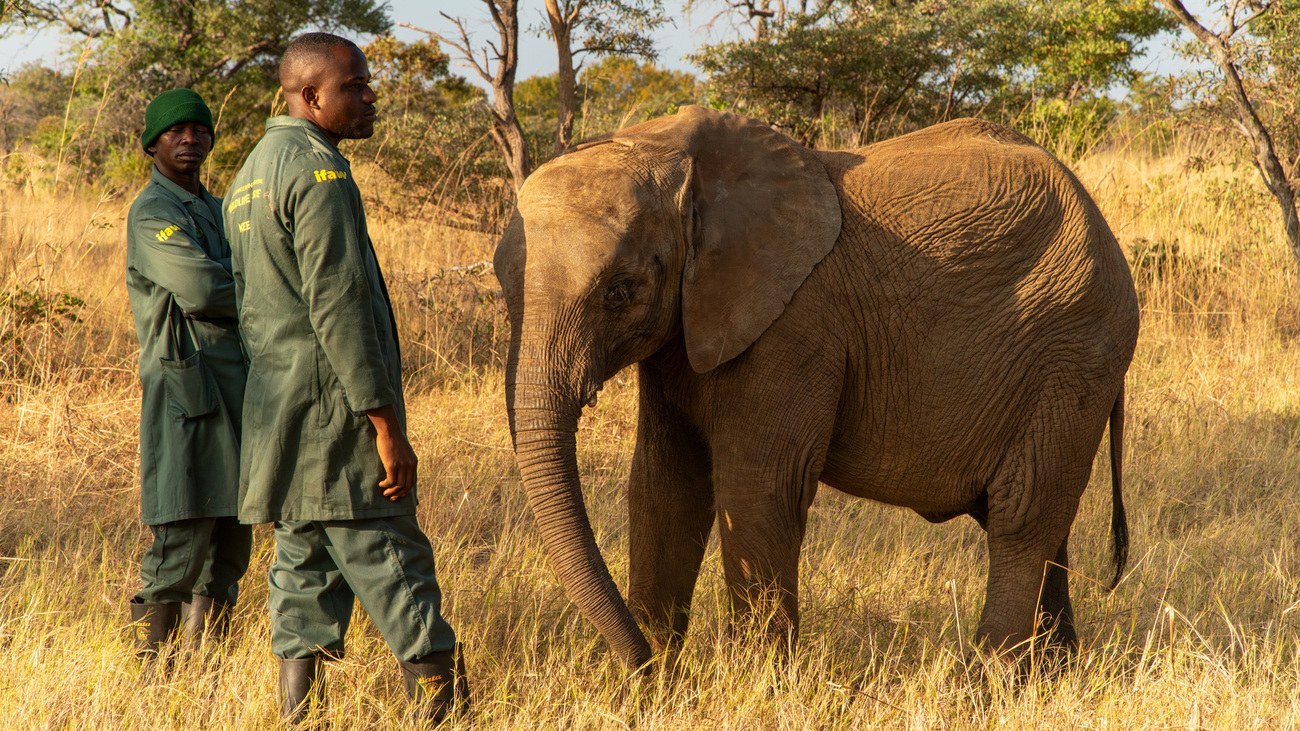
Elephant calf and their keepers in Kafue National Park. Photo: Jesse Maree / © IFAW
Because the truck isn’t custom‑built, full sedation is required for safe loading—a measure Rachael hopes to avoid in the future. “Our dream is to have our own vehicle permanently stationed at the nursery so we can train the elephants to load voluntarily over time,” she said. “The current process is physically demanding and logistically complex. But once they were safely inside, both elephants were revived and back on their feet for travel. They were checked every two hours throughout the journey.”
Although too stressed to drink, the elephants accepted food throughout the trip—munching on browse every few hours and cooled with water by their rangers. Their bond proved unbreakable.
“They broke through the divider in the truck just to be together,” Rachael laughed. “We normally separate them to balance the load, but they were determined to stand side by side.”
A warm welcome in Kafue
At the Kafue Release Facility, the elephants were offloaded down a sandy ramp and guided into the boma—a secure enclosure designed to give them space to rest and acclimatise before joining the release herd.
“As soon as they touched solid ground, you could see them relax,” said Rachael. “They drank their milk, walked into their new stables, and took comfort in their rangers’ presence. Since they were rescued, these dedicated caregivers have been their surrogate ‘mothers’, and this relationship is a critical part of their rehabilitation and essential now at this point of transition, when everything is new for them.”
Once calves move from the Lusaka Elephant Nursery to the Kafue Release Facility, they begin a “soft release” process. Here, they start to integrate with the herd while still receiving care and protection from keepers. Over time, they gradually reduce dependence on humans and increase interactions with wild elephants.
Over the years, GRI has released 19 elephants back into the wild, and 10 of these are actively monitored today. Some individuals have successfully joined wild herds or attached to other young bachelors, which is usual for teenage bull elephants. One notable success story is Chamilandu, once the herd matriarch, who had her own calf in 2019. In 2025, she even gave birth to Zambia’s first wild‑born calf by an orphan mother—her reproductive success being a true testament to the mission of GRI’s Elephant Orphanage Project. She now lives wild with her two calves, accompanied by other ex‑orphans.
This effort is part of IFAW’s growing Room to Roam network of protected landscapes, designed to secure migratory corridors and reduce conflict by giving elephants the freedom to move safely between ecosystems—from Malawi and Zambia to Zimbabwe and beyond.
From rescue to resilience
Each elephant carries a remarkable story. Chikumbi was just four months old when she was found by villagers near the Zambezi River—weak, malnourished, and alone.
“She seemed to be a physically capable young calf but demonstrated signs of post‑traumatic stress,” Rachael recalled. “To see her flourish into a healthy, confident young elephant fully immersed into a new family is incredibly rewarding.”
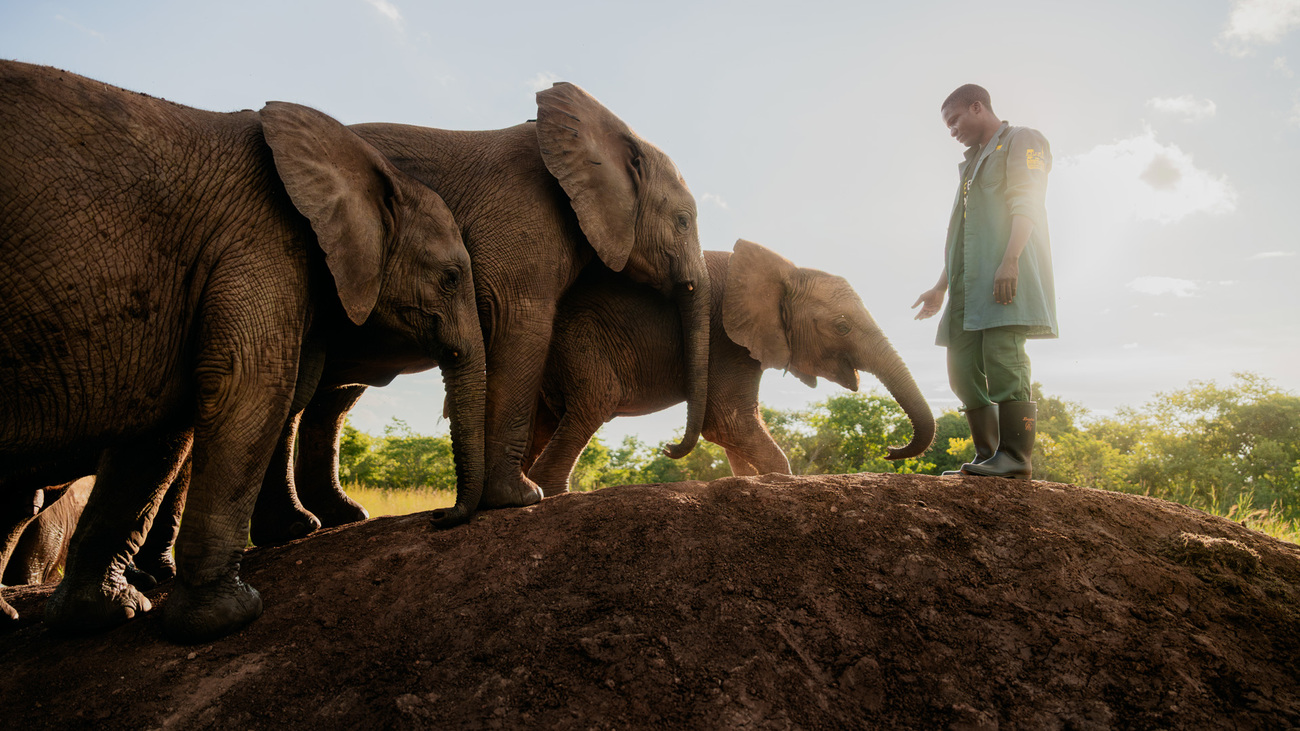
Keeper Myanda with Mataya, Chikumbi and Ndewa in Lusaka National Park. Photo: Donal Boyd / © Atlas 1 Studio
Ndewa, slightly older at rescue, was in even more critical condition.
“She was the most emaciated elephant we’ve ever saved who actually made it,” said Rachael. Months of around‑the‑clock care and specialised nutrition restored her health and spirit. In a surprising turn, the once‑nervous Ndewa has emerged as the bolder of the pair.
“She’s taken the lead at the release facility, while Chikumbi now looks to her for reassurance. They’ve switched roles completely.”
Both elephants are integrating well with the other release orphans and showing encouraging behaviours—respectful and submissive to older herd members, while exploring their environment with growing curiosity.
Every step with welfare in mind
Throughout the relocation, animal welfare was the top priority.
“We stopped the truck regularly to monitor them—cooling them down when needed, offering browse, and even placing elephant dung in the truck to surround them with familiar smells,” Rachael said. “It’s important to ease stress in every way possible. Welfare is at the heart of everything we do—and that IFAW does. We are committed to ensuring the best care at every step of their journey.”
This relocation isn’t the end—it’s a new beginning. Chikumbi and Ndewa will spend years at the Kafue Release Facility, gradually building the skills, relationships, and confidence needed to thrive on their own. And one day, when they are old enough, they’ll walk off into the wild—not just as survivors, but as symbols of success—for their species, for conservation, and for Room to Roam.
Related content
Every problem has a solution, every solution needs support.
The problems we face are urgent, complicated, and resistant to change. Real solutions demand creativity, hard work, and involvement from people like you.
DonateIFAW affiliates are registered as tax-exempt nonprofit organizations in several countries. Depending on where you reside, your donation may qualify for a tax deduction or benefit. See the pull-down menu at the bottom right of this page to see how IFAW operates in your country.