Centre for Wildlife Rehabilitation and Conservation - India
Near Kaziranga National Park, animals are being threatened by a single highwayElephant receives specialised dental treatment after poaching attack in India
Elephant receives specialised dental treatment after poaching attack in India
13 November 2026
After poachers hacked off both of his tusks, a 16-year-old elephant in Assam, India, faced severe injuries and persistent infection. A team of veterinary specialists from the Centre for Wildlife Rehabilitation and Conservation joined local authorities to provide the complex treatment he urgently needed.
When poachers attacked a 16-year-old elephant named Mangal Singh in Assam, India, they left him with devastating injuries. Both of his tusks had been hacked off close to their roots, causing severe bleeding and exposing sensitive tissue deep inside the tusks. Although local veterinary teams responded quickly, the injuries left Mangal Singh vulnerable to infection and in considerable pain.
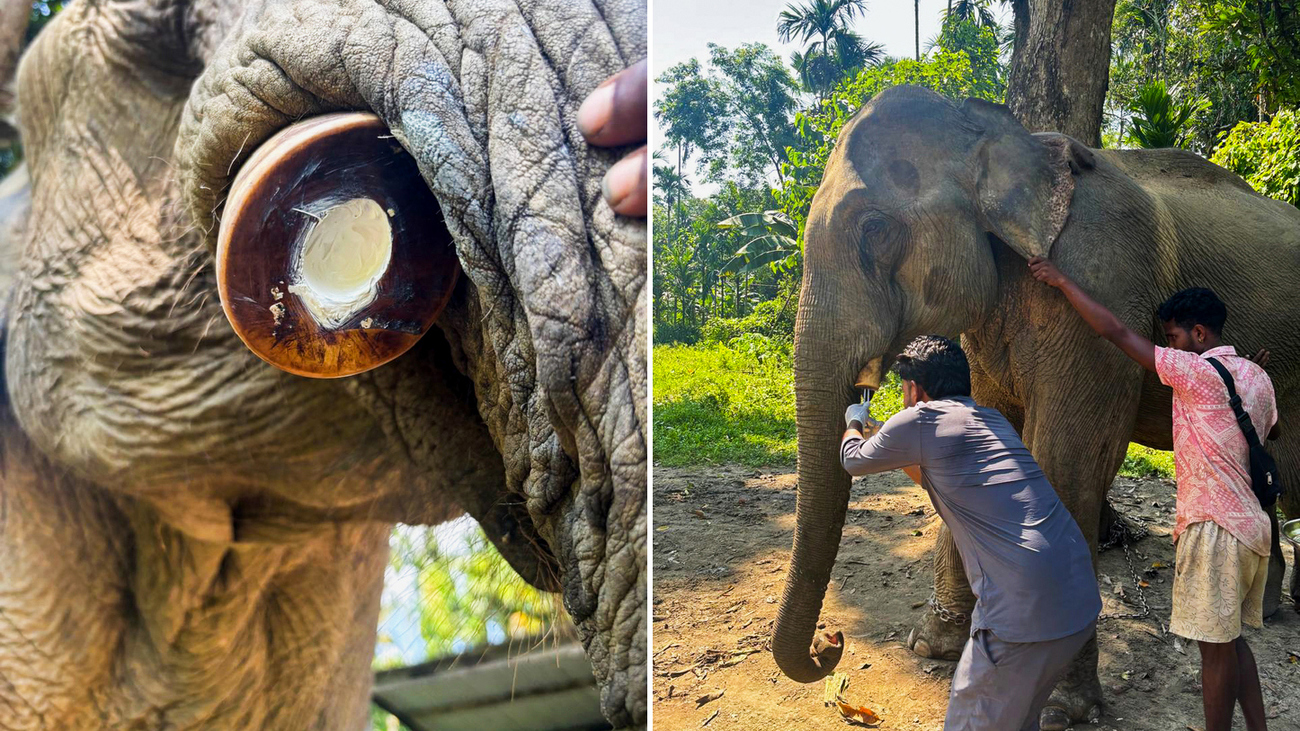
Mangal Singh receives specialised veterinary care at the CWRC in Assam, India, following severe tusk injuries caused by poaching. Photo: © IFAW-WTI
Months later, on 26 August 2026, a multidisciplinary team led by Dr Bhaskar Choudhury of the Centre for Wildlife Rehabilitation and Conservation (CWRC), a joint initiative of IFAW, the Wildlife Trust of India (WTI), and the Assam Forest Department, carried out a specialised dental procedure to address the damage and give Mangal Singh a better chance of recovery. Follow-up examinations have since shown encouraging signs of improvement, although he continues to require regular veterinary care.
Responding to a brutal poaching attack
Mangal Singh, a captive-born male elephant living in Margherita, Assam, was attacked in the Dhulijan forest area near Digboi in April 2026. His cries alerted nearby residents, who contacted the local Forest Department. Government veterinarians arrived to provide emergency medical treatment for the serious injuries caused by the removal of his tusks.
Unlike the horns of some other animals, elephant tusks are elongated incisor teeth containing living tissue, blood vessels, and nerves. When a tusk is broken or cut close to its base, the sensitive pulp inside can become exposed, creating a pathway for bacteria and potentially serious infection.
Despite ongoing veterinary attention, Mangal Singh continued to suffer from infection in the exposed pulp cavities. The severity of the injuries meant that emergency treatment alone was not enough, and more specialised intervention was needed to address the infection and preserve the remaining tusk structures.
The CWRC team also considered Mangal Singh's welfare when deciding how best to proceed. Having grown up in captivity, he was accustomed to his familiar surroundings and the people who cared for him. Rather than transport him to an unfamiliar location, which could have caused additional stress, the team decided to arrange the specialised treatment where he was already living.
A complex dental procedure offers hope for recovery
On 26 August, a multidisciplinary team led by Dr Bhaskar Choudhury, CWRC Centre Manager and lead veterinarian at WTI, performed a partial pulpotomy on Mangal Singh.
The procedure involves treating damaged or infected dental pulp while attempting to preserve healthy tissue and the remaining tooth structure. For Mangal Singh, whose tusks had been cut close to their roots, the treatment was intended to address the exposed cavities, control infection, and reduce the risk of further complications.
The operation required expertise from several veterinary and dental disciplines. Working under the guidance of the Assam Forest Department, the team included Dr Bhupen Sarma, a retired professor and specialist in elephant anaesthesia; an orthodontic team from Tinsukia led by Dr Abhishek Ojha; and veterinary professionals from the Assam Animal Husbandry Department and WTI.
Together, they brought the specialist skills needed to manage a challenging procedure on an animal of Mangal Singh's size, while taking account of the injuries he had already sustained.
Following the procedure, the team planned seven days of intensive post-operative care and close veterinary observation to monitor his condition and manage the risk of infection.
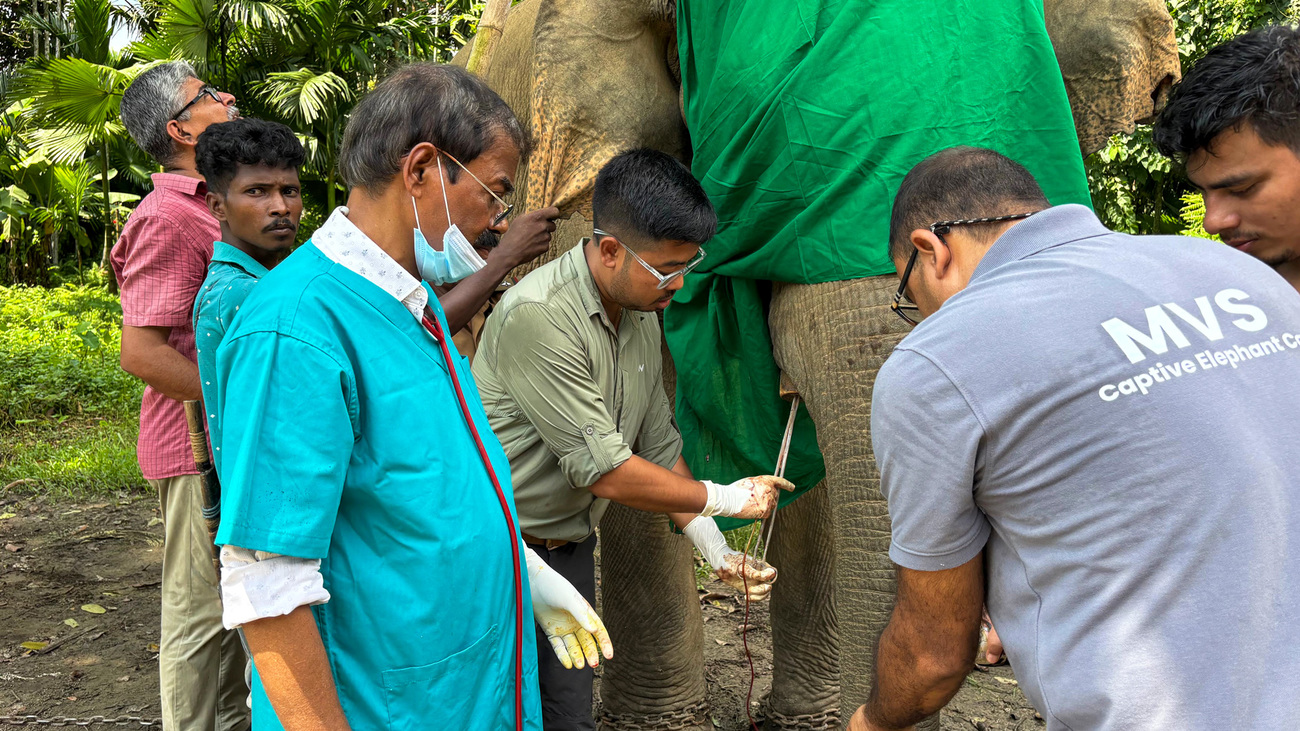
Elephant Mangal Singh receiving veterinary care at the CWRC in Assam, India. Photo: © IFAW-WTI
Encouraging signs of recovery following continued treatment
Mangal Singh's treatment did not end with the August procedure. On 14 September, the veterinary team conducted a follow-up examination and found that further intervention was needed to address infection in one of the affected tusk canals.
The team drained accumulated pus, removed dead pulp tissue, and thoroughly cleaned and dressed the affected area. They then temporarily sealed the canal to help control infection and support healing. During the same examination, the right tusk showed signs of recovery.
A subsequent examination on 29 September brought further encouraging news. Mangal Singh showed signs of improvement, indicating a positive response to the treatment and continued veterinary care.
His recovery remains an ongoing process. The veterinary team continues to monitor his health closely, providing regular cleaning, dressing, and additional treatment as needed to manage infection and support healing.
Protecting elephants from the consequences of wildlife crime
Mangal Singh's injuries illustrate the serious and lasting harm caused by the illegal ivory trade. Beyond the immediate trauma of an attack, elephants can face prolonged pain, infection, and complications that require months of veterinary treatment. His case also raises concerns about the protection of elephants living in captivity, which may remain vulnerable to poaching and other threats even when they are under human care.
The response to Mangal Singh's injuries brought together government authorities, veterinary specialists, and conservation organisations, combining their expertise to address an unusually complex injury. It also demonstrates how CWRC's veterinary expertise can be mobilised beyond the centre itself, bringing specialised treatment directly to an animal in need.
While Mangal Singh continues to require veterinary attention, the improvements observed in September are encouraging. His recovery remains a work in progress, but the collaboration and continued care behind his treatment offer a positive example of what can be achieved for animals suffering the consequences of wildlife crime.
Related content
Our work can’t get done without you. Please give what you can to help animals thrive.