Sheryl Fink
Canada releases long-awaited plan to reduce whale entanglements
Canada releases long-awaited plan to reduce whale entanglements
Sheryl Fink | 12 March 2026
In early February, a four-year-old North Atlantic right whale known as Division died from injuries caused by entanglement in fishing gear. He was just beginning his life in the ocean. Instead, like too many before him, it was cut short by ropes designed for another purpose.
Just days later, on 3 February 2026, Canada’s Department of Fisheries and Oceans released its long-awaited Whalesafe Fishing Gear Strategy, a five-year national plan to reduce and prevent whale entanglements.
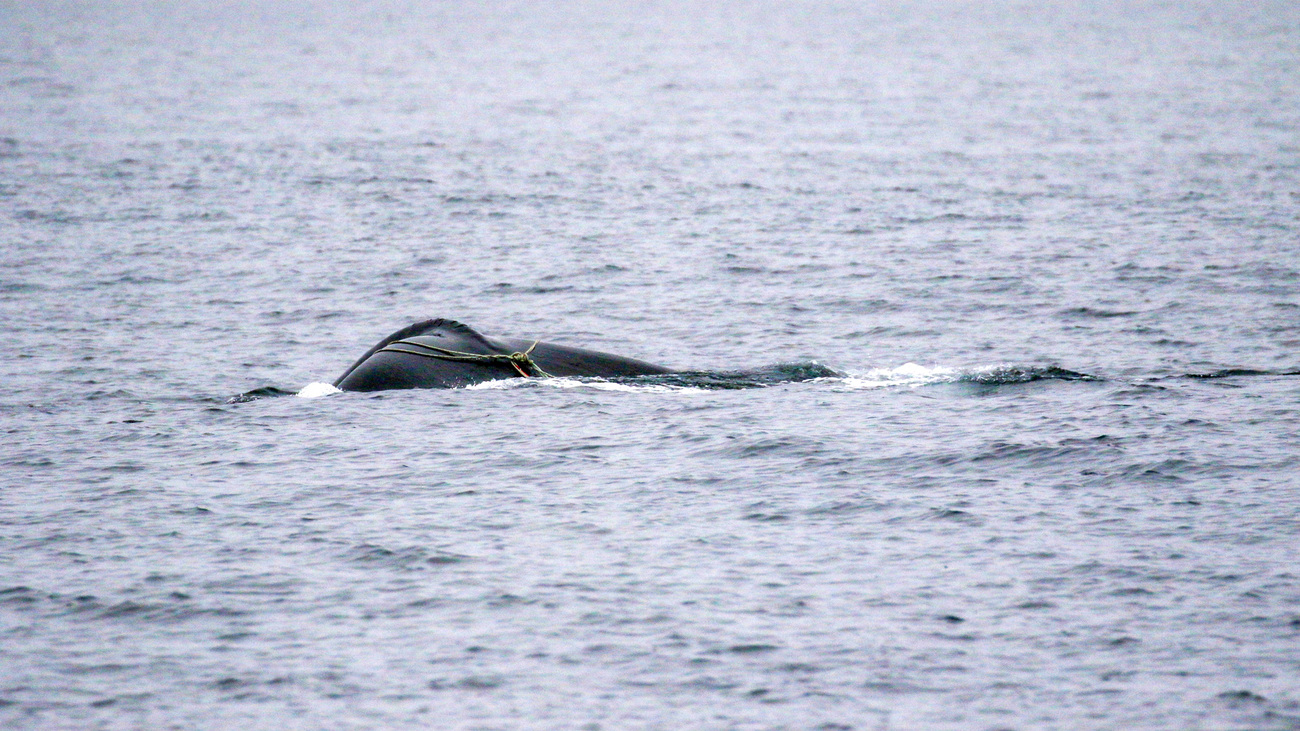
A North Atlantic right whale is spotted with a line wrapped around its tail and fluke. Photo: © NOAA Fisheries, taken under permit #27066
The timing could not be more significant. This winter is shaping up to be a record-breaking calving season for the North Atlantic right whale, one of the world’s most endangered large whales. With only around 380 individuals remaining, every calf matters. Every adult matters. Every entanglement is a setback for the species’ survival.
Entanglement is a serious threat
Entanglement in fishing gear is one of the primary causes of injury and death for right whales. Heavy ropes can wrap around a whale’s mouth, flippers, or tail, cutting into flesh and bone. Even when whales survive the initial incident, they may drag gear for months or years, making it harder to swim, feed, reproduce, or migrate.
For a species already under pressure from vessel strikes, underwater noise, and climate change, these added burdens can be fatal. Reducing entanglement risk is one of the most immediate and effective actions we can take to help right whales recover.
What the Whalesafe Fishing Gear strategy includes
Canada’s new strategy sets out a structured, phased approach to introducing innovative fishing technologies that either prevent entanglements entirely or reduce their severity.
Pilot areas will test three main categories of gear:
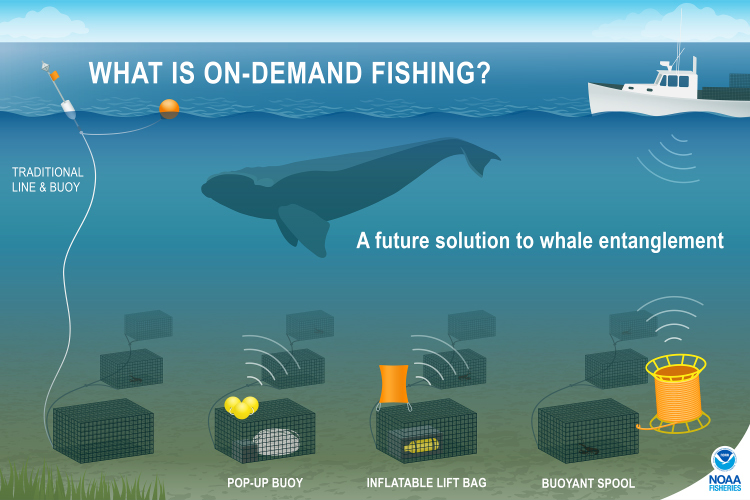
- On-demand, or ropeless, gear. Traditional fishing methods rely on vertical lines connecting traps on the seafloor to surface buoys. On-demand systems eliminate these persistent vertical lines. Instead, gear remains on the ocean floor and is retrieved when triggered by an acoustic signal, significantly reducing the risk of whales becoming entangled.
- Low breaking-strength gear. In cases where entanglement does occur, weaker ropes or links may allow whales to break free more easily or reduce the amount of gear they carry, lessening long-term injury.
- Alternative gear configurations. Using longer trawls, where multiple traps are connected together, reduces the number of vertical lines in the water column. In some fisheries, sinking or neutrally buoyant groundlines may also reduce entanglement risk.
Importantly, the strategy recognises that Canada’s fisheries are diverse. There is no one-size-fits-all solution. Implementation will be guided by region-specific risk assessments and collaboration with harvesters, Indigenous communities, researchers, and other stakeholders.
The first focus will be on Canada’s east coast, where right whales face the greatest risk. Efforts will then expand to additional fisheries and whale species on both coasts.
A step forward, and more to do
IFAW welcomes this commitment from the Canadian government and the leadership shown by Canadian harvesters working towards coexistence with whales. Collaboration is essential. Protecting whales and supporting sustainable fisheries are not opposing goals—they are interconnected.
But this strategy must now move from paper to practice.
We need:
- Clear timelines and accountability
- Rapid scaling of proven technologies to reduce entanglement
- Continued investment in innovation and monitoring
- Strong enforcement and adaptive management
Entanglement is just one of several human-caused threats. To secure a future for right whales, action must also address vessel strikes, underwater noise, and the growing impacts of climate change.
The good news is that solutions exist. We know what works. And when governments, scientists, fishers, and communities act together, we can reduce risk and give whales the space they need to recover.
You can help protect right whales
Right whales are resilient. This year’s calves are a powerful reminder that recovery is possible. But they need safer oceans to survive.
You can help protect the North Atlantic right whale from extinction by adding your voice in support of stronger protections and fishing practices that reduce the risk of entanglement.
Together, we can turn innovation into impact—and ensure that whales like Division are not lost in vain.
Related content
Our work can’t get done without you. Please give what you can to help animals thrive.