Blog
Preparing Mexico’s animal rescuers for the next disaster
Read moreFirst fin whales killed as Iceland’s brutal whaling industry resumes
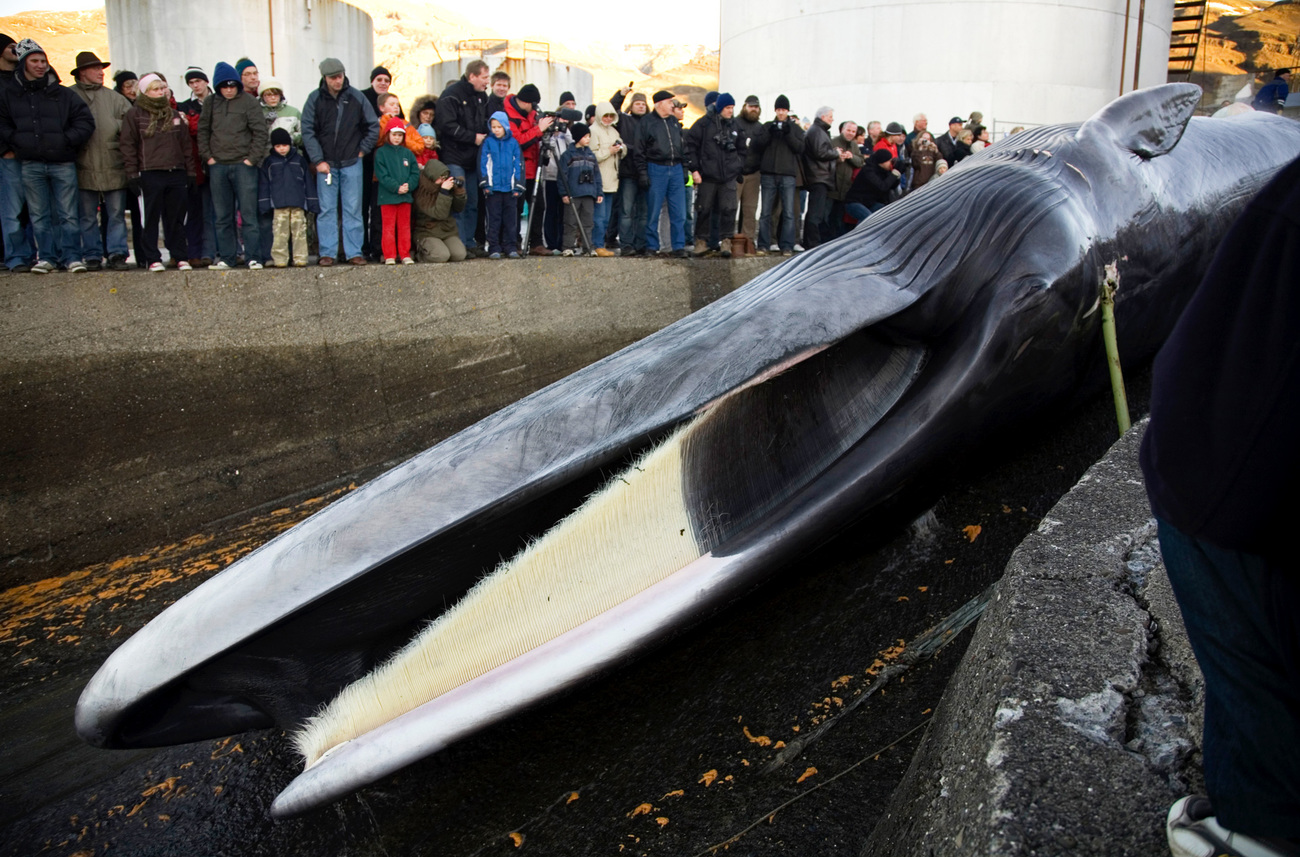
(Reykjavik, 23 June 2026)—Whalers in Iceland have returned to harbour with their first kills in three years. Yesterday, the whaling boat Hvalur 9 harpooned two fin whales. They arrived at the whaling station in Hvalfjörður on 23 June, where the dead whales are being processed. Up to 148 more fin whales could be killed in the coming weeks.
“This is the catastrophe we had hoped never to witness again. The senseless and brutal killing of whales is continuing—and this is just the beginning,” says Andreas Dinkelmeyer, Campaign Manager at IFAW Germany. “All of it is driven by the reckless actions of a notorious whaler who cannot even sell the meat.”
Icelandic whaling company Hvalur hf. has resumed hunting fin whales with two vessels after a two-year hiatus. The company returned to whaling in 2009 and has since killed 1,017 fin whales. In the most recent season in 2023, just 24 fin whales were taken, following a much larger catch of 148 in 2022. The meat has primarily been exported to Japan, where demand is declining as the country expands its own whaling capacity, including the launch of a new processing mothership in 2024.
For the 2026 season, whalers have been granted a quota of 150 fin whales and 168 minke whales.
Fin whales are the second-largest animals in the world and are officially considered vulnerable, meaning the species faces a high risk of extinction in the wild.
Conservationists from the International Fund for Animal Welfare (IFAW) have branded fin whaling unnecessary, inhumane, and brutal. For the animals hunted, it often results in prolonged suffering following an exhausting chase and being struck by a harpoon. Official studies show that, in some cases, it can take up to two hours for a harpooned whale to die. Cases have also been documented where severely injured whales managed to escape.
Commercial whaling takes place against a backdrop of declining demand for whale meat, while a referendum on whether to restart European Union (EU) membership negotiations in Iceland is scheduled for August this year. The EU strictly opposes commercial whaling, but some view the practice as part of Iceland’s national identity. The renewed focus on the issue highlights tensions over policies that some fear could be undermined by closer ties with the EU.
“We question whether Kristján Loftsson, owner of Hvalur hf., is using whaling to inflame political debate, with fin whales ultimately paying the price as collateral damage,” Dinkelmeyer added. “This is a devastating setback. The government had a clear opportunity to halt—or at least hinder—whaling this season, and it has let it slip away. The unnecessary and brutal hunting of whales is outrageous and cannot be justified under any circumstances.”
The current government has announced plans to review Iceland’s whaling legislation in the autumn, with the stated goal of ultimately ending whaling in the country. However, any meaningful changes may not take effect until the current five-year licence expires in 2029, leaving uncertainty over how quickly reforms can be implemented. Responsibility for the process lies with the Minister of Industry, Hanna Katrín Friðriksson, who oversees fisheries and will play a key role in shaping the future of whaling policy.
Despite the likelihood that unnecessary whaling will continue in the short term, there are signs of growing momentum for change. Over the past two decades, a broad alliance of Icelandic stakeholders—including environmental and animal welfare organisations, the tourism sector, policymakers, and legal experts—has been working to drive a societal shift. Across Icelandic society, opposition to whaling has steadily grown, with increasing recognition that the practice no longer reflects public values or economic realities.
“I call on the government and the responsible minister to explicitly reaffirm their opposition to whaling now and to present concrete plans for new legislation that will bring an end to whaling once and for all,” said Dinkelmeyer. “We call on them to ensure that existing regulations are fully enforced and violations are strictly penalised. People in Iceland do not want whaling, and the government has a duty to stop tolerating the irresponsible and ruthless behaviour of the whaling industry.”
Ends
Notes to Editors:
Images are available here.
Caption and Credit for Videos is: Videos: © IFAW / Leví Baltasar
A vessel from the Hvalur Hf. whaling fleet brings the first fin whales killed in the 2026 season to the whaling station in Hvalfjörður, Iceland. The animals were killed during the night of 21 June 2026 to 22 June 2026. They are pulled ashore via a ramp and butchered in the open air.
More than 1,900 fin and minke whales have been killed in Iceland since the International Whaling Commission (IWC) moratorium on commercial whaling came into effect in 1986.
Fin whales are the second largest mammals on earth, growing on average up to 20 metres long and weighing about 38 to 50 tonnes. They are fast swimmers and are only surpassed in size by blue whales. Globally the species is considered Vulnerable on the IUCN Red List of Threatened Species.
In 1982, the International Whaling Commission (IWC) took a decision to set zero catch limits for all commercial whaling (i.e. the commercial whaling moratorium). This came into force in 1986, but unlike other whaling nations, Iceland did not take out an ‘objection’ to this decision – instead, once the ban was in place, it continued a small “scientific whaling” programme until 1989. Iceland abruptly left the IWC in 1992 but re-joined in 2002, this time taking out a ‘reservation’ against the moratorium. Iceland recommenced commercial whaling under its IWC moratorium reservation in 2006, resulting in a self-allocated quota of fin and minke whales.
Further renewals of the five-year whaling licenses could continue to strain Iceland’s international relations including with the US, which has had diplomatic sanctions (so-called Pelly Amendment sanctions) in place against Iceland since 2014 due to its commercial whaling activities and international whale meat trade.
Our work can’t get done without you. Please give what you can to help animals thrive.
Unfortunately, the browser you use is outdated and does not allow you to display the site correctly. Please install any of the modern browsers, for example:
Google Chrome Firefox Safari