Community Engagement
How education is shaping the future of conservation in Amboseli
How education is shaping the future of conservation in Amboseli
September 9, 2026
By Bernard Tulito, IFAW Community Liaison Officer and Victor Murunga, IFAW Planning, Monitoring, Evaluation, & Learning Manager
In 2014, community leaders in the Olgulului Ololarashi Group Ranch (OOGR) landscape in Kenya’s Amboseli ecosystem saw a challenge: bright young people with the potential to succeed were being left behind simply because they lacked access to educational opportunities.
At the same time, IFAW recognised that securing the future of Amboseli’s iconic wildlife requires more than protecting habitat. It also requires investing in the people who share these landscapes with wildlife.
This vision lies at the heart of Room to Roam, IFAW's initiative to secure and reconnect critical habitats while enabling communities to lead conservation and thrive alongside nature.
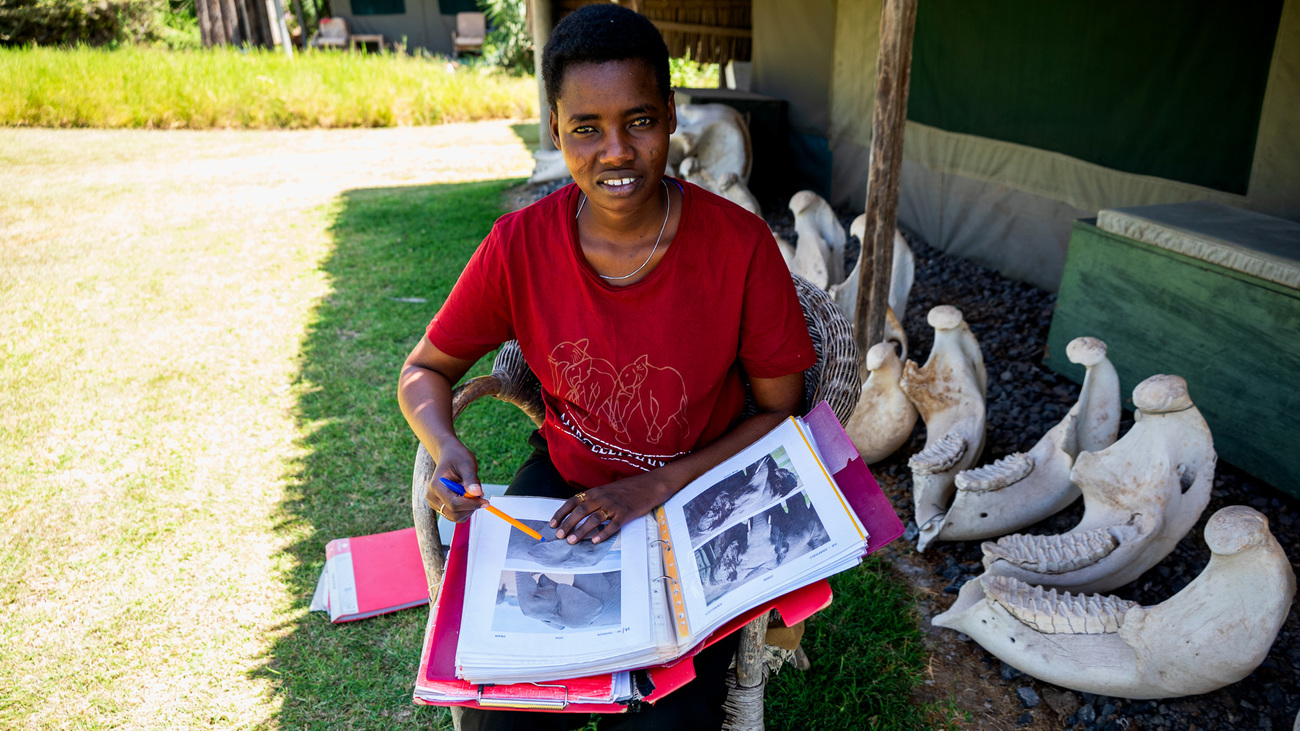
Cecilia Parrae, field researcher at Amboseli Trust for Elephants and IFAW scholarship recipient. Photo: Guyo Adhi / © IFAW
In partnership with community leaders, IFAW launched the OOGR–IFAW scholarship project to support promising young people facing financial barriers to higher education. By opening doors to further education, the project is helping cultivate future professionals, community leaders, and conservation champions whose knowledge and leadership can strengthen local livelihoods and support the long-term stewardship of the Amboseli landscape.
More than a decade later, the results are both measurable and deeply human.
Opening doors to education
Over the past decade, the programme has supported two cohorts of 60 students each.
The first cohort, supported from 2014 to 2018, achieved a 95% graduation rate, with scholars completing degrees and diplomas across a range of fields. In the second cohort, which began in 2018, 85% of scholars have already completed their studies, with the remaining students expected to graduate by the end of 2026.
The project is also helping young people progress from secondary school to higher education. In the second cohort, 98% of secondary school beneficiaries achieved the C+ grade or higher required for university entry.
Scholars have pursued studies in fields including environmental science, wildlife management, veterinary medicine, education, health, and civil engineering, building skills that can contribute to stronger communities and a more resilient landscape.
From education to impact
The impact of the scholarship programme extends far beyond the classroom.
Approximately 15–20% of graduates have pursued careers in conservation and environmental sciences, including wildlife conservation and environmental management. Among them is Cecilia Parsae, whose journey demonstrates the transformative power of opportunity.
Growing up in a pastoral Maasai community, Cecilia faced significant barriers to completing her education. After becoming a young mother, she persevered through stigma and financial hardship, eventually earning a place in secondary school. When the cost of university threatened to end her education once again, the IFAW scholarship provided the support she needed to continue.
Cecilia studied at Egerton University and qualified as a veterinary paraprofessional. Today, she works with the Amboseli Trust for Elephants, contributing to wildlife health, research, and conservation. Her story shows how investing in education can create pathways from opportunity to leadership and, in Cecilia’s case, directly to conservation impact.
But conservation careers are only part of the picture. Strong, resilient communities depend on people with diverse skills and expertise.
Health and medical sciences account for the largest share of graduates, at approximately 25–30%. These graduates are strengthening community health systems through careers in clinical medicine, nursing, public health, and health records.
A further 25–30% have entered education and social sciences, working as teachers, social workers, community development practitioners, and other professionals who strengthen local knowledge, social cohesion, and community capacity.
The remaining 20–25% have pursued business, entrepreneurship, and other professional careers, contributing to economic resilience and creating opportunities that can reduce reliance on natural resources.
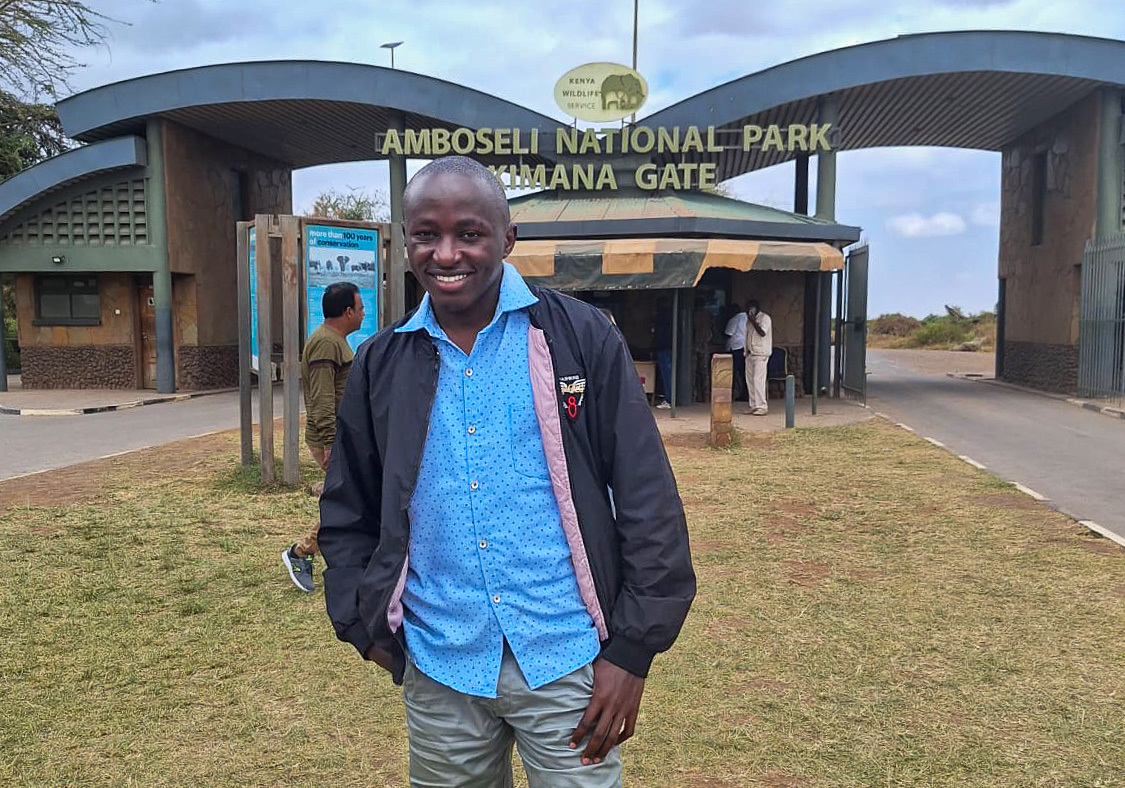
Vincent Solitei, one of the beneficiaries of IFAW’s scholarship programme in Amboseli, Kenya. Photo: Meshack Tetile / © IFAW
When one person is lifted, many rise
For Vincent Solitei Kupaai, the scholarship changed the trajectory of his life and created opportunities for those around him.
Raised by a single mother who depended on small-scale farming, Vincent qualified for university but faced the reality that his family could not afford tuition. The scholarship enabled him to study Health Records and Information Management at Kenyatta University, where he graduated with First Class Honours.
Today, Vincent works in the health sector while pursuing a master’s degree in public health. His work supports health systems, data quality, and evidence-based decision-making, while his research focuses on improving health outcomes in his home region. He has also supported his siblings through school and helped strengthen his family’s economic stability.
As Vincent puts it, “When one person is lifted, many others rise with them.”
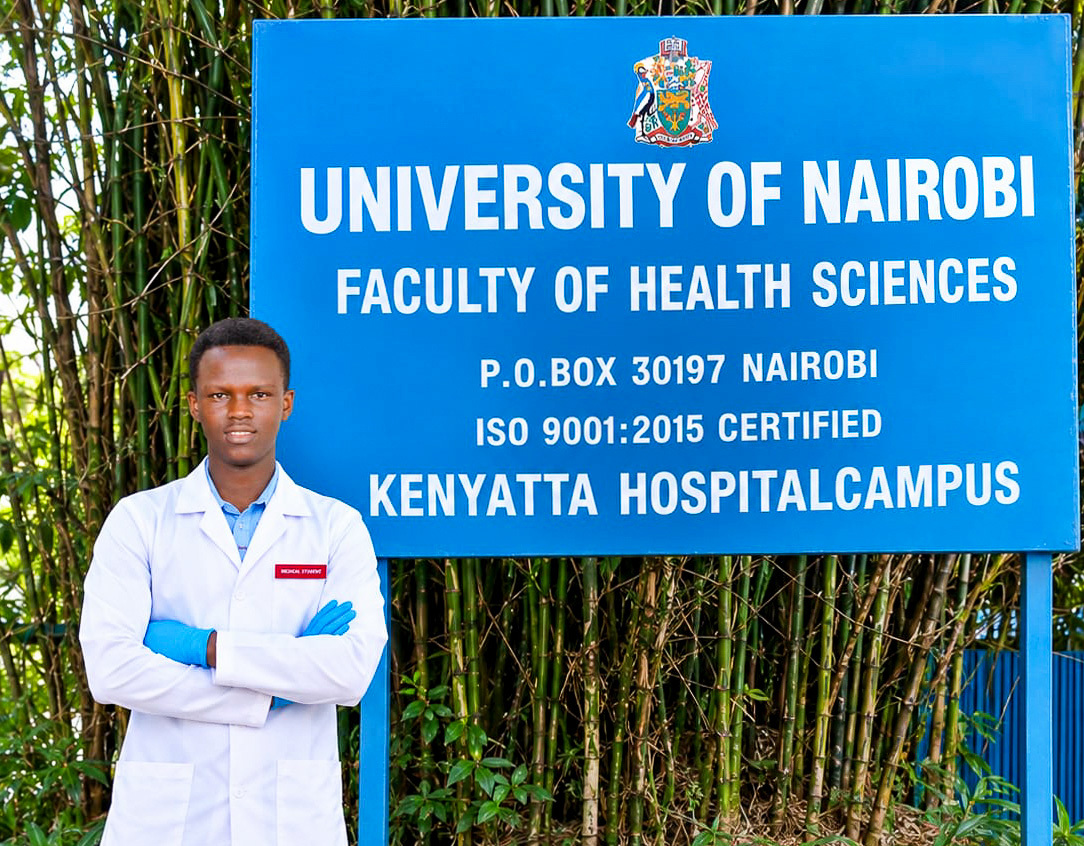
Meshack Tetile, one of the beneficiaries of IFAW’s scholarship programme in Amboseli, Kenya. Photo: Vincent Solitei / © IFAW
Meshack Tetile represents the promise of the project’s next generation. After achieving an A plain in secondary school, Meshack’s ambition to study medicine was threatened by financial constraints. Through the IFAW scholarship, he secured the opportunity to pursue a Bachelor of Medicine and Surgery at the University of Nairobi.
His goal extends beyond personal achievement. Meshack hopes to improve access to healthcare in his community and support other young people facing barriers to education.
A lasting investment in people and nature
The OOGR–IFAW scholarship programme demonstrates how investing in education can strengthen communities and contribute to conservation for generations to come.
By investing in young people like Meshack, Cecilia, and Vincent, the programme is helping build a skilled and empowered generation. Some will work directly in conservation. Others will strengthen healthcare, education, local economies, and families. Together, they contribute to communities with greater capacity and opportunity to shape the future of the landscapes they call home.
Through Room to Roam, IFAW recognises that lasting conservation depends on both wildlife and people having the opportunity to thrive. By investing in the next generation, we are helping ensure communities have the knowledge, skills, and agency to lead that future.
Related content
Our work can’t get done without you. Please give what you can to help animals thrive.