Landscape Conservation
25 countries put wildlife on the global climate agenda at COP31
25 countries put wildlife on the global climate agenda at COP31
November 19, 2026
Championed by Zimbabwe and supported by IFAW and international partners, the Wildlife for Climate Declaration marks a historic step towards recognising wild animals as an essential part of climate action.
For years, climate discussions have rightly focused on protecting and restoring forests, grasslands, wetlands, and oceans. But one critical part of these ecosystems has received far less attention: the wild animals that help keep them functioning.
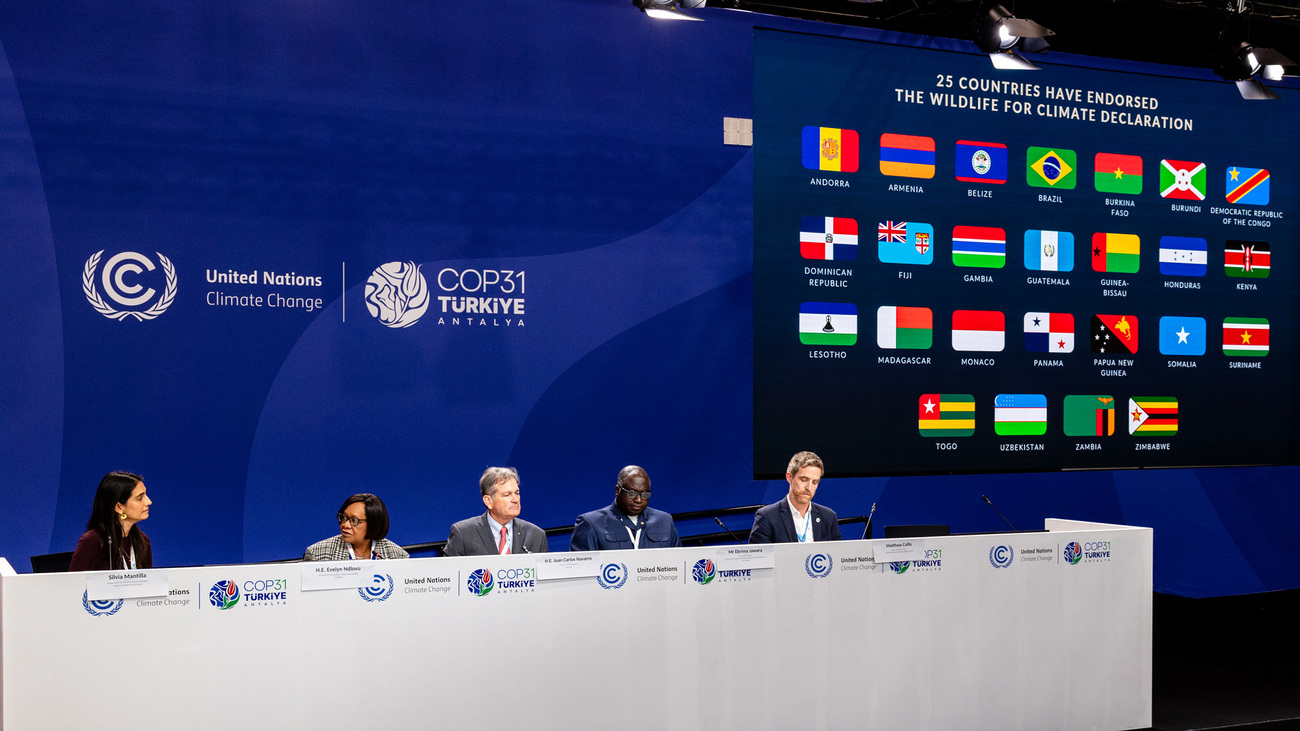
Government representatives and conservation partners at the COP31 press conference for the Wildlife for Climate Declaration, with the flags of all 25 endorsing countries displayed behind the panel. Photo: © IFAW and WFA
That began to change on 17 November at COP31 in Antalya, Türkiye, when 25 countries came together to launch the Wildlife for Climate Declaration. Championed by the Government of Zimbabwe, the initiative marks the first time a coalition of governments has jointly promoted the protection and restoration of wild animals as part of climate action at a UN Climate Conference.
For IFAW, which has worked with governments and conservation partners to advance this agenda since COP28 in Dubai, the launch represented an important shift in how the international community understands nature's contribution to addressing climate change.
"We're finally seeing nature not just as a place, but as a process, and wild animals are critical to driving that process," said Matt Collis, IFAW's Senior Director of Policy.
It's a distinction that matters. A forest's ability to support climate resilience depends on far more than the number of trees standing within it. It also depends on the animals dispersing seeds, cycling nutrients, shaping vegetation, and helping ecosystems regenerate.
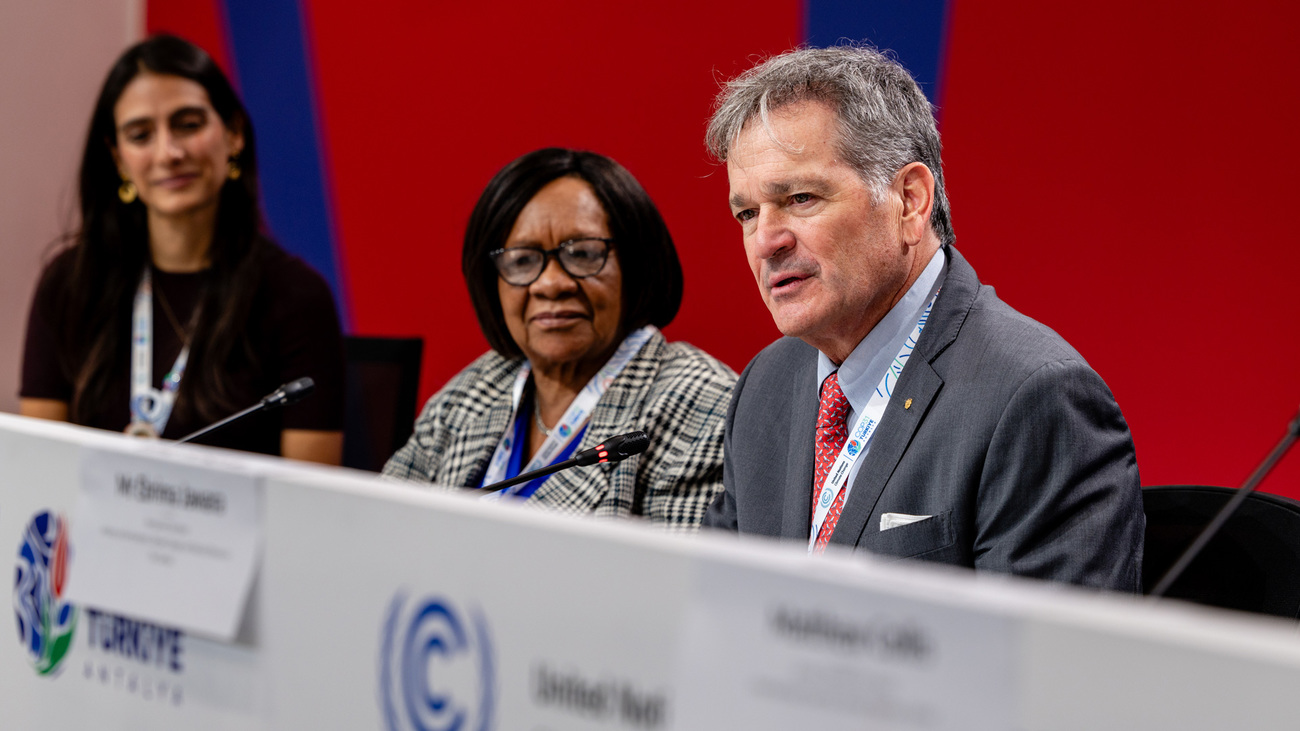
Panama’s Minister of Environment Juan Carlos Navarro, Zimbabwe’s Minister of Environment, Climate and Wildlife Evelyn Ndlovu, and Silvia Mantilla of WFA at the COP31 press conference. Photo: © IFAW and WFA
The animals behind healthy ecosystems
Consider the African forest elephant. As elephants travel through the Congo Basin, they consume fruit and disperse seeds across considerable distances, helping shape the composition and regeneration of tropical forests. Research suggests that their activities can influence forest carbon storage, although the effects vary between ecosystems.
In Belize, Baird's tapirs and howler monkeys perform similar seed-dispersal roles. Across the world's forests, birds, bats, primates, and other animals help maintain the ecological relationships that allow these habitats to recover from disturbance and adapt to changing conditions.
These contributions are increasingly well understood by scientists, but they have not always been reflected in climate policy. The Declaration builds on a Scientific Consensus on Wildlife and Climate supported by more than 350 scientists from 47 countries, making the case for recognising wildlife's ecological functions in climate mitigation and adaptation.
At the launch, Belize's Minister of Sustainable Development, Orlando Habet, captured the significance of this shift.
"Wildlife is not simply a victim of climate change. Wildlife is also an ally in addressing it. Our forests are not merely a collection of trees. They are living communities, sustained by relationships among plants, animals, soil and water," he said.
Habet also cautioned against measuring the success of nature-based climate action through carbon alone. Without healthy wildlife populations and the ecological processes they support, even apparently intact habitats may become less resilient over time.
For Collis, this is precisely why the Declaration belongs at a climate conference.
"It's really important to see this recognition here at a climate COP, because for too long we've talked about nature like it's something static, a place, not a process," he explained. "Wild animals are key for driving those processes in nature that help natural solutions to climate thrive."
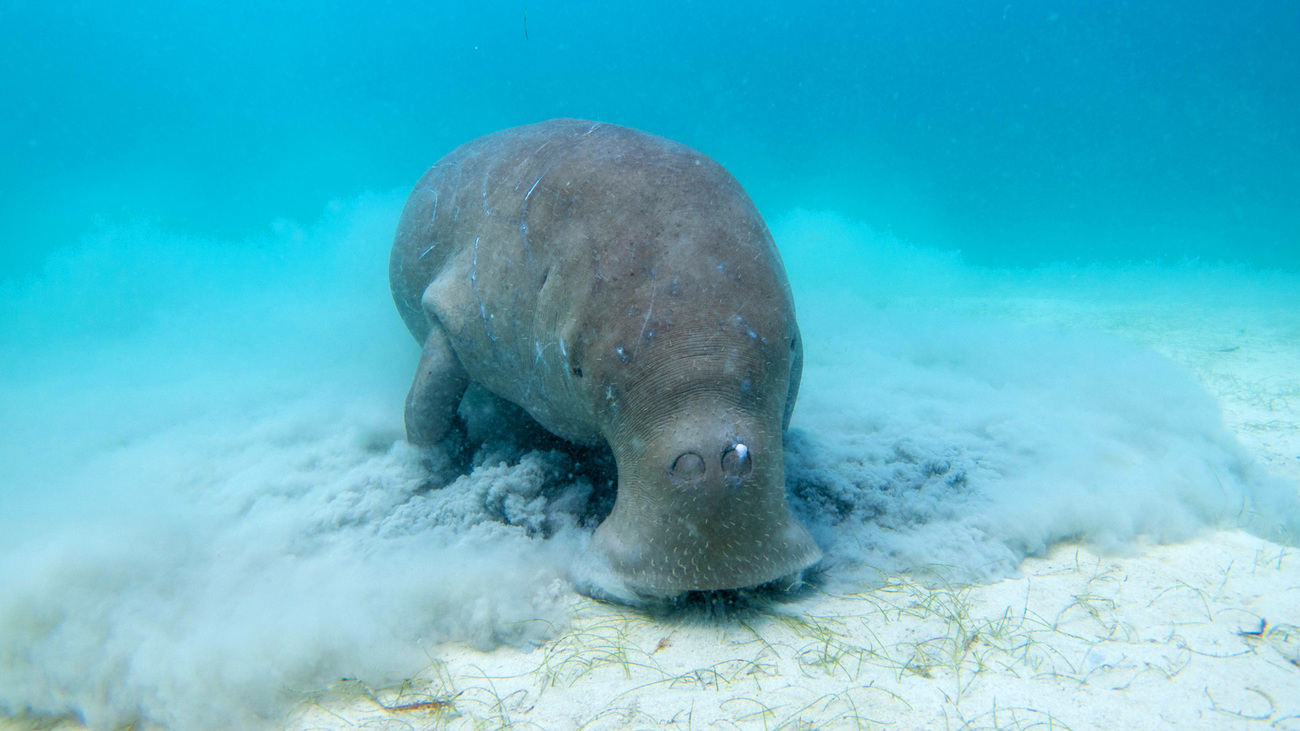
Dugong on the bottom of the ocean.
Zimbabwe's leadership brings countries together
The Declaration is the result of sustained international cooperation, rooted in African leadership and strengthened through engagement with governments across the world.
Zimbabwe championed the initiative, working with IFAW, the World Federation for Animals (WFA), and other partners to build support for a shared commitment to protect, conserve, and restore wildlife and the habitats on which it depends. The Global Rewilding Alliance also supported the effort.
That collaboration was evident at the launch, which drew a nearly full audience of 200 people. Representatives from nine endorsing governments addressed the gathering, including six ministers.
Zimbabwe's Minister of Environment, Climate and Wildlife, Evelyn Ndlovu, spoke about the consequences of wildlife loss for the ecosystems on which people depend.
"When we lose wildlife, it is not only a loss of species; it is a loss of the living processes that keep natural systems working as they should. That is why protecting and restoring wildlife is climate action. It must be recognised and prioritised as such," she said.
The Declaration has attracted support from countries across Africa, Asia, Europe, Latin America, the Caribbean, and the Pacific. Their landscapes, wildlife, and conservation challenges differ considerably, but their endorsement reflects a shared recognition that healthy animal populations contribute to functioning ecosystems and climate resilience.
Panama's Minister of Environment, Juan Carlos Navarro, delivered one of the event's most passionate interventions, welcoming the leadership of countries that are home to some of the world's richest biodiversity.
"I am truly hopeful for the first time at the COP. Because for the first time, I see us, the countries where the biodiversity is making our own decisions to protect our wildlife," he said.
He also challenged governments to act with greater urgency, arguing that climate change and biodiversity loss cannot be addressed independently.
"We cannot separate these themes, it is impossible to talk about climate change, without talking about wildlife."
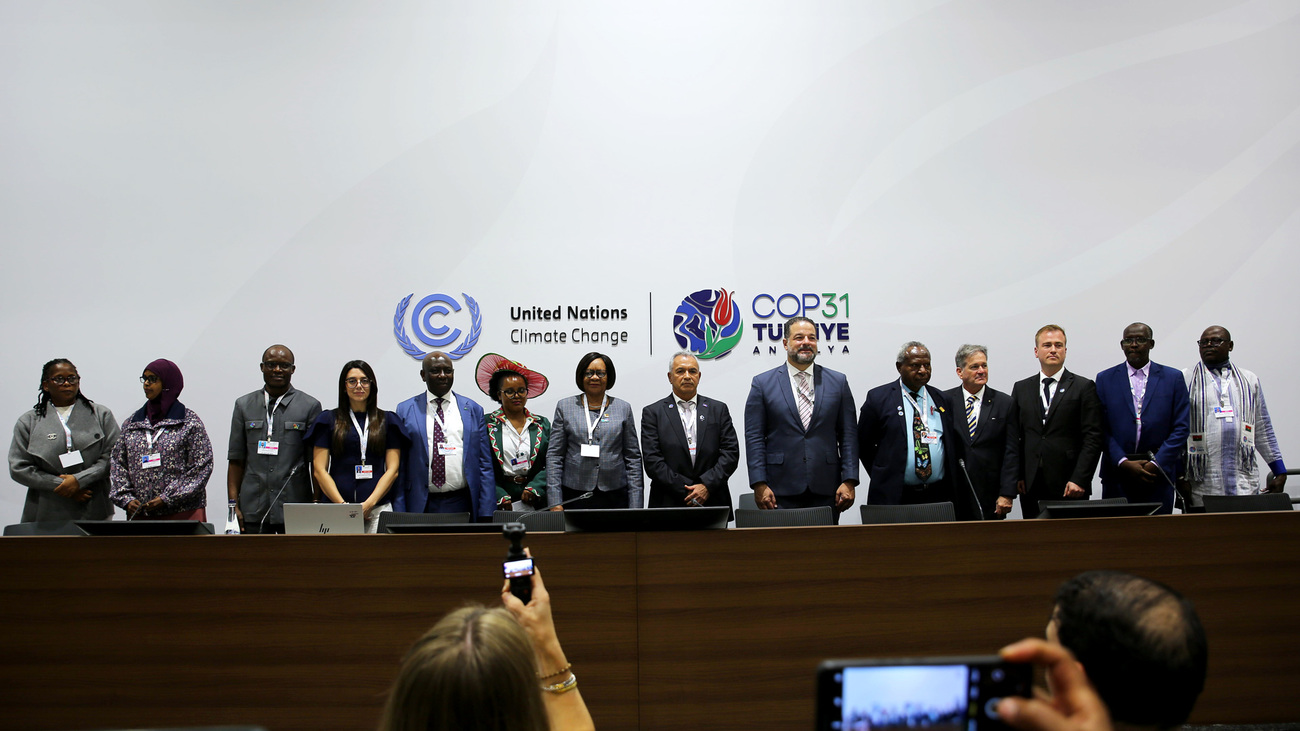
Ministers and representatives from nine endorsing countries gathered together: Orlando Habet (Belize), Armando Paíno Henríquez (Dominican Republic), Thabo Mofosi (Lesotho), Juan Carlos Navarro (Panama), John Kaupa (Papua New Guinea), Paulo Cezar Rotella Braga (Brazil), Daniel Mukubi Kikuni (Democratic Republic of the Congo), Faiza Ali Yusuf (Somalia), and Evelyn Ndlovu (Zimbabwe). Photo: © IFAW and WFA
Protecting wildlife also means supporting people
Throughout the event, ministers emphasised that protecting functioning ecosystems has direct consequences for the communities that depend on them.
The Dominican Republic's Minister for Environment and Natural Resources, Armando Paíno Henríquez, described how mangroves help shield coastal communities from storms, forests support water supplies for homes and farms, and coral reefs sustain fisheries and livelihoods.
"For a small island state like ours, protecting biodiversity means protecting the water we drink, the food we grow, and the jobs our people depend on. The work that wildlife does every day deserves a place in our climate decisions," he said.
Representatives from Lesotho, Papua New Guinea, and Somalia similarly highlighted the importance of Indigenous peoples and local communities, whose knowledge, stewardship, and livelihoods are closely connected to wildlife and the landscapes they inhabit.
These perspectives are essential to the Declaration's ambition. Effective wildlife conservation requires more than protecting habitat on a map. It depends on connected landscapes, investment in conservation, and meaningful participation by the people living and working alongside wild animals.
The Declaration also recognises that wildlife conservation complements, rather than replaces, the urgent need to reduce greenhouse gas emissions. Protecting the ecological processes that sustain healthy ecosystems is one important part of a broader response to climate change.
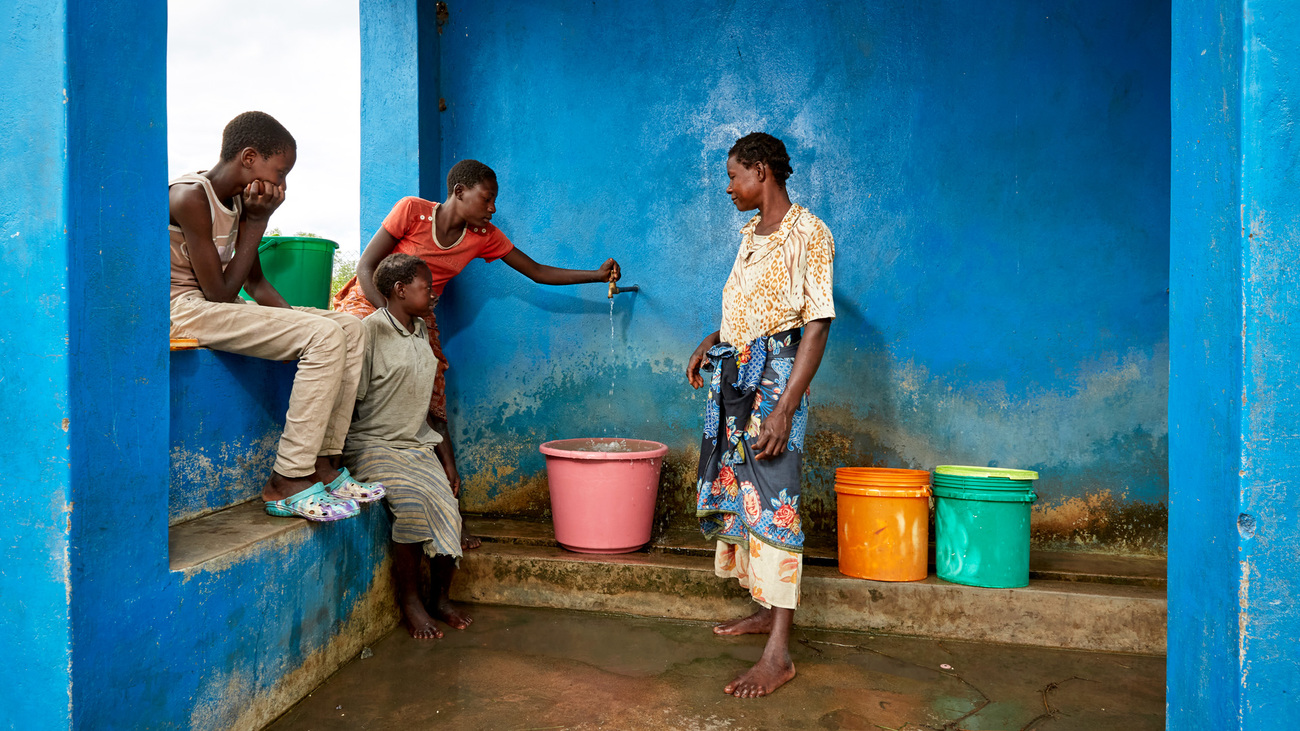
Community members take a break from fetching water from one of the community taps installed by the Chikolongo Livelihood Project in Malawi. Photo: Julia Gunther / © IFAW
From political recognition to practical action
The Declaration is voluntary and does not create new legal obligations. Its significance lies in establishing a shared political commitment and encouraging governments to give wildlife a more meaningful place in existing climate and biodiversity policies.
Zimbabwe's Permanent Secretary for Environment, Climate and Wildlife, Simon Masanga, outlined the next phase during the launch. The government intends to work with endorsing countries to develop a collaborative roadmap, with priorities potentially including stronger wildlife monitoring, habitat connectivity, community-based conservation, and access to climate and biodiversity finance.
A workshop is proposed for June 2027, during the UN climate negotiations, to help participating countries agree on practical next steps. The Declaration also remains open to additional government endorsements.
For IFAW, implementation will be the measure of success. Greater recognition of wildlife in climate policy should ultimately help protect individual animals, sustain healthy populations, and support the communities whose futures are intertwined with the natural world.
Habet expressed that ambition clearly in his closing remarks.
"The Declaration must help us move from recognition to delivery, stronger habitat protection, restored ecological connections, better monitoring and accessible finance and technical support."
By providing technical support and rallying other governments to join the declaration, IFAW is proud to have supported Zimbabwe in bringing this initiative to the global stage, alongside WFA and other partners. The work that began at COP28 has now helped build a coalition of 25 governments prepared to recognise wildlife's contribution to climate action.
As Collis put it, tackling the climate crisis requires "all hands on deck". He added, with characteristic enthusiasm, "All paws, all fins, all trunks, all beaks."
The launch at COP31 has given wildlife a new place in the international climate conversation. The task now is to make that recognition count, through stronger protection for wild animals, healthier ecosystems, and lasting benefits for the people who depend on them.
Learn more about the Wildlife for Climate Declaration and the countries supporting it.
Related content
Our work can’t get done without you. Please give what you can to help animals thrive.