Barbara Slee
From policy to implementation: protecting wildlife today, teaching ocean stewards tomorrow
From policy to implementation: protecting wildlife today, teaching ocean stewards tomorrow
Barbara Slee | January 29, 2026
In December 2025, at the 20th Conference of the Parties (CoP20) to the Convention on International Trade in Endangered Species of Wild Fauna and Flora (CITES) in Samarkand, Uzbekistan, IFAW celebrated significant new protections for hundreds of wildlife species.
These decisions marked a major policy achievement—but policy is only part of the story. Real impact happens when regulations are put into action on the ground.
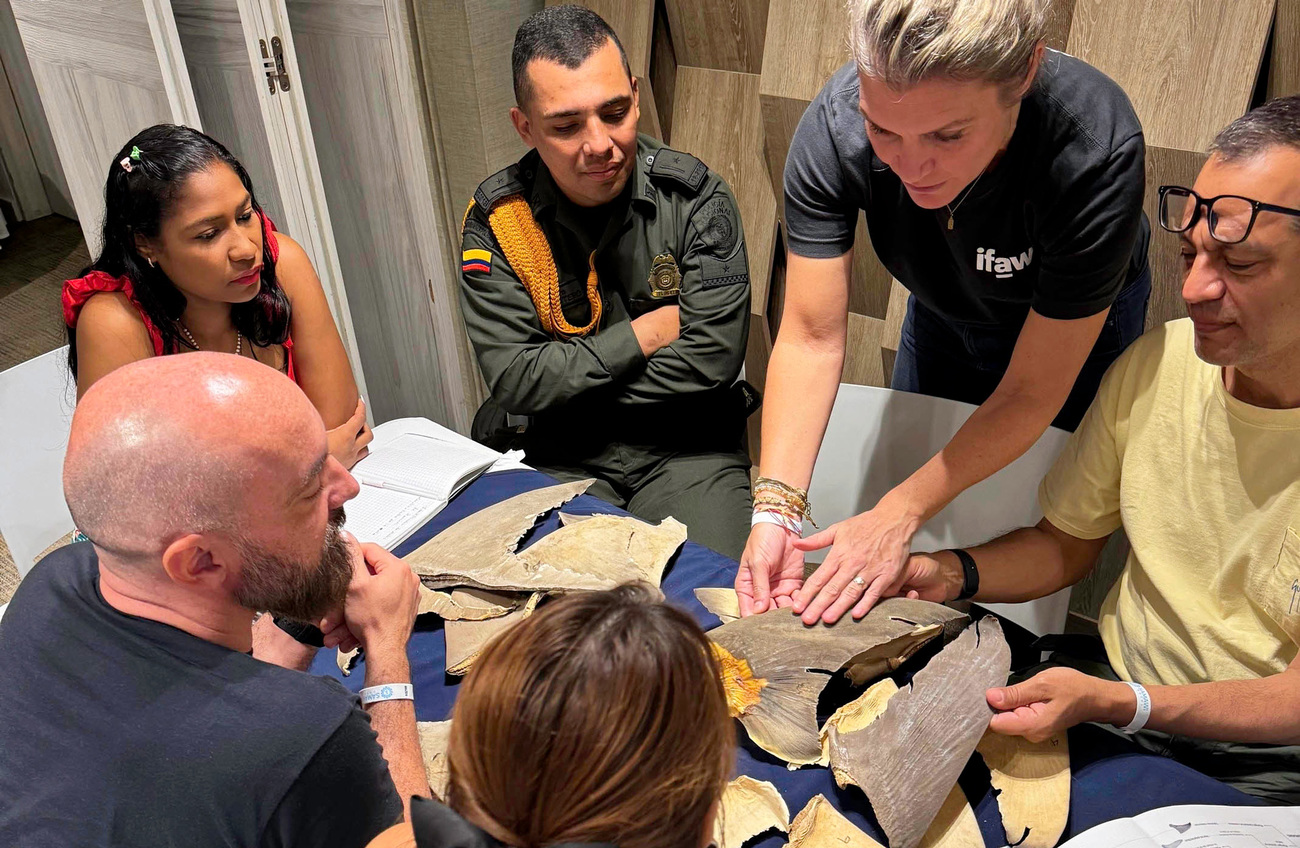
Barbara Slee explains to participants the different textures of various shark fins. Photo: © IFAW
Turning agreements into action
Countries often need technical support and training to implement CITES protections effectively. In response, IFAW provides hands‑on capacity building, particularly in regions where resources and expertise are limited.
Following the landmark decision at CoP19 to list nearly 100 shark and ray species under CITES, implementation became our immediate priority. IFAW organised a series of shark fin identification workshops in Ecuador, Panama and Colombia, and delivered regional and national trainings across the Middle East and North Africa.
Working side by side with officials from customs, fisheries, environmental agencies and law enforcement, we equipped participants with the knowledge and skills to monitor legal trade and tackle illegal trafficking in CITES‑listed sharks. This work will continue and expand.
Growing demand for training
This June, IFAW will deliver additional workshops in the Middle East for authorities from Jordan, Yemen and Oman to support species‑specific assessments. In Latin America, Chile and Peru have expressed interest in shark fin identification training alongside Ecuador, Panama and Colombia.
“I took part in training because our agency truly needs this expertise,” one participant told us. “Without support, we simply cannot fulfil our mandate.”
These collaborations cement the cycle from policy to implementation, ensuring that international decisions translate into lasting change.
Stories from the field: commitment in action
Supporting implementation means bringing government officials together, building expertise, and fostering consistent exchanges between authorities and experts. Officials consistently tell us that IFAW follows through, demonstrating care for species beyond policy milestones.
One story that stayed with us comes from San Andres, Colombia. Among the 41 participants trained in shark fin identification was Angela Maria Burgos Herrera—who attended the full three‑day workshop accompanied by her young son, Manuel, because childcare was unavailable.
An agroforestry engineer by training, Angela is a Specialized Professional with CORPONARIÑO—the Regional Autonomous Corporation of Nariño, responsible for protecting the environment and natural resources in the Department of Nariño. She leads work on wild fauna and flora use, control and surveillance.
I sat down with Angela to understand more about her work, and the impact these trainings would have.
What does your typical workday look like?
“As a public service officer, I work eight hours a day, Monday to Friday. But the nature of our work means weekends or off‑hours are common. We develop technical concepts for law enforcement or the Prosecutor’s Office, verify confiscated animals and products, and conduct fieldwork, environmental education and community outreach. My work is quite dynamic.”
Angela has been involved in a wide range of wildlife confiscations, from birds and reptiles to arachnids and marine species. One of the most notable cases involved more than 1,700 Hicotea turtles trafficked across the Ecuador-Colombia border—later received and cared for by her agency. These complex, cross-border cases illustrate just how important collaboration and technical capacity are in protecting wildlife.
What wildlife seizures are most common?
“In 2023, CORPONARIÑO received 223 wild animals in transit—including 75 birds, 114 mammals, and 33 reptiles. One notable case involved 386 shark fins. These specimens arrive through voluntary deliveries, discoveries or seizures.”
“In the Pacific Nariño region, sharks are traditionally part of local meals. Shared borders with Ecuador suggest trafficking corridors that we are working to disrupt.”
What are the greatest challenges?
“We lack resources to manage confiscation processes from start to finish. There is a need for more trained personnel, stronger wildlife identification skills among agencies and in communities, especially with children and youth. We also need certified professionals in animal care and basic forensic techniques.”
Angela emphasised the importance of shifting from reactive enforcement to behaviour-change and prevention, with stronger national commitment and science‑based strategies to focus efforts where they are most effective.
From seizures to cooperation
Angela recounted several enforcement cases, including long‑running legal processes for wildlife confiscations and cross‑border turtle seizures. These cases demonstrate both the complexity of illegal wildlife trade and the critical need for inter‑agency cooperation.
What was the most important outcome of the workshop?
“Expanding our theoretical and practical knowledge about sharks and rays, and protection measures. Scientific and local knowledge, combined with technology, strengthen conservation within environmental legal frameworks.”
Importantly, the workshop also built connections. “Getting to know professionals from different agencies helps communication, cooperation and coordinated action. Protecting sharks—and wildlife in general—requires joint effort from the state, agencies and communities.”
Angela sees IFAW’s training as a crucial stepping stone in a much broader effort.
“We don’t always have the resources to follow a confiscation case from start to finish,” she explained. “We lack specialised personnel, timely tools, and enough trained professionals to identify trafficked wildlife, care for seized animals, or carry out legal processes efficiently.”
She stressed that training is urgently needed—not only for agencies, but for law enforcement and communities, especially young people. “Education is essential. We need to build a foundation of knowledge and awareness so the next generation sees conservation not just as a job, but as a responsibility.”
Angela believes the focus must shift from reactive enforcement to prevention. “We rely too much on seizures and arrests. We need science-based strategies, behaviour change, national coordination, and technology to stop trafficking before it happens.”
Workshops like IFAW’s offer the tools—and the sense of connection—that fuel those long-term efforts. “Protecting wildlife should be a national priority,” she said. “But real change starts with people who are trained, supported and committed.”
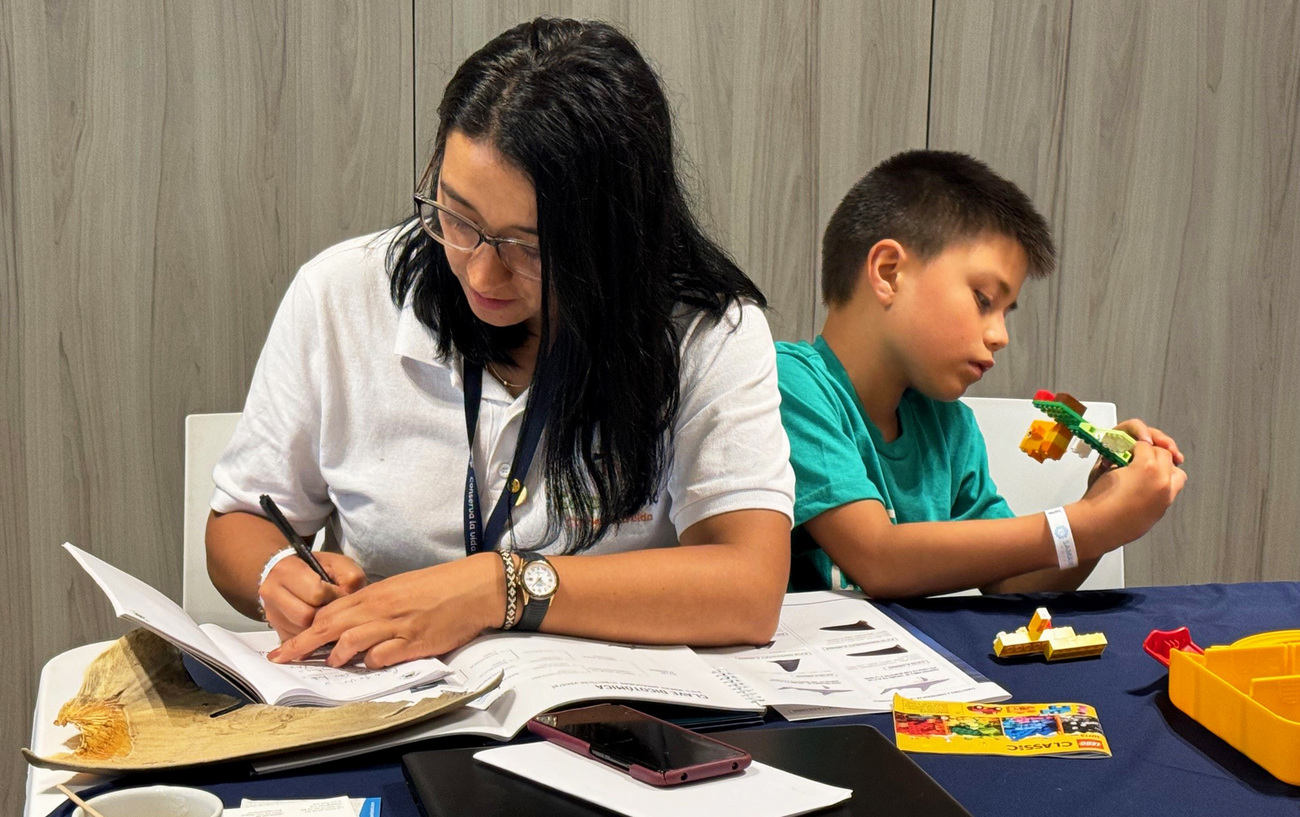
Angela at the shark fin identification workshop accompanied by her son, Manuel. Photo: © IFAW
Inspiring the next generation
What is your greatest aspiration for sharks?
“I dream of creating a shark education programme for children in my Department—something that helps them understand the importance of these species and their role in the ocean. I want to build what I call a ‘shark school’—where young people learn to respect, protect, and become stewards of marine life. That way, the next generation will grow up not fearing sharks, but fighting for them.”
From global policy halls to community classrooms, protecting wildlife today means empowering diverse voices and futures. As Angela and Manuel remind us, conservation is not only about enforcement and laws—it’s about inspiring people of all ages to care deeply for our oceans and the remarkable species within them.
Related content
Every problem has a solution, every solution needs support.
The problems we face are urgent, complicated, and resistant to change. Real solutions demand creativity, hard work, and involvement from people like you.