Grey parrots
The African grey parrot, also known as the Congo grey parrot, is a member of the holotropical parrot family, a group known primarily for their hooked beaks and colourful plumage. As the name suggests, however, the grey parrot isn’t quite as colourful as many of its true parrot relatives.
Its grey plumage covers almost all of its body, with a white mask around its eyes and vibrant red tail feathers. Though it’s not quite as eye-catching as the full-body blues, yellows, and reds of other large parrots, the contrast of the red against velvety grey is striking.
African grey parrots range in size from 30 to 40 centimetres (12 to 16 inches) long and weigh 400 to 650 grams (0.8 to 1.4 pounds), with males being slightly larger than females. Their average wingspan is around 46 to 52 centimetres (18 to 20 inches).
Grey parrots live in and around Africa’s Congo Basin, covering more than 3.4 million square kilometres (more than 1.3 million square miles).
There were once many millions of grey parrots living in West and Central Africa. Today, it’s much more difficult to estimate how many grey parrots there are. There could be as many as 13 million or there could be as few as 560,000, according to scientific estimates.
Grey parrots are flocking birds, which means they gather in large groups to sleep at night—often roosting in groups of up to 1,000 birds. They often sleep in areas surrounded by water, such as coastal or river islands, where fewer predators can reach them.
Living in groups has many advantages, most made possible by the wide range of vocalisations that these parrots use to communicate. They use their voices to coordinate flocking and choose nesting spots, to warn each other of predators, and express anger about rivals. With their incredible mimicking skills, they can even communicate the type of danger by echoing the calls of other birds or animals.
Studies from the past few decades have also found that grey parrots are highly intelligent, with reasoning abilities similar to those of a human toddler. They can count objects and associate the words they learn to mimic with specific meanings. However, their mimicking abilities and high levels of intelligence make them prime targets for the dangerous and illegal exotic pet trade.
After reaching sexual maturity at around five years old, grey parrots mate for life. They breed during the dry season, and each couple needs its own tree to build a nest for their eggs. The female usually lays between three and five eggs while the male guards her.
Then, while she incubates the eggs for around 30 days, the male gathers food and feeds the female. Once the eggs hatch, both parents raise their young until they reach independence.
As plant eaters, grey parrots help keep forests healthy by carrying undigested seeds to new places and carrying pollen from one plant to another. Eating fruits and other plant matter also helps prune the forest, alleviating competition for nutrients and making way for new growth.
What is a grey parrot’s scientific name?
The grey parrot’s scientific name is Psittacus erithacus. Grey parrots also have a number of common names, including the Congo grey parrot, African grey parrot, or the Congo African grey parrot.
They are part of the Psittacidae family, also known as holotropical parrots, and are one of just three families of ‘true parrots’.
There is also a smaller, darker type of grey parrot called the Timneh parrot. Some researchers believe this is a distinct subspecies and have given it the scientific name Psittacus erithacus timneh.
Are grey parrots endangered?
Grey parrots have been classed as endangered by the IUCN since 2016, as researchers have found that they are experiencing drastic population declines. While it’s very difficult to track the overall number of grey parrots, we know that large numbers are poached and trafficked as part of the illegal pet trade every year.
They are also losing viable habitat at a rapid rate, and together, these two factors significantly affect the worldwide population.
Threatened by high demand in the illegal pet trade, African grey parrots were first recognised by the Convention on International Trade in Endangered Species (CITES) in 1975. After a push from conservation organisations, including IFAW, the grey parrot was upgraded to CITES Appendix I protections in 2016, placing them among the world’s most endangered species.
Where do grey parrots live?
Grey parrots live in a sub-Saharan area of West and Central Africa, covering countries such as Congo, Angola, Cameroon, Gabon, and the Democratic Republic of the Congo. They can also be found on some islands off the mainland, such as Malabo and Santo Antonio.
They usually live in dense forests but can also be found around forest edges, clearings, mangroves, wooded savannah, and cultivated areas. They tend to move away from the driest areas during the dry season, always aiming to be near rivers or other sources of water.
Threats
Grey parrots are primarily threatened by the illegal pet trade and habitat loss.
Poaching for the exotic pet trade
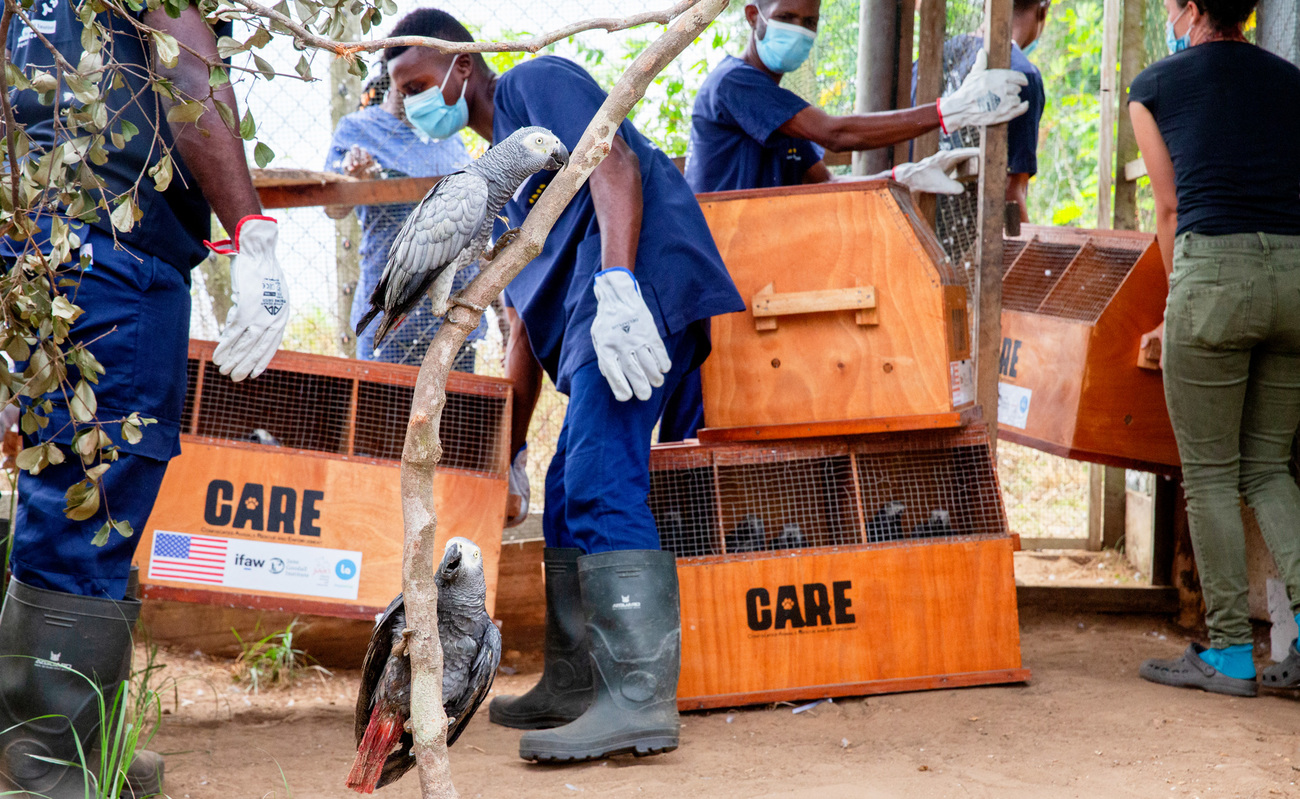
Unfortunately, there is high demand across Europe, North America, and the Middle East for grey parrots as pets, and increasing demand in China. An estimated 20% of the existing grey parrot population is taken for the pet trade each year, with over 1.3 million individuals detected in the international trade between 1982 and 2001.
However, the toll it takes is even higher than reported. Grey parrots have a high mortality rate after being captured, and as many as 66% don’t make it out of Africa alive. This means that for every individual we see in the pet trade, two more individuals could have been taken from their homes and unintentionally killed in the process.
Poachers capture dozens of birds at a time by gathering at watering spots and using tethered birds to lure flock members and trap them in nets. Populations of grey parrots have become isolated from each other, and since 1992, Ghana has lost between 90% and 99% of its grey parrot population due to poaching.
The majority of grey parrots poached in the wild are destined for the illegal pet trade, but they are also used for ceremonial purposes or for bushmeat. Their red tail feathers are used as an ingredient in traditional medicine and by the Nigerian Yoruba people to create masks for social and religious ceremonies.
Habitat loss
Deforestation, logging, and farming activities are increasing across the grey parrot’s habitat, leaving less space for the birds to live. They are losing access to their natural nesting areas—large trees with hollow cavities.
Because the overall population of African grey parrots is potentially quite large and they live in large flocks, damage to a relatively small area can affect thousands of birds.
If there are roads and human settlements in the surrounding areas, it can be difficult for grey parrots to find new nesting spots. If they do manage to find nesting spots, they face competition for food with existing flocks.
When this happens, the only possible outcome is for the population to adjust to match the available resources—this means surplus adults and young will die off. In Cameroon, experts believe habitat loss has contributed more to population declines than the pet trade.
FAQs
How long can an African parrot live?
The average African grey parrot lifespan varies. In the wild, they live to an average age of 23 years. This number is influenced by the various ways parrots can die in the wild, such as predators, lack of food, disease, and poaching.
When a grey parrot is kept in captivity with a stable food supply, veterinary care, and safety from predators, it can live for up to 60 years. But keeping a grey parrot in captivity as a pet is not the right choice, as meeting its physical and psychological needs is extremely difficult and costly. The fact that a grey parrot’s lifespan is so long means that they are a lifelong commitment—a commitment that most people cannot promise. These birds can easily outlive pet owners, resulting in abandonment or mistreatment.
How smart are African grey parrots?
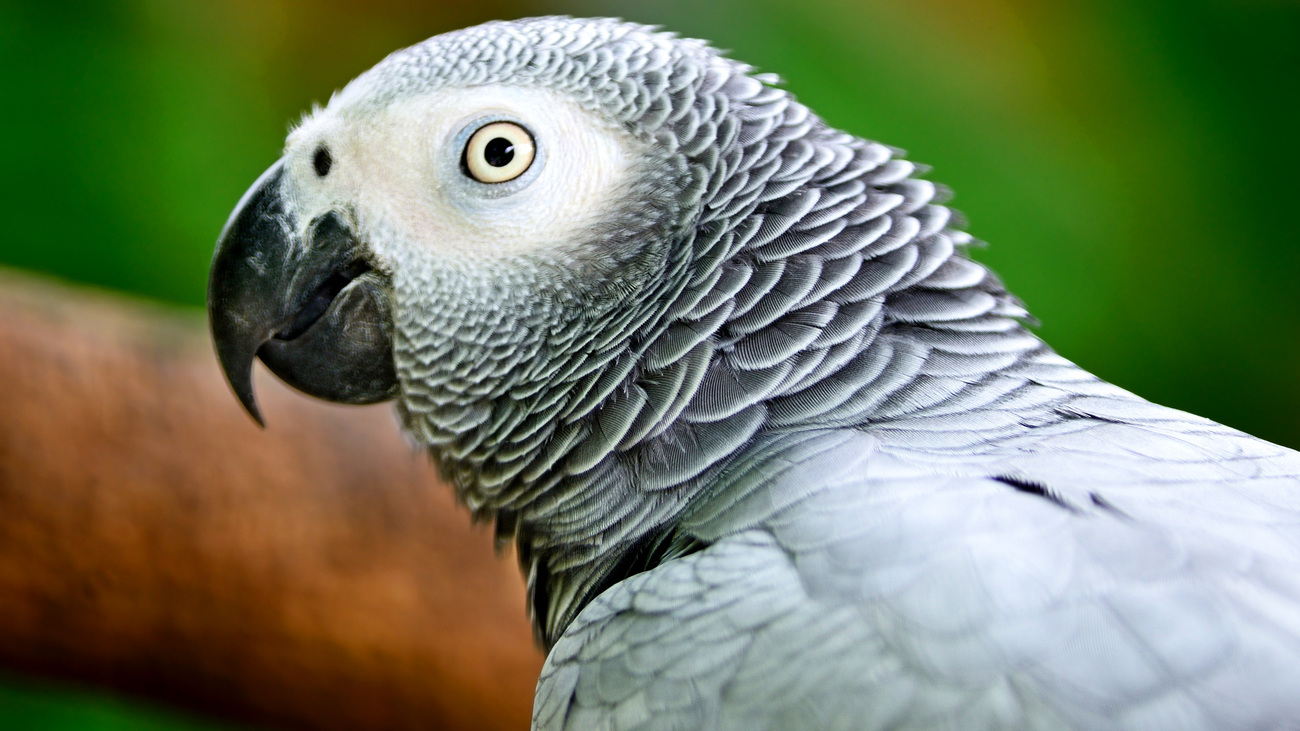
A professional animal behaviourist studied the intelligence of a captive African grey parrot named Alex from 1976 to 2007 and learned that they can also associate sound with meaning.
He could count to six in English, say a range of colours, and use this vocabulary to correctly label various groups of objects. He also used English to communicate with other birds in the lab, commenting on their efforts to complete puzzles.
Since then, other researchers have also found that if you shake two boxes—one with food inside and one without—grey parrots can use deductive reasoning to choose the right box. They can also work together in pairs to solve puzzles for a food reward.
Their overall intelligence has been compared to apes, cetaceans, and human toddlers.
While their intelligence may seem to make grey parrots an appealing pet, this actually demonstrates that they have very complex psychological needs, which cannot be replicated in captivity. Grey parrots belong in the wild with other flock members, as they are social animals.
Can African grey parrots talk?
There are a few different types of birds that have advanced mimicking abilities, but parrots are by far the best at it.
They are capable of vocalising a wide range of sounds, and it’s part of their social norms to mimic the noises they hear. By mimicking, they can fit in with the flock and benefit from its advantages—primarily the extra pairs of eyes searching for predators and food. Flocks of grey parrots in different areas have been found to have different dialects, and when a new member joins, they’ll adjust their own sounds to match.
What do African grey parrots eat?
African grey parrots eat a range of different foods to gain all the nutrients they need, including fruits, seeds, nuts, flowers, free bark, insects, snails, clay, and soil.
Fruits, seeds, and nuts make up the bulk of their diets while the other food types are usually consumed to gain missing nutrients.
Are African grey parrots endangered?
African grey parrots are listed as endangered on the IUCN Red List. This is due to both the large annual harvest for the international wildlife trade and the rapid habitat loss they are experiencing.
We don’t know a lot about parrot population numbers, but because so many parrots are poached and they’re losing so much habitat, they must be experiencing rapid population declines—which fits the criteria for endangered status.
How many African grey parrots are left in the world?
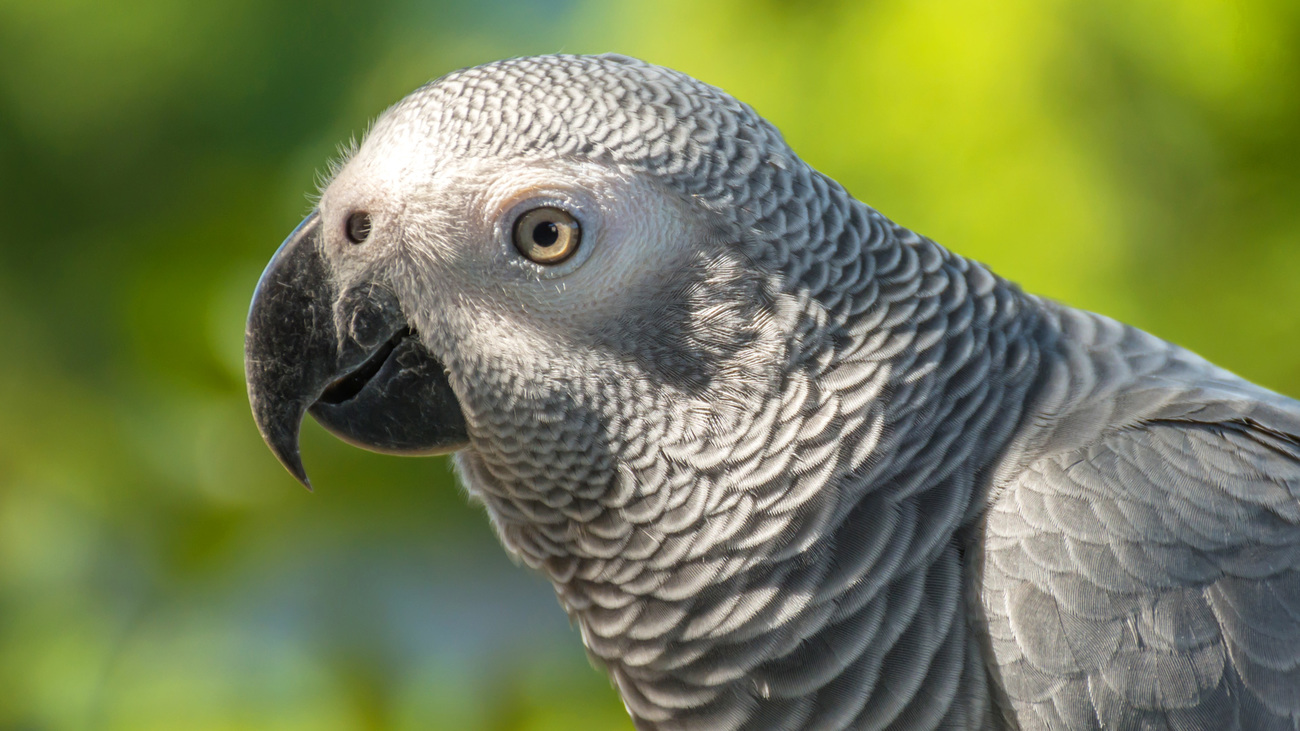
Estimating the total number of grey parrots is difficult because their populations are isolated and located in politically volatile areas. According to the IUCN, the number could be anywhere from 560,000 to 12.7 million.
Are African grey parrots good pets?
Grey parrots should not be kept as pets. Not only is the capture of grey parrots from the wild illegal, but it is also extremely dangerous and deadly for them. It is bad for the individual welfare of parrots to keep them in captivity, and it is harmful for the species as a whole.
Grey parrots usually live to around 60 years of age in captivity. With a lifespan this long, parrots are extremely likely to be passed from home to home when human carers die or become unable to look after them. Caring for a large bird for this long is costly, can damage your home, and can be a large burden on you and your family. It is much easier to care for a domesticated animal like a dog or cat.
The process that brings grey parrots from their homes in Africa to pet owners around the world is fraught with danger and unsafe conditions. They are illegally harvested from their natural habitats and trafficked around the world—often kept in small cages with nutritionally inadequate diets and no medical care. Many individuals don’t survive the journey.
Between 1982 and 2001, over 1.3 million grey parrots were detected in the international trade network, and the internet is making it even easier for buyers and sellers to make contact with each other. Right now, estimates suggest that a significant percentage of the overall population is poached each year, and this consistent demand is taking a serious toll on wild populations.
Our work
At IFAW, we’re working hard to combat poaching and the illegal trade threatening African grey parrots.
Disrupting trade
Alongside African governments and other conservation organisations, we pushed for grey parrots to receive CITES Appendix I protections. When this was finally achieved in 2017, it became illegal to trade grey parrots internationally.
In addition, IFAW supported the Uganda Wildlife Authority, Conserv Congo, and the World Parrot Trust alongside the Wildlife Trust of India (WTI) to investigate a trafficking case, leading to the seizure of 122 grey parrots from a trafficker in the Democratic Republic of the Congo. These birds were transported to the care of the Uganda Wildlife Conservation Centre and given proper veterinary care. Eventually, many of the parrots recovered and were successfully released back to the wild.
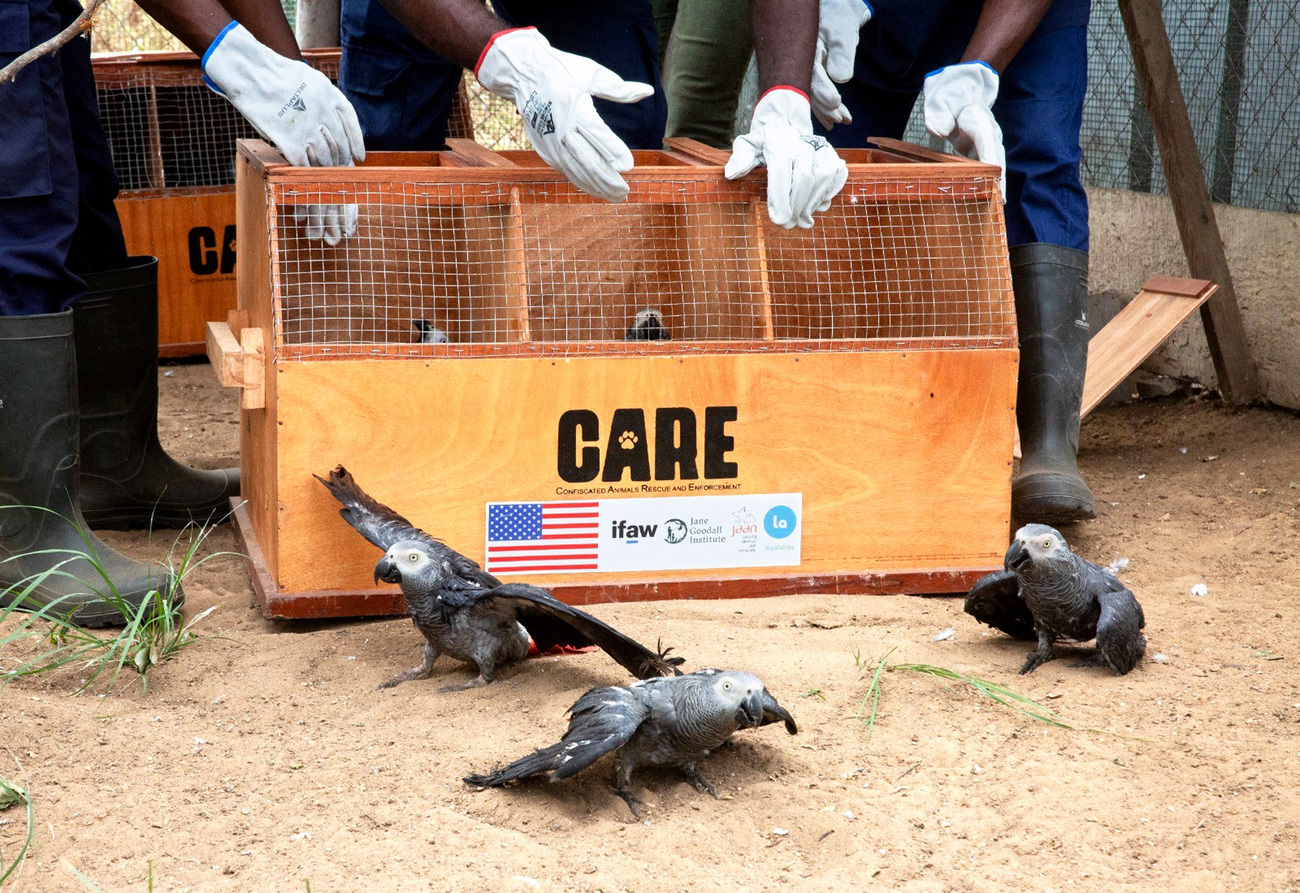
We support investigations into wildlife trafficking, and we also help train law enforcement officials in the proper handling and care of wildlife seized from illegal trade—a crucial first step in the recovery process for these vulnerable animals.
Under these investigations we’ve supported alongside World Parrot Trust and the Lukuru Foundation, we have seen 16 confiscations and voluntary submissions—saving a total of 453 parrots, including 401 African greys and 52 red-fronted parrots.
Taking grey parrots off the market
IFAW is tackling the threats facing African grey parrots at every level—disrupting the illegal trade, reducing demand, and supporting the safe rescue and return of birds to the wild. We played a leading role in securing global protection for the species under CITES Appendix I, and in 2025 we welcomed a major national milestone: new legislation in the Democratic Republic of the Congo now criminalises the capture, sale, and killing of African grey parrots, offering vital protection where it's needed most.
Through our CARE (Confiscated Animals – Rescue and Enforcement) initiative, IFAW has supported 16 confiscations or voluntary surrenders since 2022, rescuing 453 parrots, including 401 African greys. In one operation alone, 45 birds were saved in the Republic of the Congo and transferred into the care of our partners at the Jane Goodall Institute. We also train frontline officers in bird-safe handling, provide proper cages and veterinary guidance, and help ensure rescued parrots have the chance to recover and fly free again.
To reduce demand, we lead public awareness campaigns in China and the MENA region, encouraging people to reject wild-caught pets. As co-founder of the Coalition to End Wildlife Trafficking Online, we’ve helped remove over 24 million illegal listings. We also work directly with tech platforms, flagging harmful content as an EU Trusted Flagger, and using AI tools like Guardian 2.0 to detect and remove illegal parrot sales before they spread. Every bird matters—and with your support, we can help them survive and thrive in the wild.
How can you help?
When it comes to fighting against the illegal pet trade, awareness and perception is everything. You can help by not keeping grey parrots as pets and convincing others around you to do the same.
You can also support conservation and rescue organisations that work to protect parrots and other wildlife species across the globe.