Kenya’s Meru Park awarded “World Class” status
Thursday, July 19, 2007
Nairobi, Kenya
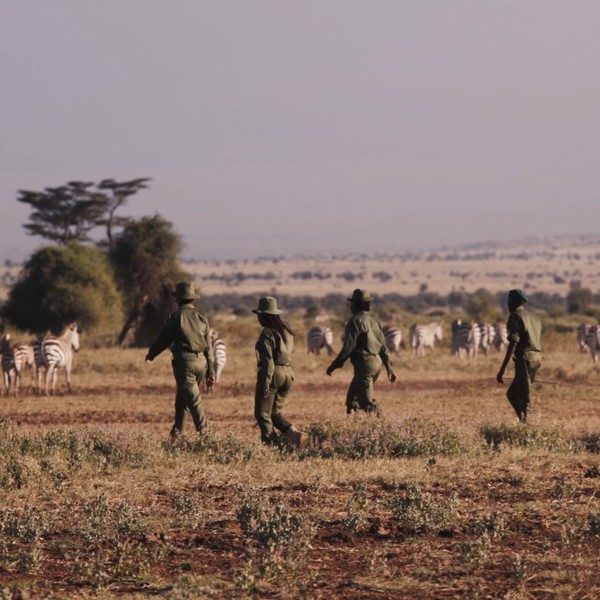
Reflecting on the Park’s troubled past and the rampant poaching that kept
tourists away and almost wiped out its wildlife populations, Kenya’s Tourism and
Wildlife Minister Morris Dzoro said, “Meru not only became a hotbed of conflict
and mismanagement, but also lost its splendour as a top tourist spot and
wildlife refuge.”
He applauded IFAW for supporting the Park’s restoration at a cost of US$ 1.25 million to improve basic infrastructure such as roads and staff houses, build electric fences to mitigate human-wildlife conflict, purchase vehicles and radio communication equipment for law enforcement purposes and enhance biodiversity through the translocation of over 1300 assorted wildlife species including elephants, rhino, reticulated giraffe, endangered Grevy zebra and leopard among others.
“From rampant poaching, wildlife diseases and rundown infrastructure, Meru Park has truly come around. It is a tribute to the remarkable faith, boundless energy, relentless commitment and great effort of KWS staff in rebuilding this beautiful wildlife haven,” said James Isiche, IFAW’s Regional Director in East Africa. “Meru truly merits world class conservation status because it now has what it takes to rival the great Tsavo and Maasai Mara parks,” he added.
At the apex of its ruin in the late 1990s, tourism numbers dwindled to 1819. A poaching onslaught wiped out the rhino population, while elephants, the majestic guardians of the African savanna, fell from 3000 in the 1970s to less than 300 in 1991 as besieged rangers deserted the Park’s headquarters at Kinna. Following the restoration, however, the new rhino sanctuary supported by IFAW now boasts 55 black and white rhino, species populations have stabilized, and the Park’s commander deploys security rangers from the once deserted but now refurbished and safe Kinna headquarters.
Using Meru as a model for success, IFAW is currently involved in a similar five-year restoration project in partnership with KWS at Tsavo National Park, home to some of the world’s most important elephant populations. Through IFAW’s involvement here, basic park operations and infrastructure will be enhanced, while law enforcement, research, and community education will also be improved.
He applauded IFAW for supporting the Park’s restoration at a cost of US$ 1.25 million to improve basic infrastructure such as roads and staff houses, build electric fences to mitigate human-wildlife conflict, purchase vehicles and radio communication equipment for law enforcement purposes and enhance biodiversity through the translocation of over 1300 assorted wildlife species including elephants, rhino, reticulated giraffe, endangered Grevy zebra and leopard among others.
“From rampant poaching, wildlife diseases and rundown infrastructure, Meru Park has truly come around. It is a tribute to the remarkable faith, boundless energy, relentless commitment and great effort of KWS staff in rebuilding this beautiful wildlife haven,” said James Isiche, IFAW’s Regional Director in East Africa. “Meru truly merits world class conservation status because it now has what it takes to rival the great Tsavo and Maasai Mara parks,” he added.
At the apex of its ruin in the late 1990s, tourism numbers dwindled to 1819. A poaching onslaught wiped out the rhino population, while elephants, the majestic guardians of the African savanna, fell from 3000 in the 1970s to less than 300 in 1991 as besieged rangers deserted the Park’s headquarters at Kinna. Following the restoration, however, the new rhino sanctuary supported by IFAW now boasts 55 black and white rhino, species populations have stabilized, and the Park’s commander deploys security rangers from the once deserted but now refurbished and safe Kinna headquarters.
Using Meru as a model for success, IFAW is currently involved in a similar five-year restoration project in partnership with KWS at Tsavo National Park, home to some of the world’s most important elephant populations. Through IFAW’s involvement here, basic park operations and infrastructure will be enhanced, while law enforcement, research, and community education will also be improved.
Press Contact
Colleen Cullen (IFAW, Headquarters)
Contact phone:
+1 (508) 744-2236
Contact mobile:
+1 (508) 648-3586
Contact email: